Most HVAC contractors are brilliant at diagnosing a failing compressor and hopeless at diagnosing a failing marketing funnel. That is not a criticism — it is a time problem. When you are on a roof in July or crawling through an attic in January, nobody is answering the phone, updating your Google listing, or chasing the citation that just dropped off a directory. HVAC marketing software exists to close that gap, and LinkSpear was built specifically to turn the local-search game into something a busy contractor can actually run between service calls. This page walks through exactly how heating and cooling companies use LinkSpear to find local prospects, enrich their contact details, queue them for outreach, and build the backlinks that push them up the map pack — with realistic numbers, not hype.
Why HVAC Marketing Is Harder Than It Looks
The heating and cooling business has a brutal marketing shape. Demand is spiky — a heat wave or a cold snap doubles your call volume overnight, then it goes quiet. Jobs are high-ticket but infrequent per customer, so you are constantly hunting for new households and property managers rather than milking repeat orders. And your competition is fierce: every metro area has dozens of HVAC companies, plus national lead brokers who resell the same $75 “exclusive” lead to four of you at once.
That last point is the one that quietly bleeds contractors dry. When you rent leads from an aggregator, you never own the relationship, you compete on speed-to-dial, and your margin evaporates. The contractors who win long-term build assets they control: a strong local presence on Google, accurate listings across the web, and their own list of prospects. Everything in LinkSpear points toward owning those assets instead of renting attention.
- Spiky demand: you need pipeline built before the season peaks, not during it. The furnace calls in January are won by the citations and rankings you built the previous September.
- Low repeat frequency: a furnace lasts 15–20 years, so new-customer acquisition is the whole ballgame. You cannot coast on an existing book of business the way a dentist or a gym can.
- Commoditized shared leads: paying brokers trains you to compete on price, which is fatal for a service business that lives on trust and craftsmanship.
- Trust-driven buying: homeowners pick the contractor who looks established and reviewed — which is a local-SEO problem, not a sales problem.
- Thin marketing bandwidth: the owner is usually the estimator, the dispatcher, and the marketer, so any system that takes more than an hour a week gets abandoned.
Understanding that shape is the whole point, because it tells you where to spend your limited marketing hours. You do not need a bigger ad budget so much as a repeatable habit that builds owned assets. That is the gap LinkSpear is designed to fill, and the rest of this page shows the mechanics.
The LinkSpear Playbook for Heating and Cooling Companies
LinkSpear is not a single tool bolted onto your website; it is a connected workflow. Five capabilities do the heavy lifting for HVAC teams: a local business directory to source prospects, lead enrichment to complete their contact cards, call queuing to work them one at a time, local citation and directory backlink building to lift your organic rankings, and rank tracking to prove the needle is moving. Used together, they take you from “I hope the phone rings” to “I have 40 qualified property managers to call this week and my citations are clean.” Let us break down each piece the way an HVAC business would actually use it.
The reason to think in terms of a connected workflow rather than a menu of features is that each piece feeds the next. The directory produces prospects; enrichment makes those prospects reachable; the call queue turns reachable prospects into booked visits; citations and rank tracking make the phone ring on its own so you are not forever dependent on outbound. Skip a step and the chain breaks — a great list you never call is worthless, and great rankings with no follow-up leave money on the table.
Source Local Prospects With the Business Directory
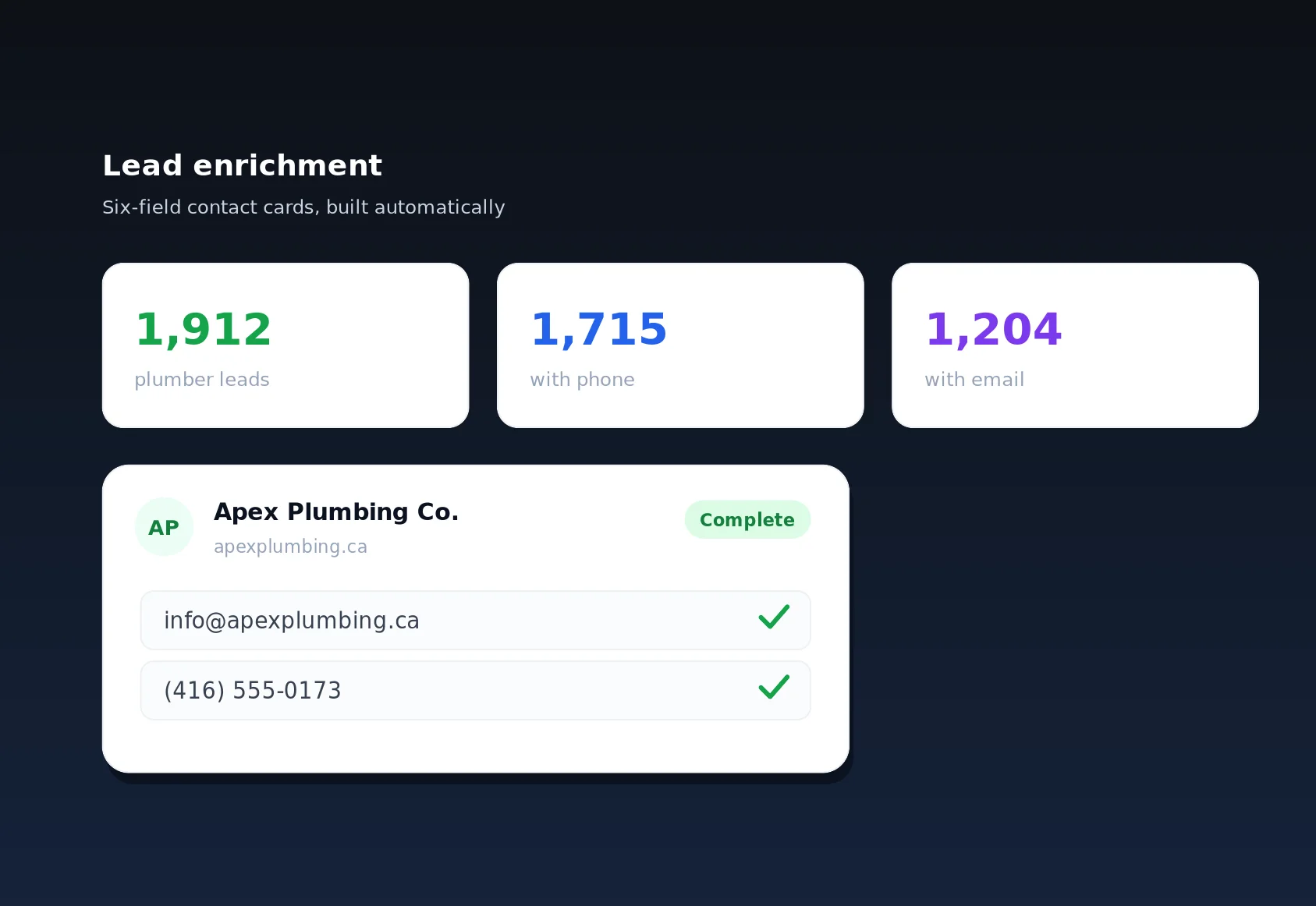
LinkSpear maintains a deduplicated master catalogue of local businesses with full contact cards — business name, phone, email, website, street address, city, province or state, country, and category. For a residential furnace-and-AC company that catalogue is a goldmine of adjacent B2B work: property management firms, apartment complexes, realtors who need pre-sale inspections, restaurants and cafes with rooftop units, gyms, dental offices, and small manufacturers with rooftop packaged systems. These are the recurring maintenance contracts that smooth out your seasonal swings.
Instead of buying a stale list, you filter the directory by city and category and instantly get a working set of real businesses in your service radius. A contractor in Columbus can pull every property management company and multi-tenant office within 30 minutes of the shop, then hand that list straight into outreach. Because the catalogue is deduplicated, you are not calling the same office three times under three spellings — a small thing that saves real embarrassment on the phone.
The commercial contracts that flatten your season
Residential emergency work is where the emotional spikes are, but light-commercial maintenance agreements are where the stability lives. A ten-unit strip mall with rooftop packaged units needs quarterly filter changes, coil cleanings, and belt checks whether or not it is 95 degrees outside. If you sign eight or ten of those agreements, you have a base of scheduled, predictable revenue that keeps your techs busy during the shoulder months of spring and fall when the phone would otherwise be silent. The directory is the fastest way to build the target list for that campaign.
- Commercial maintenance targets: property managers, HOAs, and facilities teams who sign annual service agreements and rarely switch vendors once you are in.
- Referral partners: realtors, home inspectors, and general contractors who send you install jobs every single week if you stay top of mind.
- Light-commercial installs: restaurants, salons, clinics, and retail with rooftop or split systems that fail predictably and need fast replacement.
- Multi-site operators: franchise groups and small chains where landing one location often means landing five.
Fill In Missing Emails and Phones With Lead Enrichment
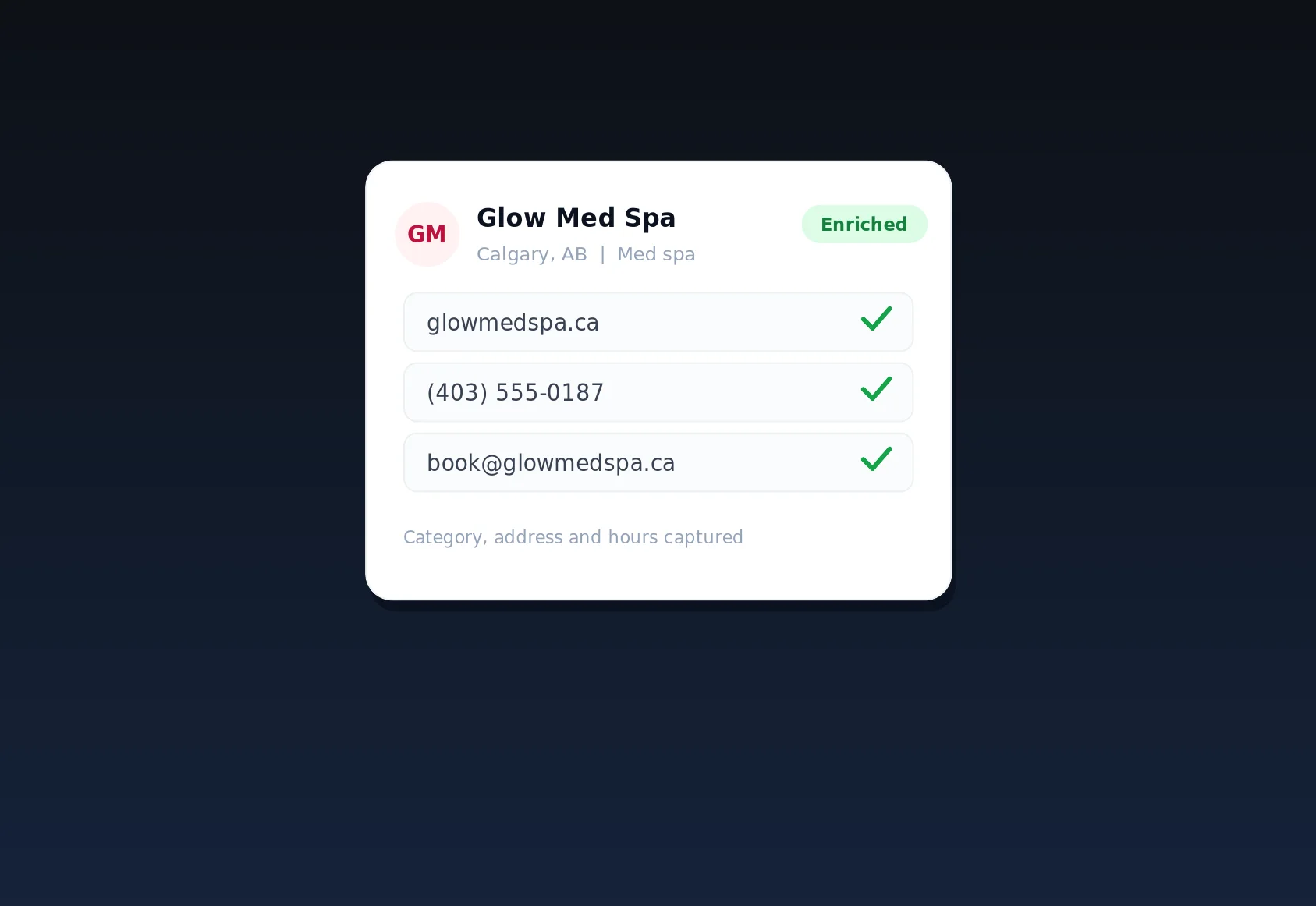
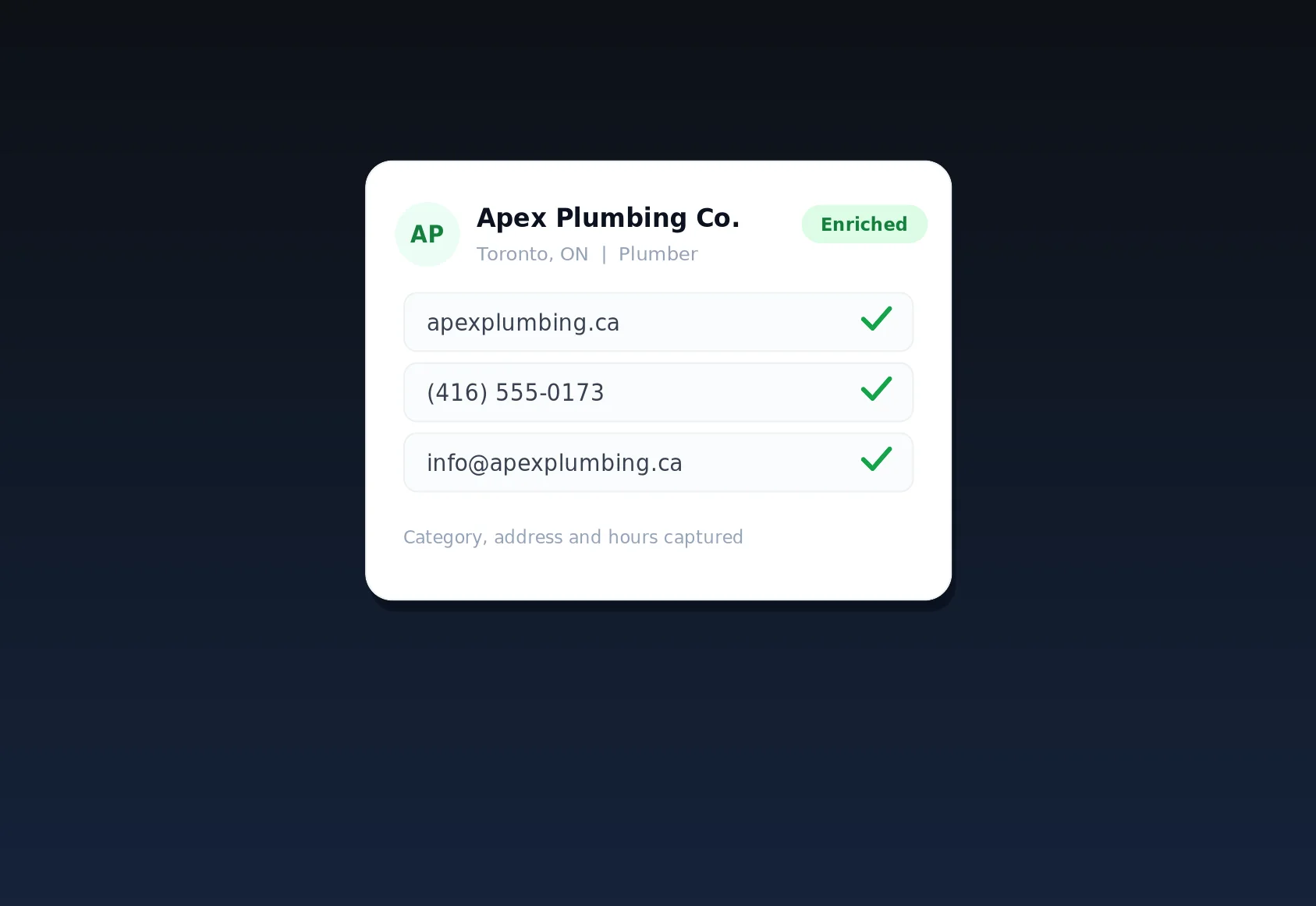
A prospect list is only useful if you can actually reach the decision-maker, and raw directory data always has gaps. LinkSpear’s lead enrichment visits each business’s own website through rotating anonymous proxies and pulls the missing email and phone number automatically — without ever exposing your IP or getting your office network flagged for scraping. For an HVAC contractor, that means the difference between a name you cannot use and a facilities manager’s direct line you can call today.
This matters more than it sounds. The hardest part of landing commercial maintenance contracts is getting past the front desk to whoever actually approves vendors. Enrichment routinely surfaces the general inbox, the “info@” address, and the main line so you can start a real conversation or send a tailored proposal. The rotating-proxy layer is what makes this safe at volume: you can enrich a few hundred prospects in an afternoon without your shop’s IP getting rate-limited or blocked, because each request looks like ordinary organic traffic from a different address.
Why enrichment beats buying a list
Purchased lead lists go stale the moment they are compiled — businesses close, managers change, phone numbers get reassigned. Because LinkSpear enriches live from each company’s current website, the email and phone you get reflect what is published right now, not what was true a year ago when some data broker last scraped it. For a contractor whose whole pitch depends on reaching the right person, fresh beats cheap every time. Enrich a territory once, work it, and re-enrich it next quarter to catch the changes.
Work Every Lead With Call Queuing
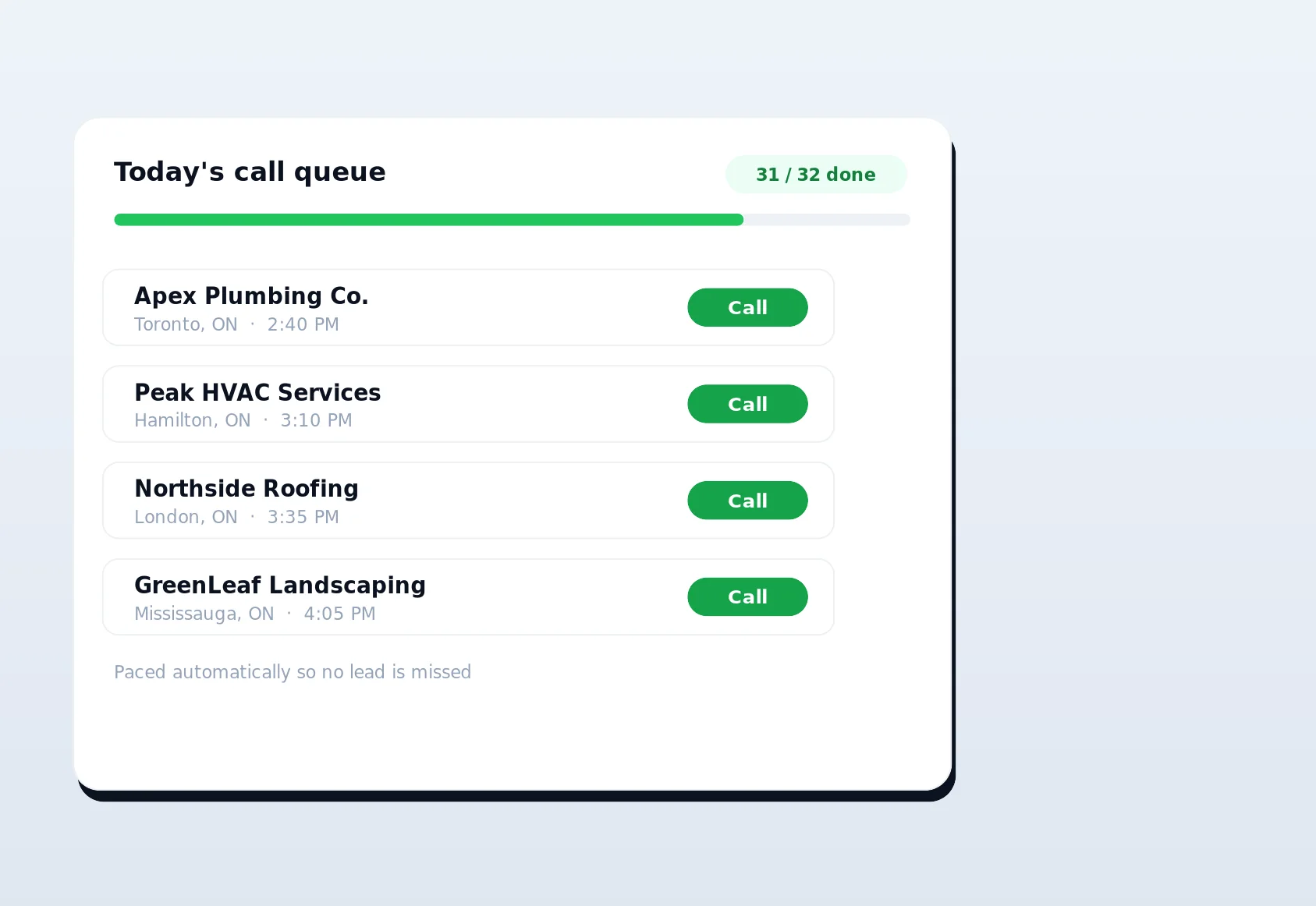
Reps do not lose deals because the leads are bad; they lose deals because the leads sit. LinkSpear’s call queuing hands businesses to your sales reps one at a time, with cooldowns, daily call caps, and cross-tenant fairness so no prospect gets hammered and no rep runs dry. If you have two people doing outbound in the slow shoulder season, the queue keeps them moving through the property-manager list in an orderly way instead of both accidentally calling the same building.
The practical payoff for an HVAC shop is consistency. Set a daily cap — say each rep calls 25 new commercial prospects a day — and the system feeds them steadily, respects the cooldown before anyone gets a second touch, and keeps a clean record of who was contacted and when. That rhythm is exactly what turns a pile of directory rows into booked maintenance-agreement site visits. It also means when you hire a seasonal helper, they are productive on day one instead of asking “who do I call next?”
A concrete outbound math example
Suppose you run one rep making 25 calls a day, four days a week. That is 100 dials weekly. In outbound light-commercial HVAC, a reasonable expectation is that roughly one in five dials reaches a decision-maker, and one in five of those conversations turns into a scheduled maintenance walkthrough. That math yields about four booked walkthroughs a week. If you close half of those into annual agreements averaging $1,800 a year, you are adding roughly two contracts a week — on the order of $180,000 in recurring annual revenue built over a single quarter, entirely from prospects you sourced and enriched yourself. The queue is what makes those 100 weekly dials actually happen instead of trailing off after Tuesday.
Climb Google With Local Citations and Directory Backlinks
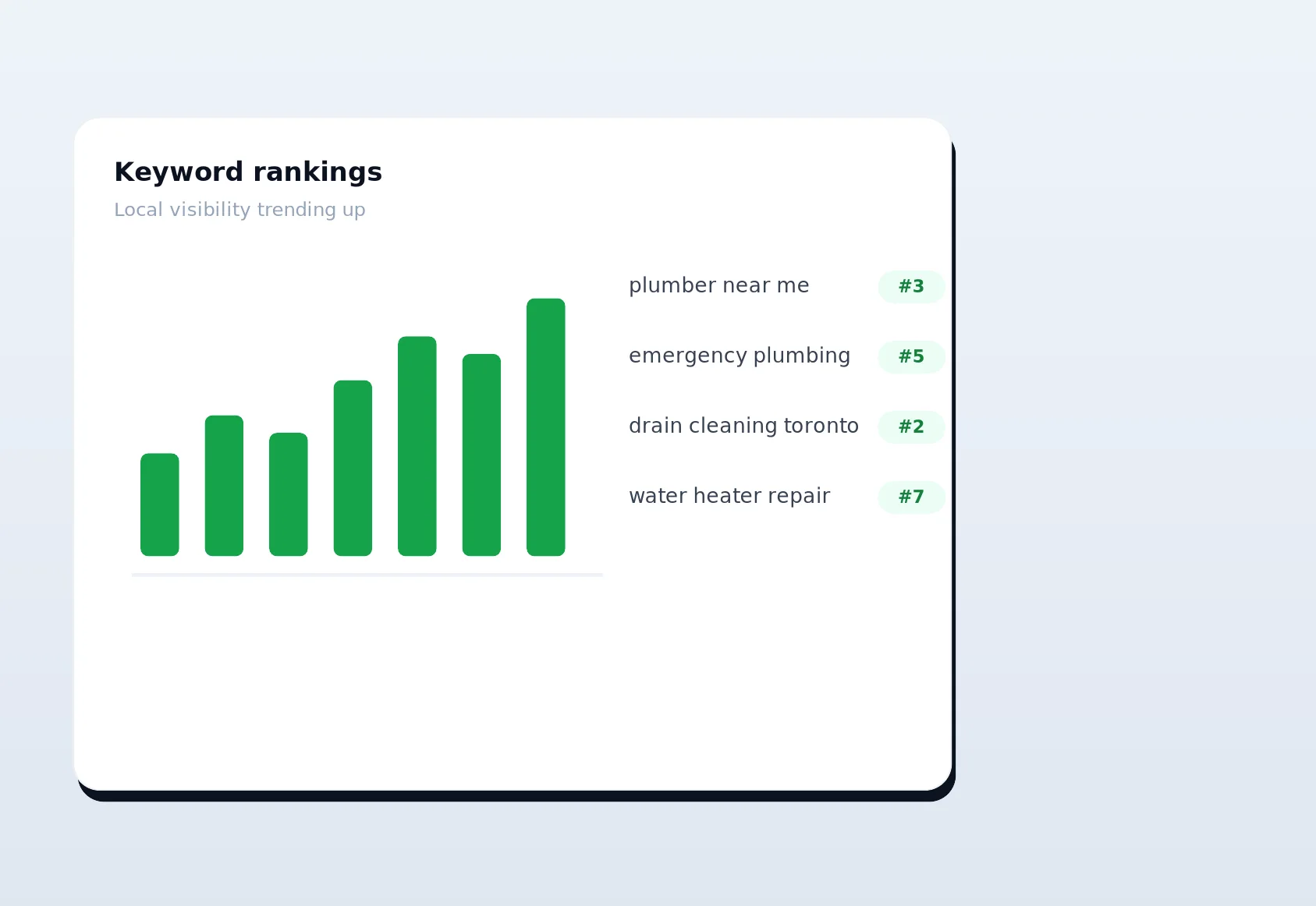
Ranking in the local map pack is largely a citations-and-links game, and it is the single highest-leverage thing an HVAC contractor can fix. Google trusts businesses whose name, address, and phone number appear consistently across reputable directories — Yelp, Angi, HomeAdvisor, BBB, chamber sites, and dozens of niche home-services directories. Building and maintaining those listings by hand is soul-crushing, so most contractors never finish the job. That is precisely why the ones who do finish outrank everyone else.
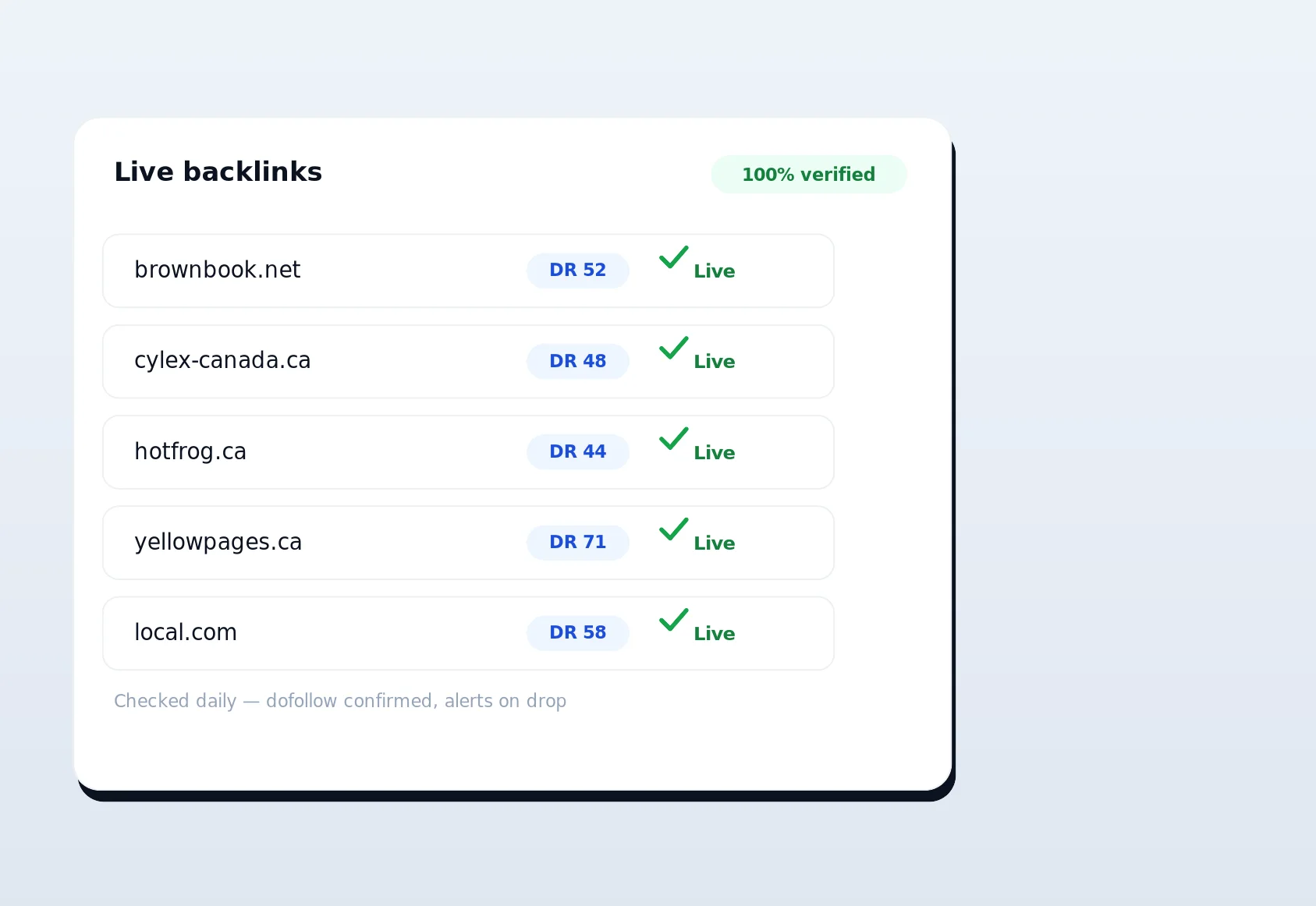
LinkSpear’s directory backlink builder uses a Chrome extension that auto-fills those citation and directory submissions using your real browser and your real IP — so there is no spammy footprint, no thin-content penalty risk, and no purchased-link liability. You review and submit; the extension just removes the tedium of typing the same NAP details into 60 forms. Over a few weeks you assemble a broad, consistent citation profile that directly supports your Google Business Profile rankings.
| Directory type | Example targets for HVAC | Why it moves rankings |
|---|---|---|
| Home-services verticals | Angi, HomeAdvisor, Thumbtack, Porch | High-authority, category-relevant citations Google weighs heavily |
| General business | Yelp, BBB, Yellow Pages, Bing Places | Core NAP consistency signals across the open web |
| Local and civic | Chamber of commerce, city directories, Nextdoor | Geographic relevance that feeds the local map pack |
| Niche and trade | HVAC contractor listings, energy-rebate partner pages | Topical relevance that reinforces your service category |
Beyond citations, LinkSpear rounds out the SEO side with rank tracking so you can watch “AC repair near me” climb, keyword research to find the phrases homeowners actually type, competitor backlink analysis to see who is linking to the shop across town, schema audits, instant indexing, and live-link verification so a citation that quietly disappears gets flagged instead of silently costing you authority.
NAP consistency is the detail that decides it
The single most common reason a technically solid HVAC company gets stuck below competitors in the map pack is inconsistent NAP data — “Suite 4” on one listing, “#4” on another, an old phone number lingering on a directory you forgot about. Google reads those discrepancies as uncertainty about who and where you are, and uncertainty suppresses rankings. Because the LinkSpear extension fills every form from one canonical company profile, your name, address, and phone go out identical every time, and the live-link verification catches the day an old listing drifts out of sync so you can repair it.
Capture Seasonal Demand Before Your Competitors Do
The defining feature of HVAC is that demand arrives in waves, and the contractors who win are the ones whose marketing is already in place when the wave hits. You cannot build citations and rankings in the three days of a July heat wave — SEO takes weeks to mature — so the whole game is preparing in the off-season for the peak you know is coming. LinkSpear’s workflow makes that preparation cheap enough to actually do.
| Season | Demand driver | What to prep 6–8 weeks ahead |
|---|---|---|
| Spring | AC tune-ups, pre-summer replacements | Rank-track “AC repair” and “air conditioner replacement”; refresh cooling citations |
| Summer | Emergency AC failures, new installs | Full citation profile live; call queue working property managers for rooftop units |
| Fall | Furnace tune-ups, indoor air quality | Add heating keywords to rank tracking; outbound to maintenance-agreement prospects |
| Winter | Emergency heating, no-heat calls | Verify all listings and phone numbers are live before the first cold snap |
The practical discipline is simple: whatever season is coming in two months is the keyword set you tune your rank tracking to today, and the citations you make sure are clean today. A contractor who front-loads heating citations in September walks into the first hard freeze already ranking, while the competitor who waits until the phones are ringing to “get serious about marketing” has missed the window entirely. LinkSpear turns that seasonal foresight into a one-hour weekly task rather than a scramble.
A Realistic 90-Day Picture
Honesty matters here, because “page-one in a week” promises are how contractors get burned. Local SEO compounds; it does not explode. Here is a grounded expectation for a single-location HVAC company that actually runs the LinkSpear workflow consistently.
| Timeframe | What you do | Realistic outcome |
|---|---|---|
| Weeks 1–2 | Pull directory prospects, enrich contacts, submit first 30–40 citations | Clean NAP data live; first outbound call sessions booked |
| Weeks 3–6 | Daily call queue, 50–80 total citations, fix schema and indexing | Early ranking lift on long-tail terms; first commercial maintenance meetings |
| Weeks 7–12 | Sustained outreach, competitor gap links, live-link verification | Map-pack movement on core terms; a repeatable weekly lead cadence |
Contractors who treat this as a weekly habit — an hour of citation work, a couple of call sessions — typically see the seasonal dead spots fill with commercial maintenance work first, then organic homeowner calls rise as rankings mature. The businesses that do not see results are the ones that submit ten citations and quit; the tool cannot want it more than you do. The compounding is real but it is back-loaded, so the contractors who push through the quiet first month are the ones who reap the outsized month-four and month-five gains.
How LinkSpear Compares to Renting Leads
The clearest way to see the value is against the thing most HVAC contractors already do — buying shared leads from an aggregator. One builds an asset; the other rents attention that disappears the moment you stop paying.
| Factor | Shared lead brokers | LinkSpear |
|---|---|---|
| Exclusivity | Sold to 3–5 competitors | Your own sourced and enriched prospects |
| Cost model | Per lead, forever, rising | Flat subscription, unlimited work |
| Long-term asset | Nothing accrues to you | Rankings and citations compound |
| Control | You compete on speed-to-dial | You control targeting and cadence |
| Seasonality | Prices spike exactly when you need leads | Owned rankings carry you through the peak |
The math gets stark over a year. A contractor buying 20 shared leads a month at $75 each spends $18,000 annually and owns nothing at the end of it — stop paying and the pipeline goes dark the same day. The same contractor running LinkSpear spends a fraction of that on a flat subscription and finishes the year with a full citation profile, map-pack rankings, and a self-sourced prospect list that keeps producing calls whether or not next month’s invoice gets paid. That is the difference between renting and owning your local market.
Built for Solo Shops and Multi-Location Agencies Alike
A one-truck operation and a 40-tech regional company have very different needs, and LinkSpear scales across both. Solo contractors live in the Starter and Growth tiers, running their own directory pulls and citation submissions in an hour a week. Larger companies and the marketing agencies that serve HVAC clients use the Pro and Agency tiers, where agency sub-accounts let you manage citations, rank tracking, and lead lists for a dozen contractors from one dashboard — each client walled off in their own workspace.
If you serve adjacent trades, the same playbook transfers cleanly. Agencies running LinkSpear for HVAC often replicate it for plumbers, electricians, and roofing contractors — the sourcing, enrichment, and citation mechanics are identical, only the directories and keywords change. That reusability is why a single marketing person can credibly run local SEO for an entire portfolio of home-services clients without drowning, and why an owner-operator can get the same caliber of local presence a big franchise pays an agency thousands a month to maintain.
Getting Started in Under an Hour
You do not need a marketing degree or a week of onboarding. A first productive session looks like this:
- Step 1 — Set your territory: enter your city and service radius so the directory and rank tracking know your patch.
- Step 2 — Pull a prospect list: filter for property managers, realtors, and light-commercial categories, then run lead enrichment to fill in emails and phones.
- Step 3 — Queue your calls: set a daily cap and cooldown, and let call queuing feed your reps their first outbound session.
- Step 4 — Install the backlink extension: submit your first batch of citations to home-services and local directories using your real browser.
- Step 5 — Turn on rank tracking: add “AC repair,” “furnace replacement,” and your city terms so you can watch the needle move.
Do that once and you have a working local-lead engine. Repeat the citation and calling steps weekly and it compounds. The whole point of the design is that the first session is short enough to finish in a single sitting between service calls, and the recurring weekly rhythm is light enough that it survives your busy season instead of getting abandoned the first week the phones go crazy.
Ready to stop renting leads and start owning your local market? Every new account gets a 14-day free trial on the Starter plan — no risk, no long onboarding. Spin up your first HVAC prospect list, enrich the contacts, submit a batch of citations, and see real businesses land in your call queue this week. The heating-and-cooling companies that dominate their metro are not busier than you; they simply built the assets they own instead of renting attention that vanishes. Start your free trial today and build yours.