Your Google Business Profile is the single most valuable piece of real estate in local search. When someone types "plumber near me" or "emergency dentist," Google shows a map with three businesses pinned to the top. That block is the Local Pack, and the businesses inside it capture the overwhelming majority of clicks, calls, and direction requests. Everything below the map fights over the scraps. Google Business Profile optimization is the discipline of getting your business into that three-pack and keeping it there.
Most guides treat this as a checklist you complete once: fill in your hours, add a few photos, pick a category, and hope. That is table stakes, not a strategy. Google's local algorithm ranks profiles on three pillars, relevance, distance, and prominence, and two of those three are things you can actively influence long after your profile is "complete." LinkSpear is built around exactly that reality. It is a local lead-generation and backlink-building platform that treats your Google Business Profile not as a static listing but as the center of a system that includes citations, reviews signals, backlinks, and continuous rank tracking.
This page explains what Google Business Profile optimization really involves, where businesses lose ranking they should be winning, and how LinkSpear's lead database, directory backlink builder, Chrome extension autofill, call queuing, and rank tracking work together to turn your profile into a lead-generating engine. If you have been wondering how to get more local business leads without buying ads forever, this is the mechanism.
What Google Business Profile Optimization Actually Is
Google Business Profile (formerly Google My Business) is the free listing that controls how your business appears in Google Maps and the Local Pack. Optimization means shaping every signal Google reads about that listing so the algorithm decides you are the most relevant, most trustworthy result for the searches that matter to you.
Google has stated for years that local rankings come down to three factors:
- Relevance, how well your profile matches what the searcher is looking for. This is driven by your primary and secondary categories, your business description, your services, your products, and the keywords that appear consistently across the web about you.
- Distance, how far you are from the searcher or the location term they used. You cannot move your building, but you can expand the radius where you appear by strengthening the other two factors so Google trusts you enough to show you further out.
- Prominence, how well-known and established Google believes your business is. This is the big one, and it is where most local businesses leave rankings on the table. Prominence is built from citations, backlinks, reviews, and the volume and consistency of information Google finds about you across the entire web.
Here is the part almost nobody internalizes: your on-profile fields max out fast. Once your categories, description, hours, photos, and services are dialed in, you have exhausted the relevance levers you control directly. From there, every additional ranking gain comes from off-profile signals, the citations, directory listings, and local backlinks that tell Google your business is real, established, and prominent. That is precisely the layer LinkSpear automates, and it is the layer that separates a profile that ranks fourth from one that ranks first.
The Prominence Problem: Why Most Profiles Plateau
Imagine two identical roofing companies in the same city. Both have complete profiles, good photos, and the same category. One ranks first in the map pack; the other ranks eighth and wonders why. The difference is almost always prominence, specifically, the volume and consistency of citations and local backlinks pointing at the winner.
A citation is any online mention of your business's name, address, and phone number (NAP). Directory listings, chamber of commerce pages, industry association sites, and local business hubs all create citations. Google cross-references these mentions to verify your business exists, confirm your details are consistent, and gauge how established you are. A business with 80 accurate, consistent citations reads as far more legitimate than one with 12. This is the mechanical reason local SEO for small business so often comes down to who did the unglamorous citation work and who did not.
The problem is that building citations manually is soul-crushing. Each directory has its own signup form, its own field layout, and its own submission quirks. Doing 50 of them by hand can eat a full week, and the moment your address or phone number changes, inconsistencies creep in and actively hurt you. This is exactly why most businesses do a handful, burn out, and plateau. LinkSpear was built to break that plateau.
How LinkSpear Optimizes Your Google Business Profile
LinkSpear approaches Google Business Profile optimization as a full workflow, not a one-time audit. It combines four capabilities that map directly onto Google's ranking factors: a local business directory with an automated backlink builder, a lead database that doubles as your citation and outreach engine, rank tracking to measure everything, and supporting SEO tooling like schema markup and anchor-text optimization. Here is how each piece contributes.
1. The Local Business Directory and Backlink Builder
LinkSpear continuously discovers free directory and citation sites relevant to your business and location. Instead of you hunting for where to list, the platform surfaces a queue of high-value local business directory listings you can submit to. Then it does the part that actually saves you the week of work: a Chrome extension autofills each submission form from your company profile, using your own real browser and IP address.
That last detail matters more than it sounds. Because the extension submits through your genuine browser session and IP, the listings look exactly like a real business owner filling out a form, because that is what is happening. There is no offshore submission farm, no shared server footprint, and no pattern that directories flag as spam. You review each profile, the extension fills the fields (business name, address, phone, website, email, category, description), and you submit. What used to be a fifteen-minute-per-site grind becomes a few clicks.
The result is a steadily growing base of consistent NAP citations and local backlinks, the exact prominence signals that push your Google Business Profile up the map pack. And because everything is populated from one canonical company profile, your NAP stays consistent across every listing, which is itself a ranking factor and a common failure point.
2. The Company Lead Database as an Optimization Asset
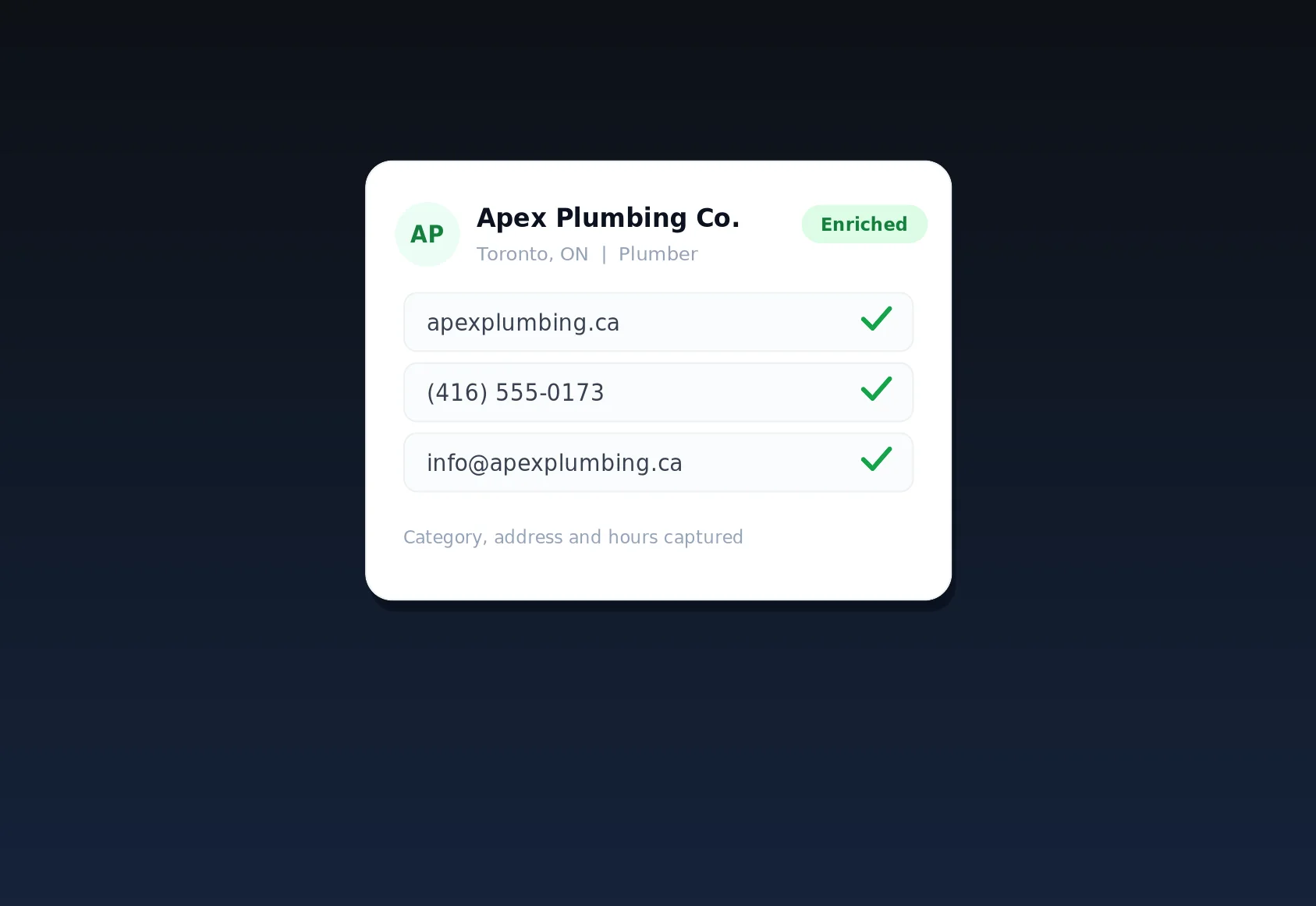
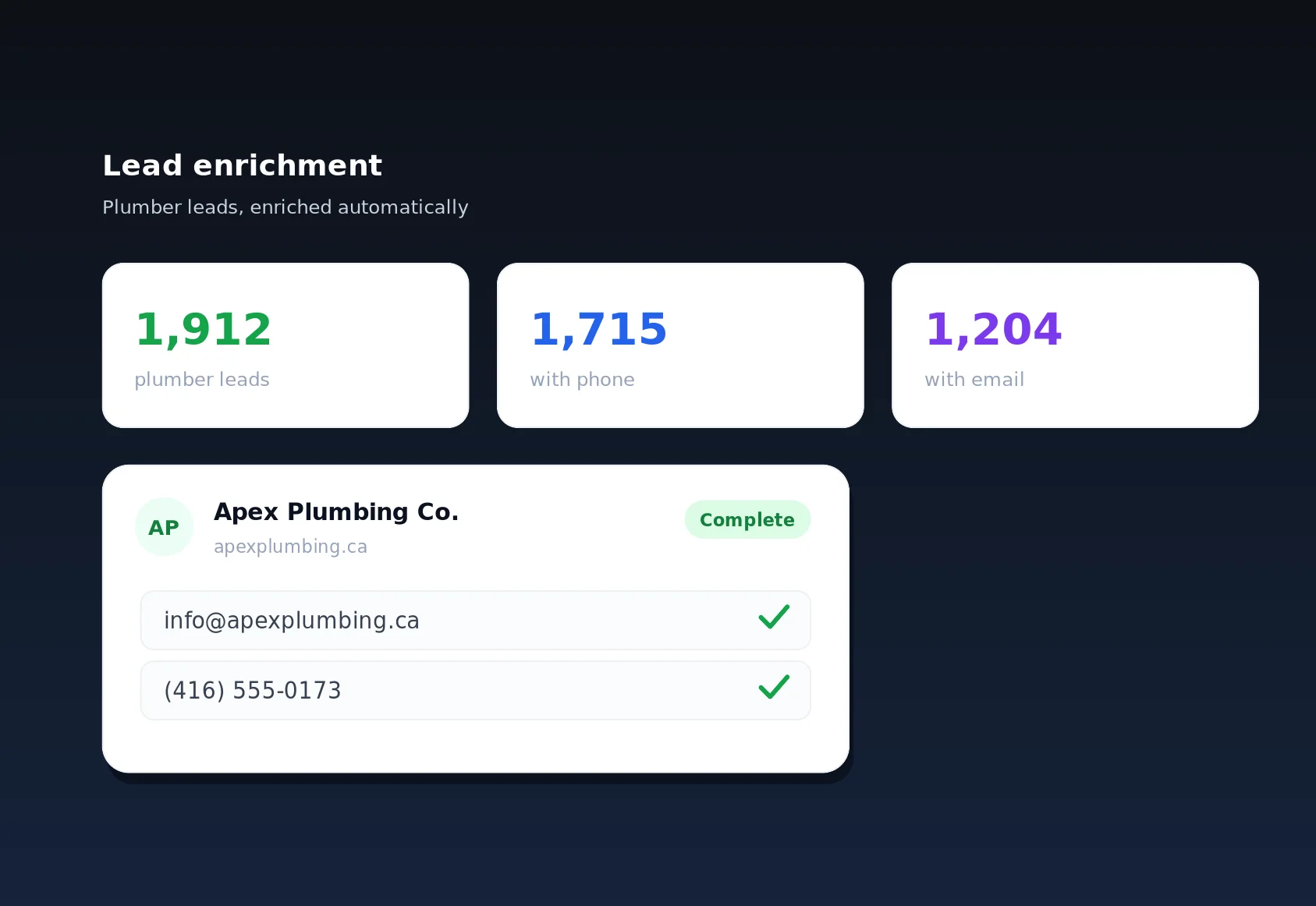
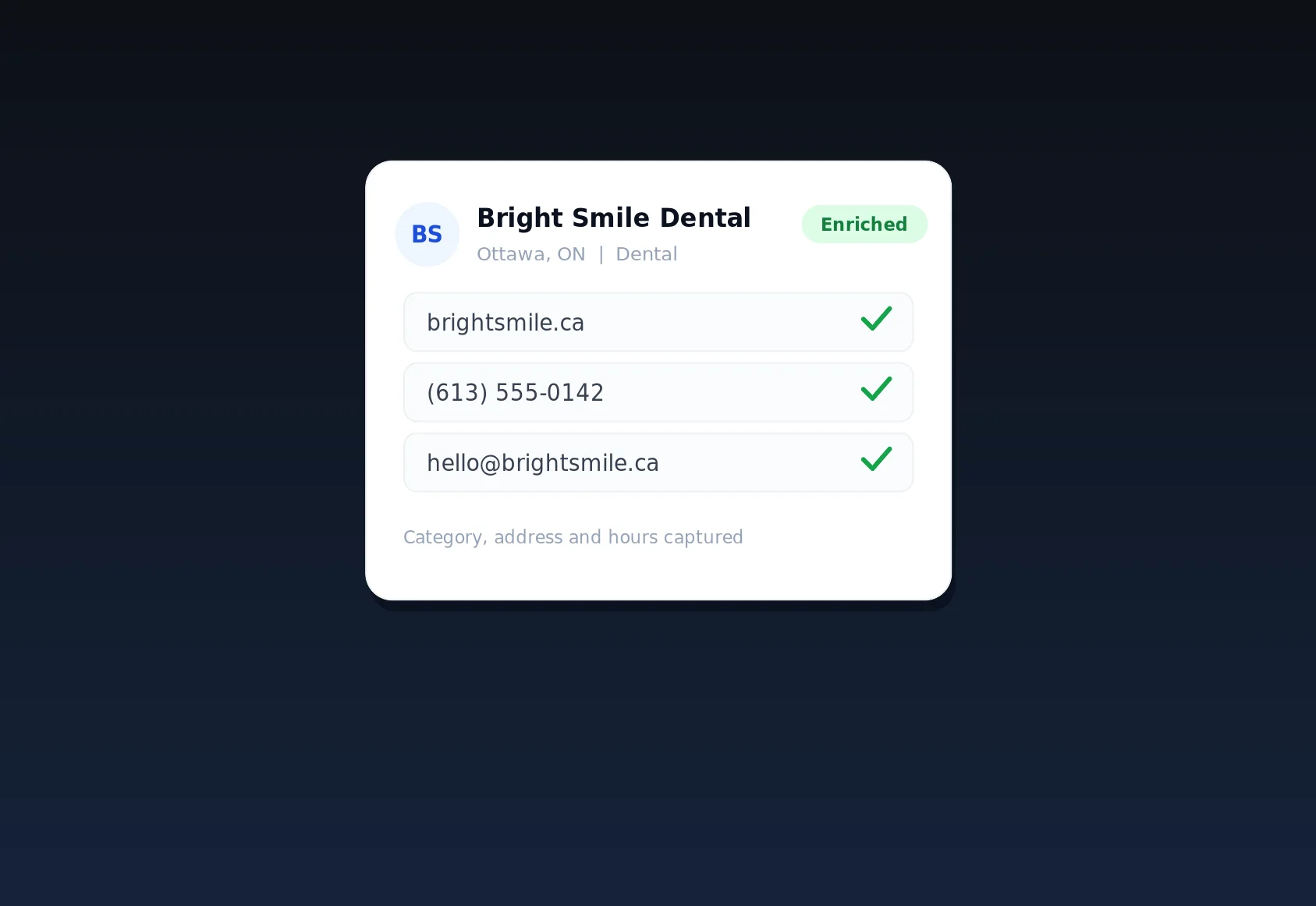
LinkSpear's Company Lead Database harvests local business leads from OpenStreetMap and directories, producing full contact cards: business name, website, address, email, phone, and category. Missing fields get enriched automatically through an email finder and phone enrichment, all routed through rotating proxies so the data collection is reliable and clean.
For Google Business Profile optimization specifically, this database serves two purposes. First, if you are an agency or a business managing multiple locations, the enriched, verified contact data becomes the source of truth you push into directory listings, keeping NAP airtight. Second, and this is where LinkSpear separates itself from every pure "listing tool," the lead database is a pipeline generator. The same local businesses you can see in your area become outreach targets, partners for local backlinks, and, for agencies, clients who need exactly this optimization work done.
3. Call Queuing: Turning Rankings Into Revenue
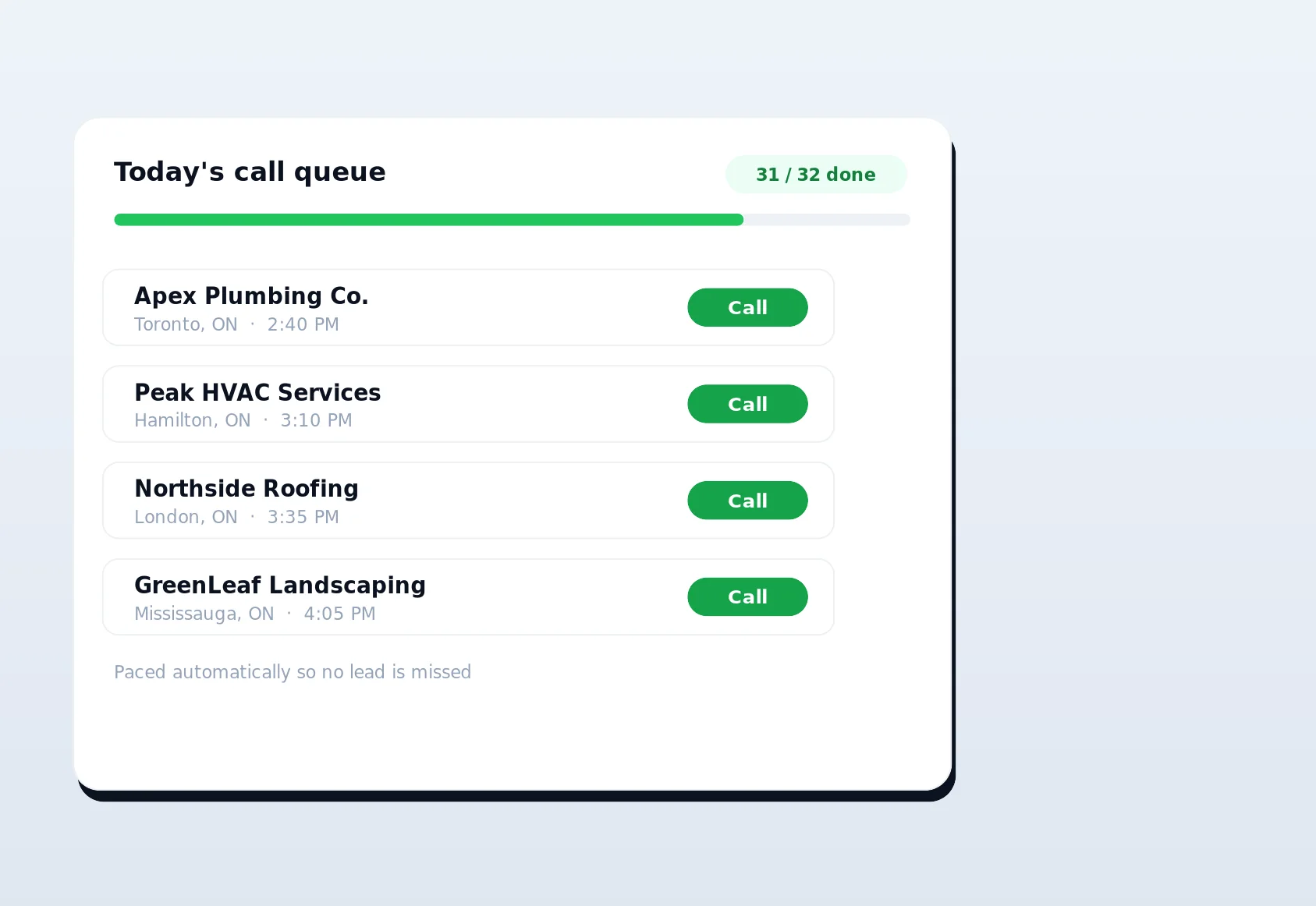
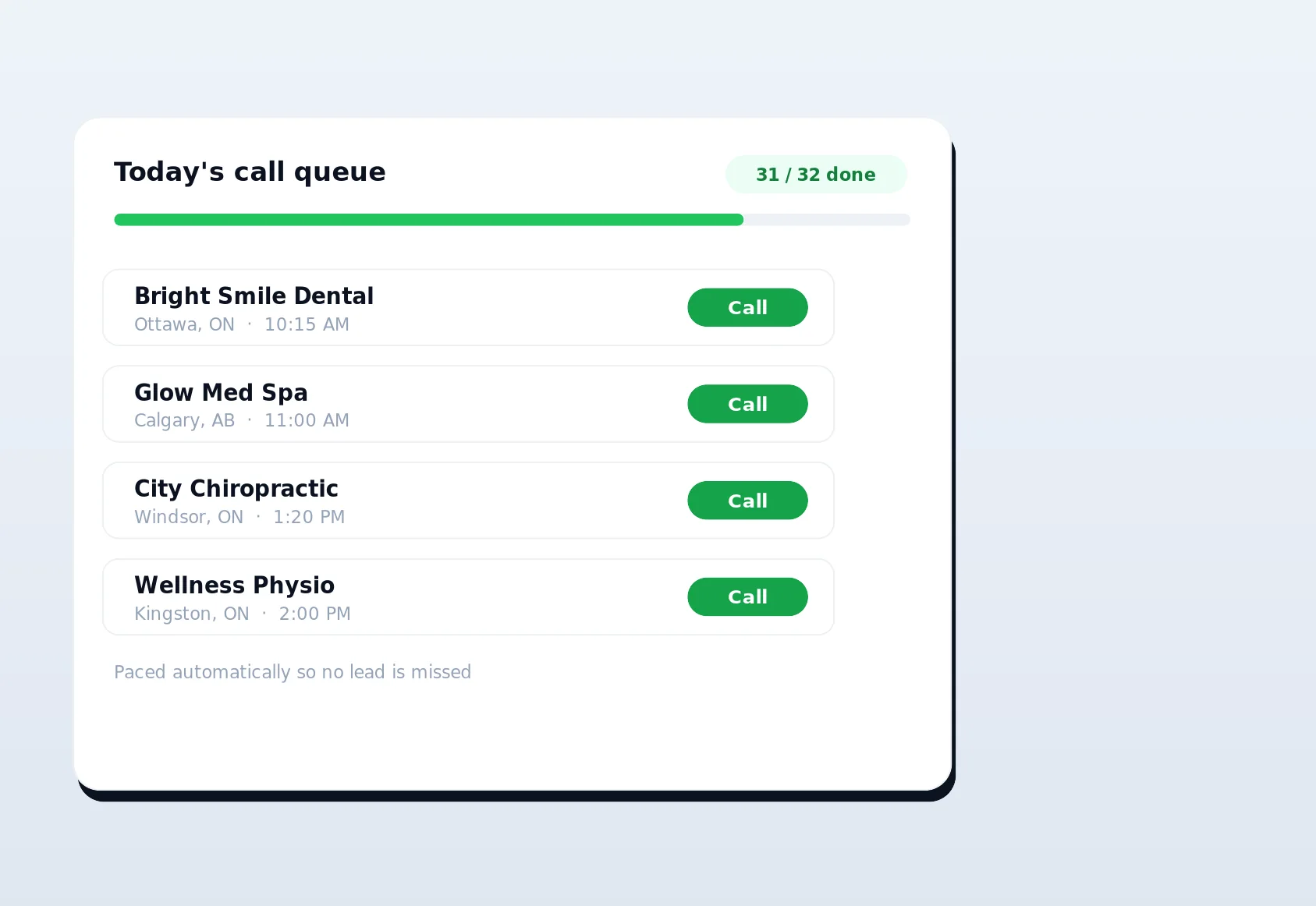
Ranking in the map pack is a means, not an end. The point is calls, leads, and customers. LinkSpear closes that loop with Call Queuing, which turns leads from the database into a daily outbound call queue for your sales team. A local business using LinkSpear to climb the map pack can simultaneously run an outbound motion against nearby prospects, so you are not waiting passively for inbound while your profile matures. Agencies use this to fill their own pipeline with local businesses who need the very optimization services LinkSpear helps deliver. This is a direct, concrete answer to how to get more local business leads: rank to capture inbound, and queue calls to drive outbound, from one system.
4. Rank Tracking and Proof of Value
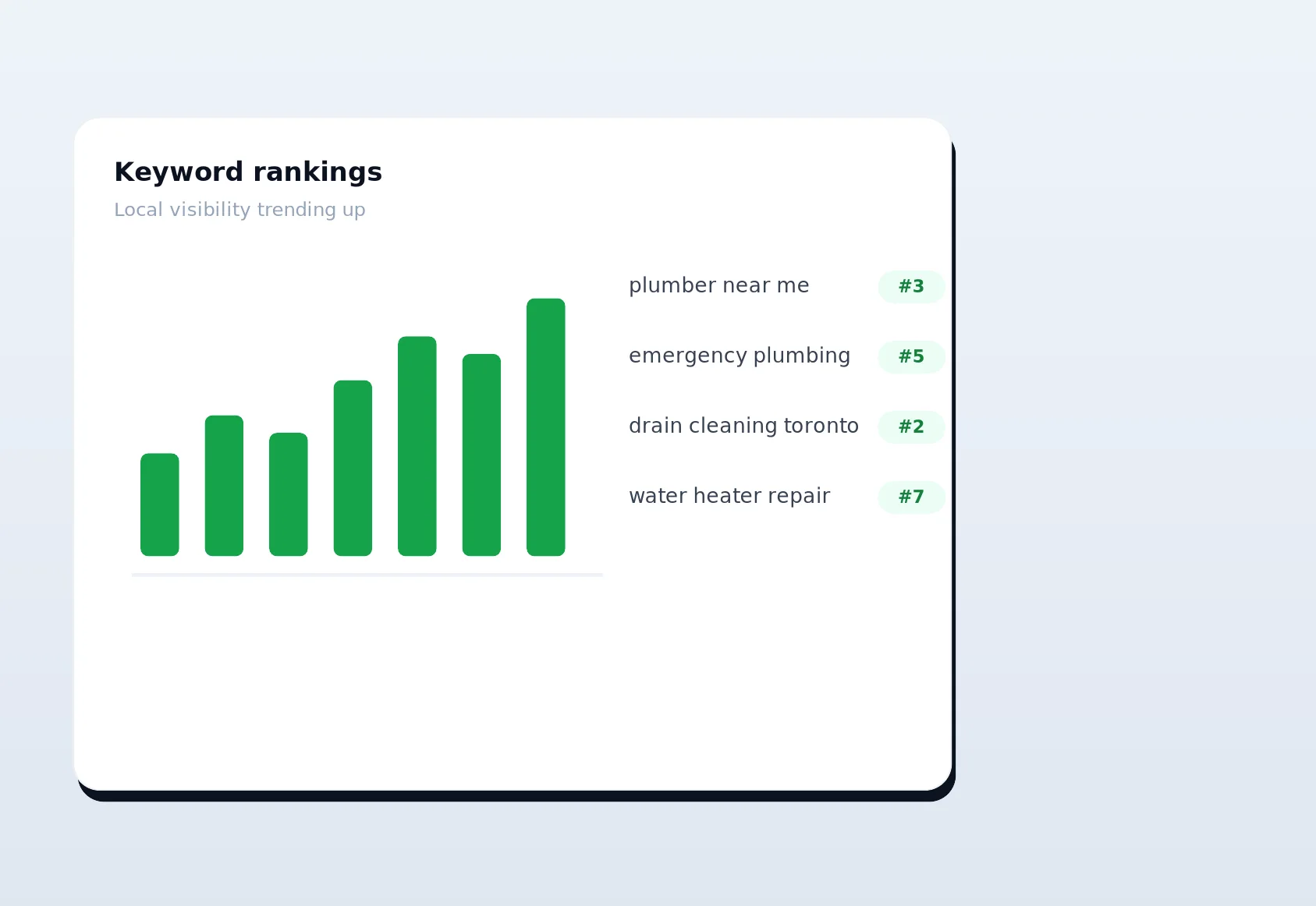
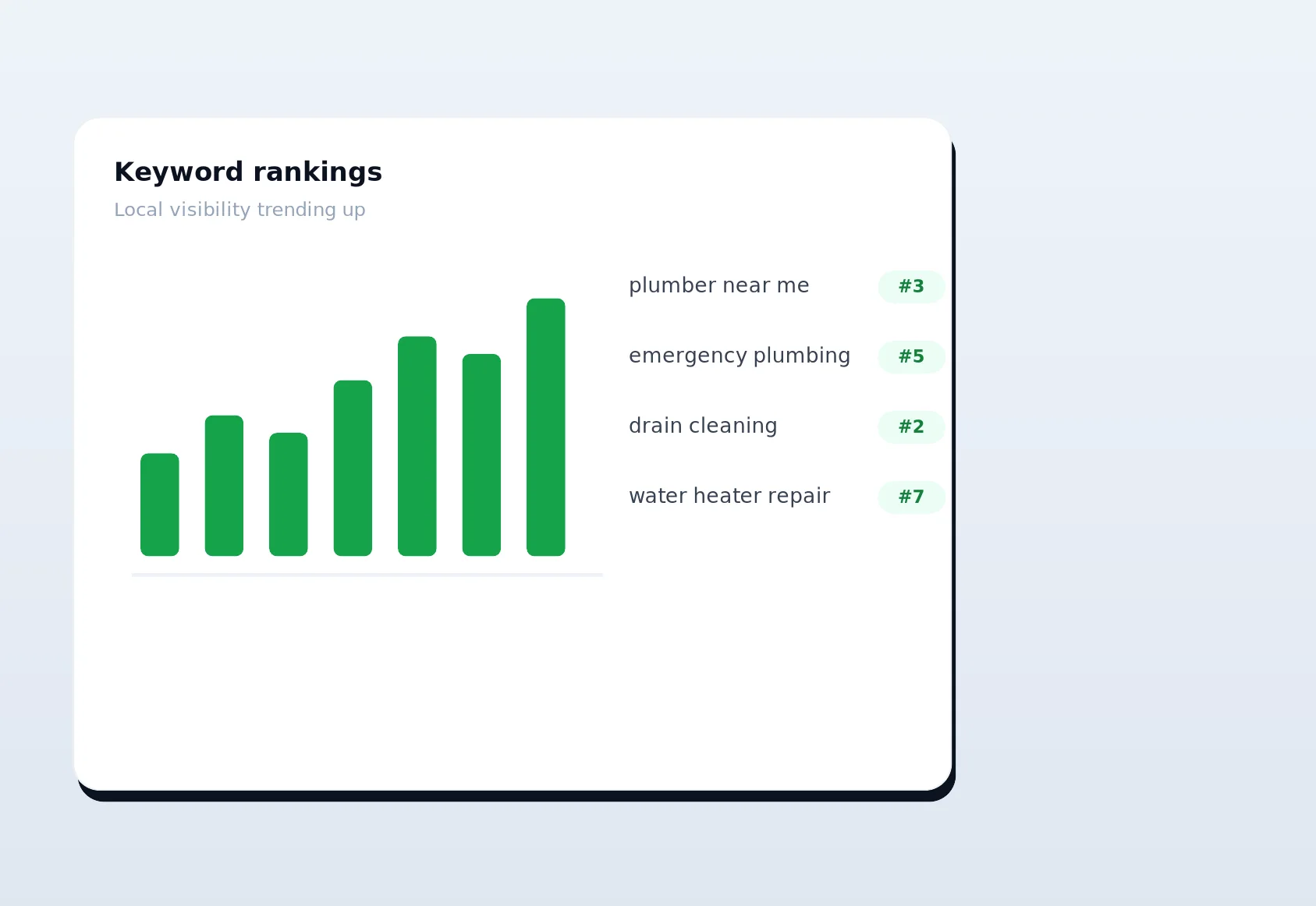
You cannot optimize what you do not measure. LinkSpear includes rank tracking so you can watch your Google Business Profile and your keywords climb over time. It also generates proof-of-value reports, which are essential if you are an agency justifying retainer fees, or a business owner who wants to see that the citation and backlink work is actually paying off in position gains.
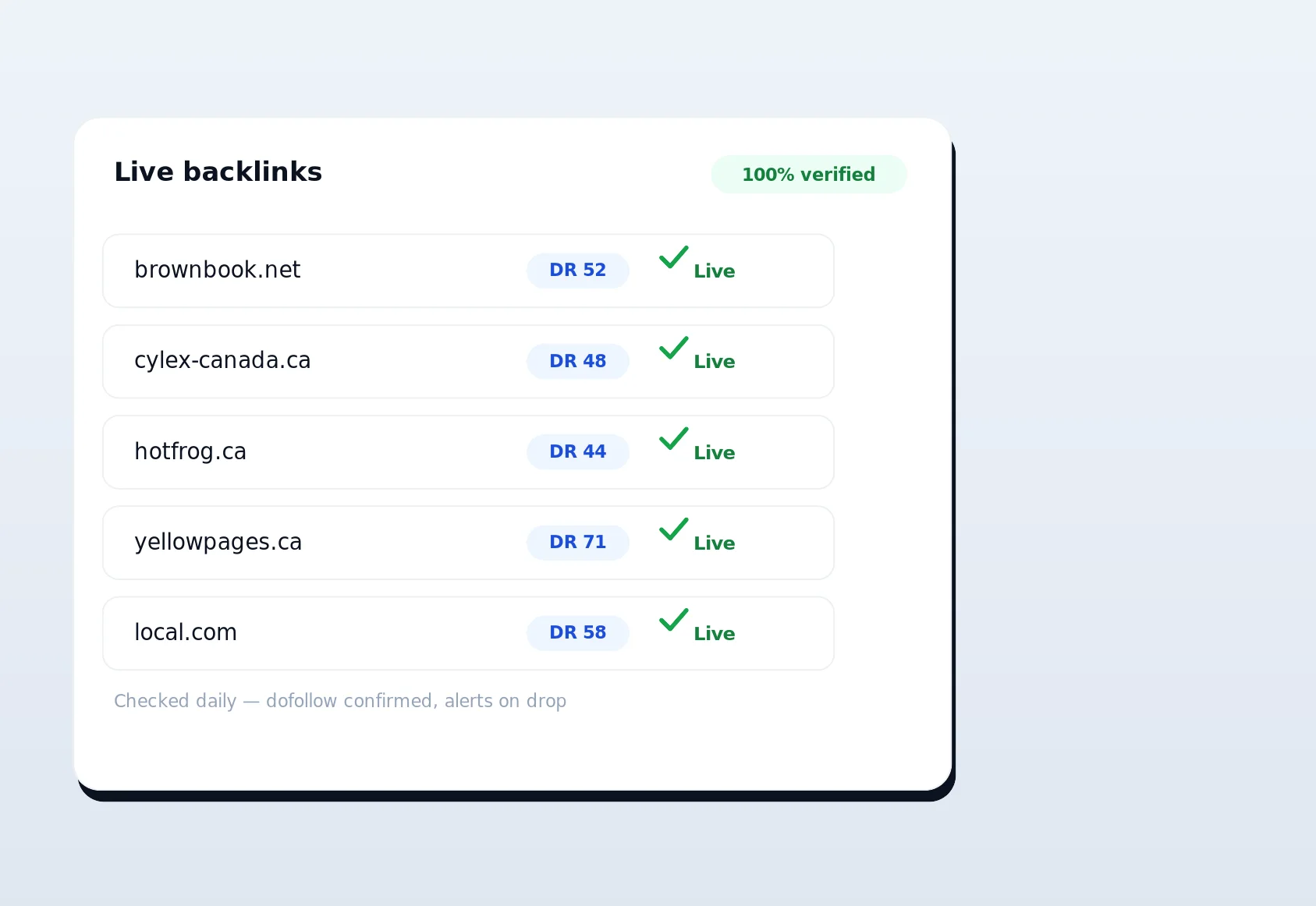
Rounding out the toolkit are keyword research (to choose the categories, services, and description language that map to real search demand), anchor-text optimization (so the backlinks you build carry the right relevance signals without over-optimizing), live link verification (so you know your citations and backlinks stay live rather than silently dropping), schema markup (to feed structured local business data to search engines), and local citation building. Together these form a genuine google business profile optimization tool, not a single-trick listing widget.
A Concrete 30-Day Optimization Workflow
Abstract capabilities are less useful than a plan. Here is a realistic month-one workflow a local business or agency can run inside LinkSpear.
- Days 1-2, Build the canonical profile. Enter your business once: exact name, address, phone, website, email, primary and secondary categories, and a keyword-informed description. Use LinkSpear's keyword research to confirm your category and service language matches what people actually search. This profile becomes the single source of truth the extension autofills everywhere.
- Days 3-5, Establish a citation baseline. Open the local business directory queue, review the highest-authority and most locally relevant sites first, and use the Chrome extension to autofill and submit. Aim for 15 to 25 consistent listings in the first push. Because NAP is pulled from one profile, every citation matches.
- Days 6-10, Verify and expand. Use live link verification to confirm submitted listings went live. Continue working the directory queue toward 40 or more citations. Enable schema markup on your own website so your structured local data reinforces the citations.
- Days 11-20, Build local backlinks and anchor text. Use the lead database to identify local partners, suppliers, and complementary businesses for genuine backlink opportunities, and apply anchor-text optimization so those links carry balanced, natural relevance signals rather than one over-stuffed phrase.
- Days 11-30, Run the outbound motion. Load qualified local leads into the Call Queue so your sales team works a daily list while the citation and backlink work matures the profile. Inbound and outbound run in parallel.
- Day 30, Measure. Pull a rank-tracking report and a proof-of-value report. Compare map-pack positions and keyword rankings against your day-one baseline, then double down on the categories and terms showing movement.
Run this loop for 60 to 90 days and the compounding effect of consistent citations, verified live backlinks, and clean structured data is what separates the businesses that break into the three-pack from the ones stuck below the fold.
Comparing the Manual Approach to the LinkSpear Approach
The value of automating the unglamorous parts becomes obvious when you see the two approaches side by side.
| Optimization Task | Doing It Manually | With LinkSpear |
|---|---|---|
| Finding relevant directories | Hours of Googling, guessing at authority, and duplicating effort across locations | A continuously discovered queue of relevant local directory and citation sites |
| Submitting listings | 15+ minutes per site, retyping the same NAP into every form | Chrome extension autofills from one profile via your real browser and IP |
| Keeping NAP consistent | Error-prone across dozens of listings; inconsistencies silently hurt rankings | One canonical profile feeds every listing, so NAP stays identical everywhere |
| Confirming links stay live | Manual re-checking, if it happens at all | Live link verification flags dropped citations and backlinks |
| Generating local leads | Buy ads or lists; data goes stale fast | Enriched lead database from OpenStreetMap plus directories, with email and phone enrichment |
| Turning rankings into calls | Wait passively for the phone to ring | Call Queuing turns leads into a daily outbound list |
| Proving it worked | Screenshots and guesswork | Rank tracking plus proof-of-value reports |
Common Objections, Answered Honestly
"Isn't automated directory submission spam that could hurt me?"
This is the right question to ask, and the answer is in the mechanics. LinkSpear does not blast your listing from a shared server or an offshore farm. The Chrome extension fills forms in your own browser, submitting from your real IP, so each listing is a genuine submission that you review before it goes out. You control which directories you list on and can prioritize authoritative, locally relevant ones. Consistent NAP citations on legitimate directories are exactly what Google's prominence factor rewards; the risk comes from inconsistency and low-quality spam farms, both of which this workflow is designed to avoid.
"I already filled out my profile. What more is there to do?"
Completing your profile exhausts the on-profile relevance levers, which is maybe a third of the ranking equation. Prominence, built from off-profile citations and local backlinks, is where ongoing gains come from, and it is never truly "done." Competitors keep building citations; if you stop, you fall behind. LinkSpear makes the ongoing prominence work fast enough that you actually sustain it.
"I'm a single-location small business, not an agency. Is this overkill?"
Not at all. The single-location business is exactly who benefits most, because you are competing directly against neighbors for the same three map-pack slots, and citation depth is often the deciding factor. The workflow above scales down cleanly to one location, and the 14-day free trial lets you build your baseline citations before paying anything. This is local SEO for small business without needing an in-house SEO team.
"How is this different from a listings-management tool?"
Pure listings tools stop at submitting citations. LinkSpear treats citations as one input in a system that also generates the leads to grow your business, queues the calls to close them, builds local backlinks with proper anchor text, verifies links stay live, and tracks the rankings that prove it worked. It optimizes your profile and fills your pipeline, rather than doing only the former.
Who Gets the Most From LinkSpear
Three groups see outsized returns from this approach to Google Business Profile optimization:
- Local businesses that live or die by the map pack, home services, dental and medical practices, law firms, restaurants, salons, auto shops, and any business where "near me" searches drive revenue. For them, breaking into the three-pack is often the difference between a full calendar and a slow week.
- SEO agencies managing local clients, who need to deliver citation building, backlink work, and rank reporting at scale without drowning in manual form-filling, and who need proof-of-value reports to defend retainers. The lead database also feeds their own new-business pipeline.
- Multi-location brands and franchises, where NAP consistency across dozens of locations is the make-or-break challenge, and where one canonical profile feeding every listing prevents the inconsistencies that quietly suppress rankings.
Getting Started
Google Business Profile optimization is not a one-time task you check off; it is a prominence-building loop you run continuously, and the businesses that win the map pack are simply the ones who ran that loop consistently while their competitors did the profile once and stopped. LinkSpear exists to make that loop fast enough to actually sustain, by automating citation submission through your real browser, keeping NAP consistent from a single profile, verifying your links stay live, building local backlinks with sane anchor text, generating and enriching local leads, queuing outbound calls, and tracking every ranking move with proof-of-value reporting.
You can start on the Starter plan with a 14-day free trial and no credit card required. That is enough time to enter your canonical profile, build your first 20 to 40 consistent citations, enable schema on your site, and watch your baseline rankings in the tracker, before you have paid a cent. If you have been searching for a serious google business profile optimization tool that also answers how to get more local business leads, start the free trial, run the 30-day workflow above, and let the rankings and the pipeline speak for themselves.