Every local dataset you touch arrives with a different opinion about what a business actually is. One source calls it a "Plumber," another "Plumbing Contractor," a third "plumbing & heating services," and a fourth just tags it "Home Services." Multiply that across tens of thousands of records and your carefully built lead list becomes almost impossible to filter, segment or trust. Business category normalization is how LinkSpear fixes this at the source: it maps every noisy, inconsistent industry label into a single, deduplicated taxonomy so the same trade always means the same thing, no matter where the record came from.
This page explains what category normalization is inside LinkSpear, how the pipeline works step by step, the concrete outcomes it drives for agencies and local businesses, and how it quietly underpins nearly every other feature you rely on — from call queuing to directory backlink building.
What business category normalization actually means
At its simplest, normalizing business categories is the process of collapsing many raw, human-entered or scraped labels into one authoritative category value. Instead of storing whatever text a data source happened to use, LinkSpear resolves each record to a canonical entry in a controlled vocabulary — a fixed taxonomy that you and your team agree on.
The problem it solves is deceptively large. Local business data comes from OpenStreetMap tags, YellowPages listings, directory scrapes, manual imports and reps typing notes in the field. None of these sources speak the same language. Without normalization you end up with:
- Fragmented segments — a search for "electricians" misses half your electricians because they're filed under "electrical contractor," "electrical services" or "sparky."
- Broken reporting — you can't tell a client how many roofers you're targeting when roofers live under six different labels.
- Wasted calls and spend — reps dial the wrong verticals, and enrichment fires against businesses that don't match the campaign.
- Duplicate-looking records — the same company appears "different" because its category text differs across sources.
Category normalization removes that ambiguity. It's the difference between a pile of raw strings and a structured, queryable classification you can build an entire local marketing operation on top of.
Why messy categories quietly cost you money
Inconsistent categories rarely announce themselves. There's no error message — just a slow leak of accuracy across everything downstream. An agency running campaigns for dozens of local clients feels it as friction: lists that need manual cleanup before every push, reports that don't reconcile, and reps who lose trust in the queue because the businesses they're handed don't fit the pitch.
Consider a single agency managing HVAC, plumbing and electrical clients across three provinces. If "HVAC" is stored eleven different ways, then a targeted campaign for the HVAC client silently under-delivers, the plumbing leads bleed into the HVAC segment, and the monthly performance report undercounts reach. None of this is visible until a client asks a pointed question you can't cleanly answer. Normalized categories turn that guesswork into a number you can defend.
The cost also compounds over time. Every new data source you plug in adds its own dialect of category names, so the mess grows faster than your team can hand-clean it. What starts as a manageable spreadsheet task becomes a permanent bottleneck that sits between "we imported leads" and "we can actually use them." Teams that don't normalize eventually stop trusting their own filters and fall back on gut feel — which is exactly the kind of imprecision a data platform is supposed to eliminate. The whole point of centralizing your local business data is to ask sharp questions and get sharp answers, and inconsistent categories quietly break that promise.
How LinkSpear's normalization pipeline works
LinkSpear runs category normalization automatically at import time, so cleanliness is the default rather than a chore you remember to do later. The DirectoryCategorizer is the single source of truth for these rules — every record that enters the catalogue passes through the same logic, which means the taxonomy stays consistent whether a business arrived via scrape, bulk upload or an API sync.
Step 1: Ingest the raw label
When a business enters the Local Business Directory, LinkSpear captures its original category text exactly as received — nothing is discarded. Keeping the raw value means you always have an audit trail and can re-run normalization later if the taxonomy evolves. Whether the record came from an OpenStreetMap tag, a YellowPages listing, a directory scrape or a manual CSV upload, the raw label rides along with it untouched, so you never lose the provenance of a classification decision.
Step 2: Clean and tokenize
The raw label is lowercased, trimmed, stripped of punctuation and split into meaningful tokens. "Plumbing & Heating Services, LLC" becomes a normalized token set that the matcher can reason about, so cosmetic differences — ampersands, casing, trailing suffixes — never create false distinctions.
Step 3: Map to the canonical taxonomy
Cleaned tokens are matched against LinkSpear's controlled vocabulary using a layered strategy: exact synonym matches first, then curated alias rules (for example, "sparky" and "electrical contractor" both resolve to Electrician), then fuzzy scoring for near-misses. Each rule lives in the DirectoryCategorizer, so improving one alias improves classification for every record at once.
Step 4: Assign confidence and fall back safely
Every match carries a confidence signal. High-confidence matches are applied automatically. Low-confidence or genuinely unknown labels are routed to a safe holding category rather than being force-fit into the wrong bucket — because a misclassified plumber is worse than an honestly "uncategorized" one. Nothing is deleted or deactivated in this process; records are only ever relabelled or flagged for review.
Step 5: Deduplicate and enrich
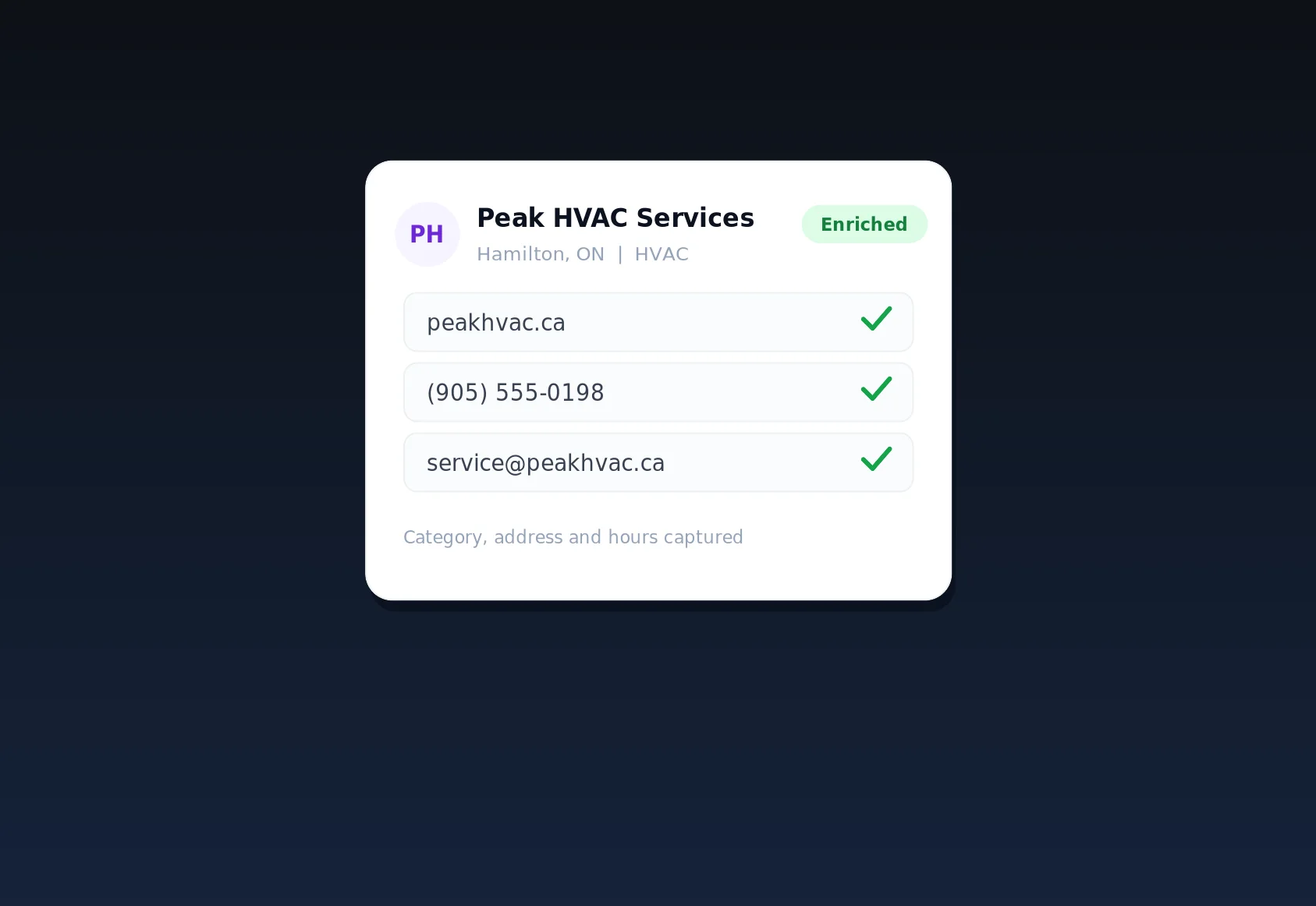
With a canonical category attached, records that describe the same business finally look the same to the deduplication engine, tightening the master catalogue. From there the clean category flows into lead enrichment, which visits each business's own website through rotating anonymous proxies to fill in the missing email and phone — targeted precisely because the category is now trustworthy.
Step 6: Re-normalize on demand
Because the raw label is preserved and the rules are centralized, you can re-run normalization across the whole catalogue whenever the taxonomy is refined. Add a new alias today, and historical records benefit tomorrow — no re-import required. This matters because real taxonomies are living things: new trades emerge, regional terminology differs, and edge cases surface only after you've seen enough data. A normalization system that can only classify at import time freezes those early mistakes in place. LinkSpear's re-runnable approach means your data quality improves continuously instead of degrading, and a single well-chosen alias rule can correct thousands of records in one pass.
Crucially, all six steps run through the same DirectoryCategorizer logic. There is no separate "cleanup mode" that behaves differently from live import — the rules that classify a freshly scraped record are the exact rules that re-classify your historical catalogue. That single source of truth is what keeps a large, multi-source dataset internally consistent even as it grows into the hundreds of thousands of records.
The taxonomy: structured, human-readable, and yours to filter
A good taxonomy is broad enough to cover the long tail of local trades yet tight enough that no two entries overlap. LinkSpear organizes categories into clear top-level groups with specific leaf categories underneath, so you can filter at whatever altitude a campaign needs — all "Home Services," or specifically "Roofer." That two-level structure is deliberate: agencies often want to prospect broadly first ("show me every home-services business in this metro") and then drill into a single trade for a client-specific push. A flat list of hundreds of categories makes both jobs harder; a grouped hierarchy makes each one a single click.
Here's a simplified view of how raw source labels collapse into canonical categories:
| Raw source labels (as received) | Canonical category | Top-level group |
|---|---|---|
| plumber, plumbing contractor, plumbing & heating, drainage services | Plumber | Home Services |
| electrician, electrical contractor, electrical services, sparky | Electrician | Home Services |
| hvac, heating & cooling, air conditioning repair, furnace services | HVAC Contractor | Home Services |
| dentist, dental clinic, dental surgery, cosmetic dentistry | Dentist | Healthcare |
| restaurant, eatery, bistro, diner, family restaurant | Restaurant | Food & Drink |
| law firm, attorney, solicitor, legal services, lawyer | Law Firm | Professional Services |
Once the data lines up this cleanly, everything you do with it — filtering, reporting, routing calls, launching campaigns — gets faster and more defensible.
Concrete benefits and outcomes
Normalization isn't a cosmetic nicety; it's the substrate that makes precise local marketing possible. The payoffs show up across the whole workflow:
- Filter with confidence — select "all plumbers in Ontario" and actually get all of them, because every plumbing variant already resolves to one category.
- Cleaner call queues — reps receive businesses that genuinely match the campaign vertical, so pitches land and connect rates climb.
- Trustworthy reporting — client-facing counts ("we're targeting 1,240 verified roofers") reconcile because there's one true category per record.
- Higher enrichment ROI — enrichment and verification spend goes toward the right businesses instead of mislabeled noise.
- Sharper backlink targeting — directory submissions match the correct niche directories for the trade.
- Faster onboarding — new imports are usable immediately, with no manual category cleanup ritual before each campaign.
How normalization compares to the manual alternative
Most teams handle category chaos one of three ways: they ignore it, they clean it by hand in spreadsheets, or they normalize it automatically. The differences compound quickly at scale.
| Dimension | Ignore it (raw labels) | Manual spreadsheet cleanup | LinkSpear normalization |
|---|---|---|---|
| Consistency across sources | None — every source differs | Only as good as the last edit | One canonical value everywhere |
| Effort per import | Zero upfront, huge downstream | Hours of tedious re-tagging | Automatic at import time |
| Scales to 100k+ records | No | Not realistically | Yes |
| Re-run when rules improve | N/A | Redo everything by hand | One click, whole catalogue |
| Audit trail of original label | Kept but unusable | Usually overwritten | Raw value preserved |
| Feeds calls, enrichment, backlinks | Poorly | Inconsistently | Directly and reliably |
Manual cleanup feels productive for a few hundred rows. Past that, it becomes a permanent tax on your team's time and a recurring source of errors. Automated normalization pays for itself the first time you skip a spreadsheet cleanup session before a launch.
There's also a subtler advantage: consistency between people. When two team members clean categories by hand, they inevitably make different judgment calls — one files "dental surgery" under Dentist, another under Healthcare-Other. Over months, those small disagreements accumulate into a taxonomy no one fully trusts. A centralized rule set removes the human variance entirely. The classification of "dental surgery" is decided once, in one place, and applied identically to every record forever. That reproducibility is what lets an agency confidently tell a client the exact same number this month that it told them last month, computed the exact same way.
Who business category normalization is for
Clean categories help anyone working with local business data at volume, but a few profiles feel the difference most:
- Marketing agencies running many local clients across verticals and regions, who need per-vertical segments and client reports that hold up under scrutiny. Agency sub-accounts inherit the same normalized taxonomy, so every team member sees consistent categories.
- Lead-gen operators scraping from multiple sources who need those feeds to merge into one coherent, filterable catalogue instead of a tangle of near-duplicate labels.
- In-house teams at multi-location businesses comparing themselves against local competitors by category.
- Sales teams that cold-call from LinkSpear's queue and need every handed-off business to actually match the script for their target trade — whether that's plumbers, electricians, dentists or restaurants.
Where it fits in the wider LinkSpear workflow
Category normalization isn't a standalone tool you visit occasionally — it's the connective tissue between LinkSpear's other capabilities. A clean category attached at import time silently improves every stage that follows:
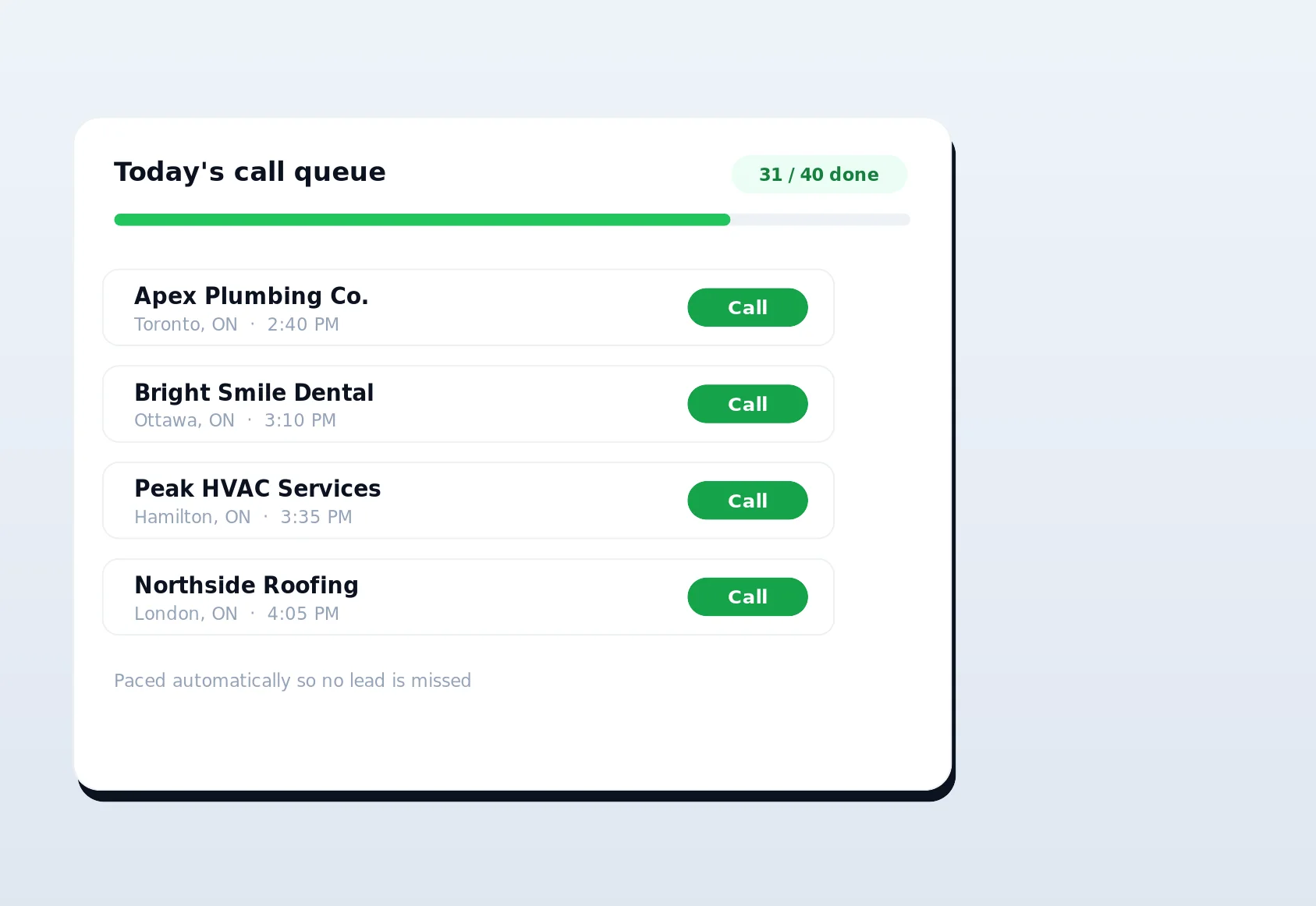
- Directory → Queue — normalized categories let call queuing hand reps businesses filtered to the exact vertical, with cross-tenant fairness, cooldowns and daily caps intact.
- Directory → Enrichment — lead enrichment visits each business's site through rotating anonymous proxies to complete emails and phone numbers, aimed only at records that truly belong to the campaign.
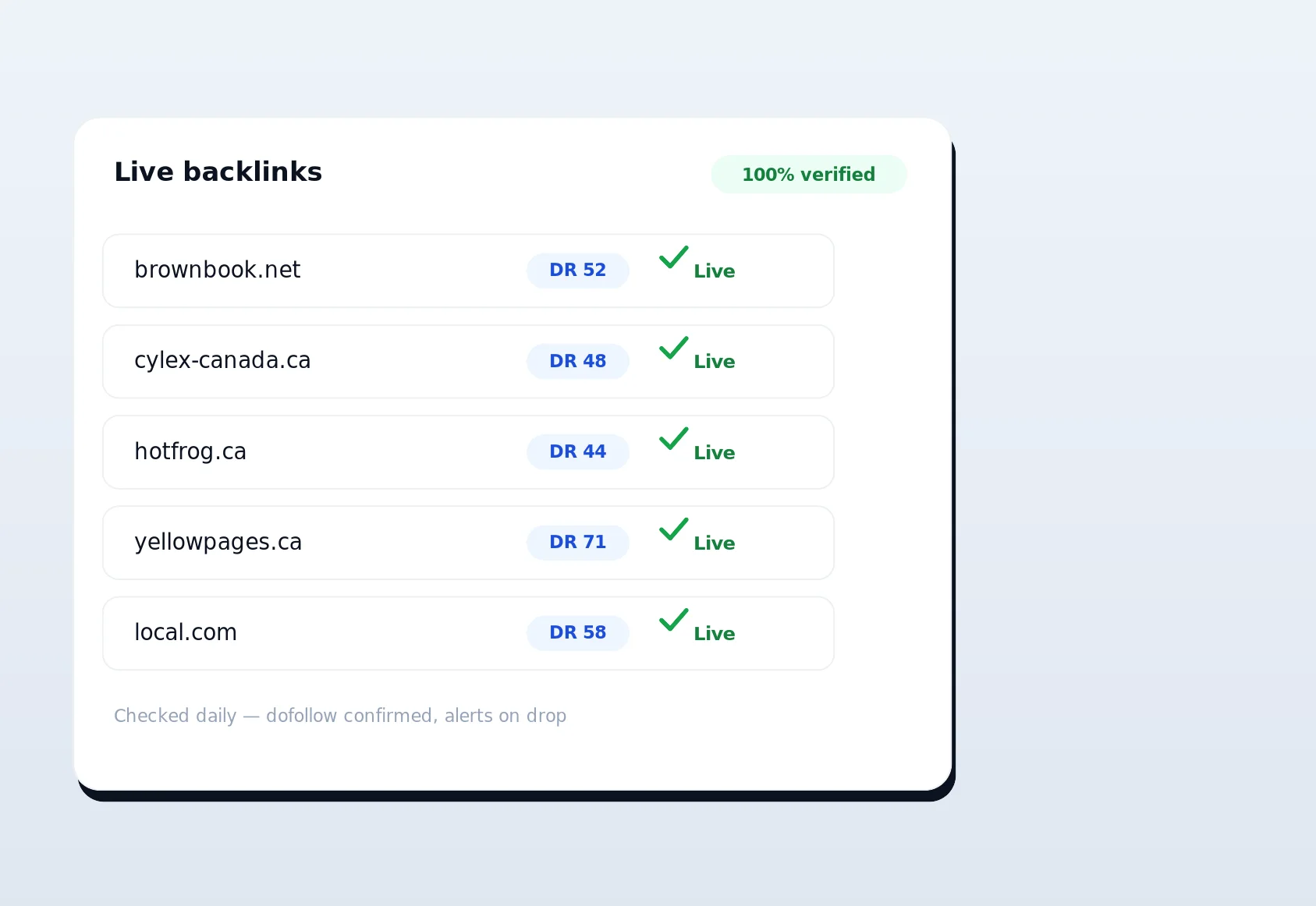
- Directory → Backlinks — the directory backlink builder Chrome extension auto-fills citation submissions using your real browser and IP, matched to the right niche directories because the trade is correctly classified.
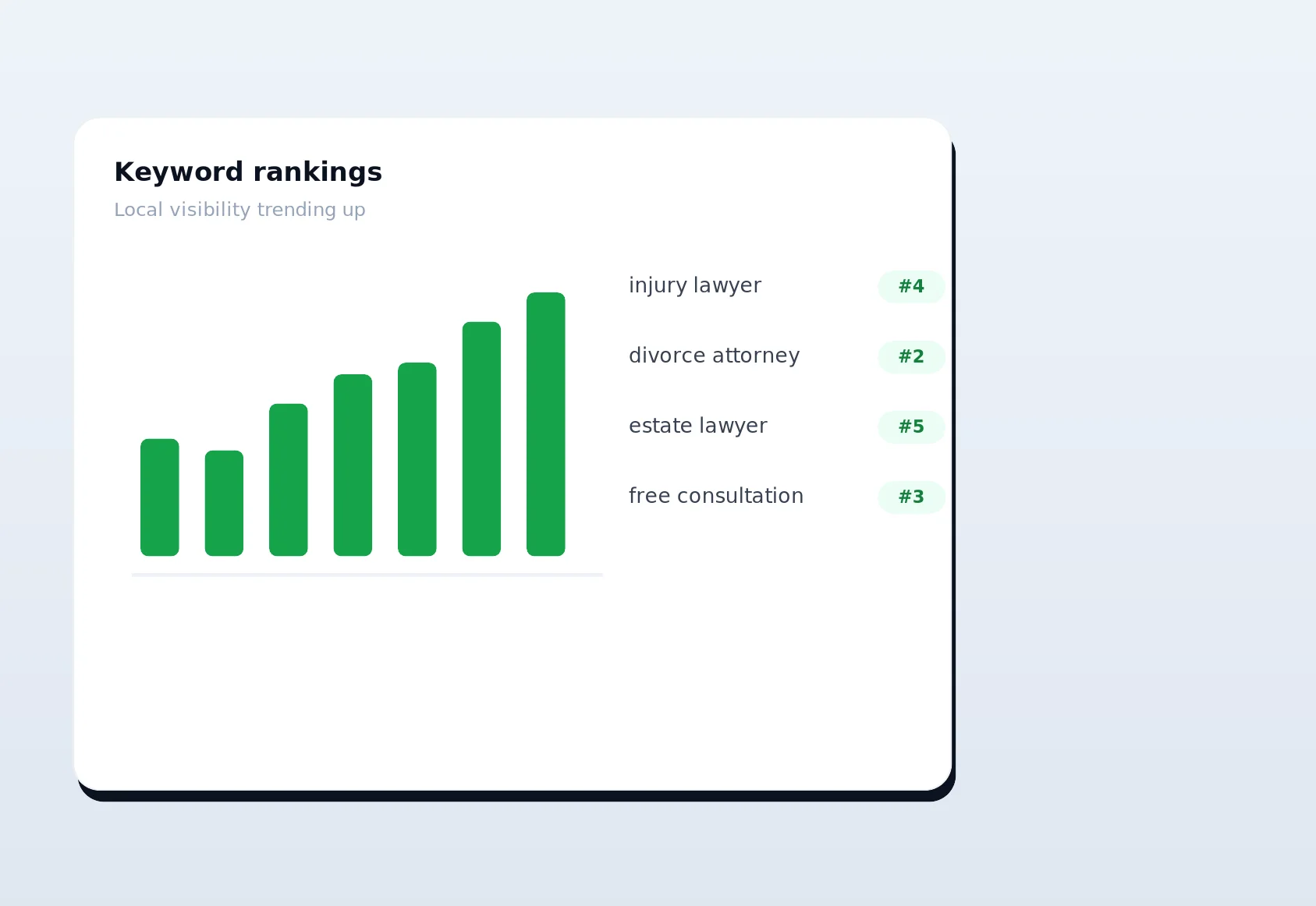
- Everything → Reporting — rank tracking, keyword research and live-link verification all become easier to slice by vertical when the underlying categories are trustworthy.
In practice, you rarely think about normalization directly — you just notice that your segments are complete, your reports reconcile, and your reps stop complaining about mismatched leads.
This is the quiet leverage of getting classification right at the foundation. A single accurate category on a record ripples outward: it decides which reps see the business, which enrichment jobs run against it, which directories the backlink extension proposes, and which line of a client report it lands on. Fixing the category once fixes all of those at the same time. Fixing them individually, downstream, would mean patching the same problem in four different places — and forgetting one. Normalization concentrates the effort where it does the most good.
Built to preserve your data, never destroy it
A normalization engine that quietly deletes or deactivates records it doesn't understand is worse than no engine at all. LinkSpear is built on the opposite principle: normalization only ever relabels or flags. The original source category is preserved, unknown labels land in a safe uncategorized bucket for review, and no business is ever removed from the catalogue because its category was ambiguous. You gain a cleaner taxonomy without losing a single lead — and you can always trace a canonical category back to the exact text it came from.
Start cleaning up your local data today
If your local lead lists are a patchwork of inconsistent labels, business category normalization is the single highest-leverage fix you can make — because it multiplies the accuracy of everything you do next, from calls to enrichment to backlinks. LinkSpear applies it automatically the moment data enters your catalogue, so you spend your time running campaigns instead of scrubbing spreadsheets. Every new account starts with a 14-day free trial on the Starter plan, no long-term commitment required. Import your first list, watch thousands of messy labels collapse into one clean taxonomy, and see how much sharper your local marketing gets when the data finally agrees with itself. Start your free trial and put a real category system to work today.