
A great outreach campaign lives or dies on the quality of its list, and that is exactly where local business directory software earns its keep. LinkSpear gives you a single, deduplicated master catalogue of local businesses, each one presented as a complete contact card: business name, phone, email, website, street address, city, province or state, country and category. Instead of juggling a dozen half-finished spreadsheets, exported CSVs and stale scrapes, you get one source of truth that stays clean as it grows. This page walks through what the directory is, how it fills itself in, the outcomes it drives, who gets the most out of it, and how it plugs into the wider LinkSpear workflow.
What the Local Business Directory Actually Is
At its core, the LinkSpear directory is a living database of local businesses that your team owns and controls. Every business is stored once, as a canonical record, no matter how many times it appears across your data sources. That deduplication is the quiet superpower here: when you pull the same plumbing company from OpenStreetMap, YellowPages and a manual import, the directory recognises it as one entity and merges the details rather than creating three noisy duplicates.
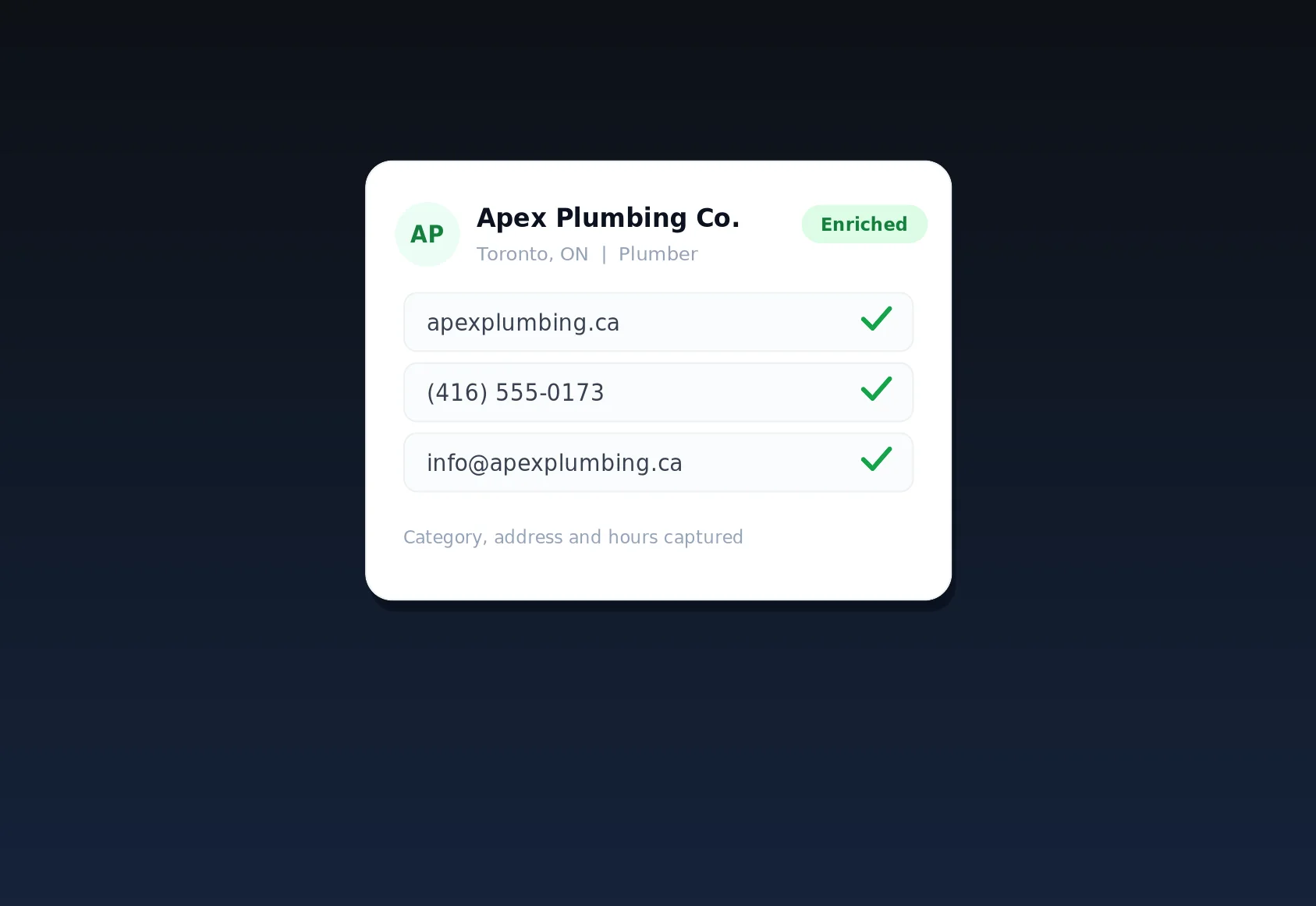
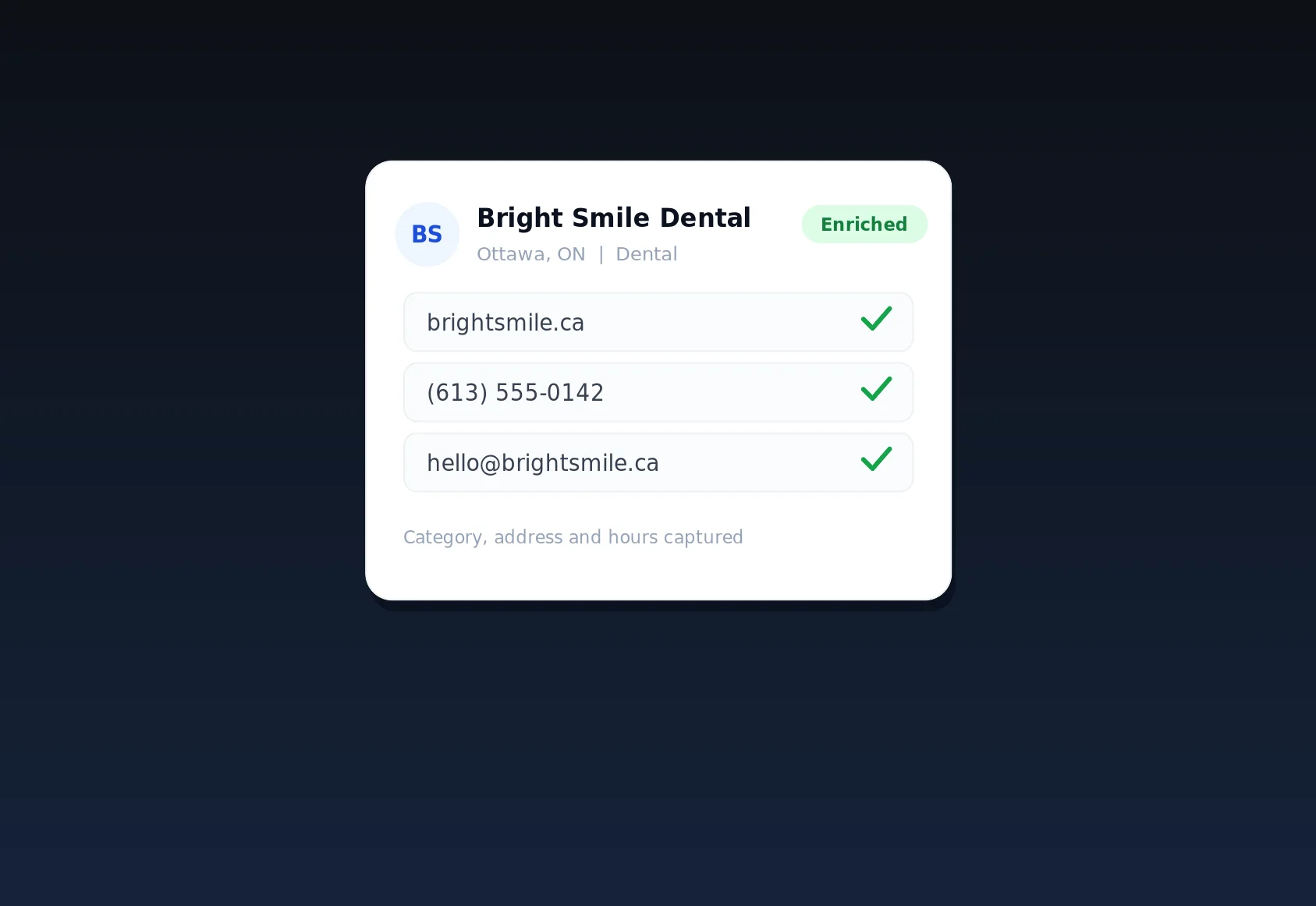
Each record is a full contact card rather than a bare name and phone number. You see the business name, a verified phone line, a contact email, the company website, the full street address broken into city and province or state and country, and a normalised category. Because the schema is consistent, you can filter, segment and hand off records with confidence. A record for a roofer in Calgary looks structurally identical to a record for a dentist in Manchester, which is what makes bulk operations, fair distribution and reporting possible.
Why deduplication matters more than volume
Anyone can buy a list of a million rows. The problem is that raw lists are riddled with repeats, dead numbers and inconsistent formatting, and every duplicate quietly wastes a rep's time and burns goodwill when the same business gets called twice. LinkSpear treats the catalogue as a permanent asset: records are repaired and reactivated rather than casually deleted, so the directory becomes more accurate over time instead of decaying. You are building an appreciating database, not renting a disposable one.
Volume without cleanliness is a liability. A team of five reps working a 50,000-row bought list will spend the first week discovering that a third of the numbers are disconnected, a quarter of the businesses have closed, and hundreds of rows are the same handful of franchises listed under slightly different names. A deduplicated directory of 15,000 verified, complete records will out-produce that bloated list every single time, because every dial has a real chance of becoming a conversation. Quality is not a nice-to-have layered on top of quantity; it is what makes the quantity usable in the first place.
Contact cards you can actually act on
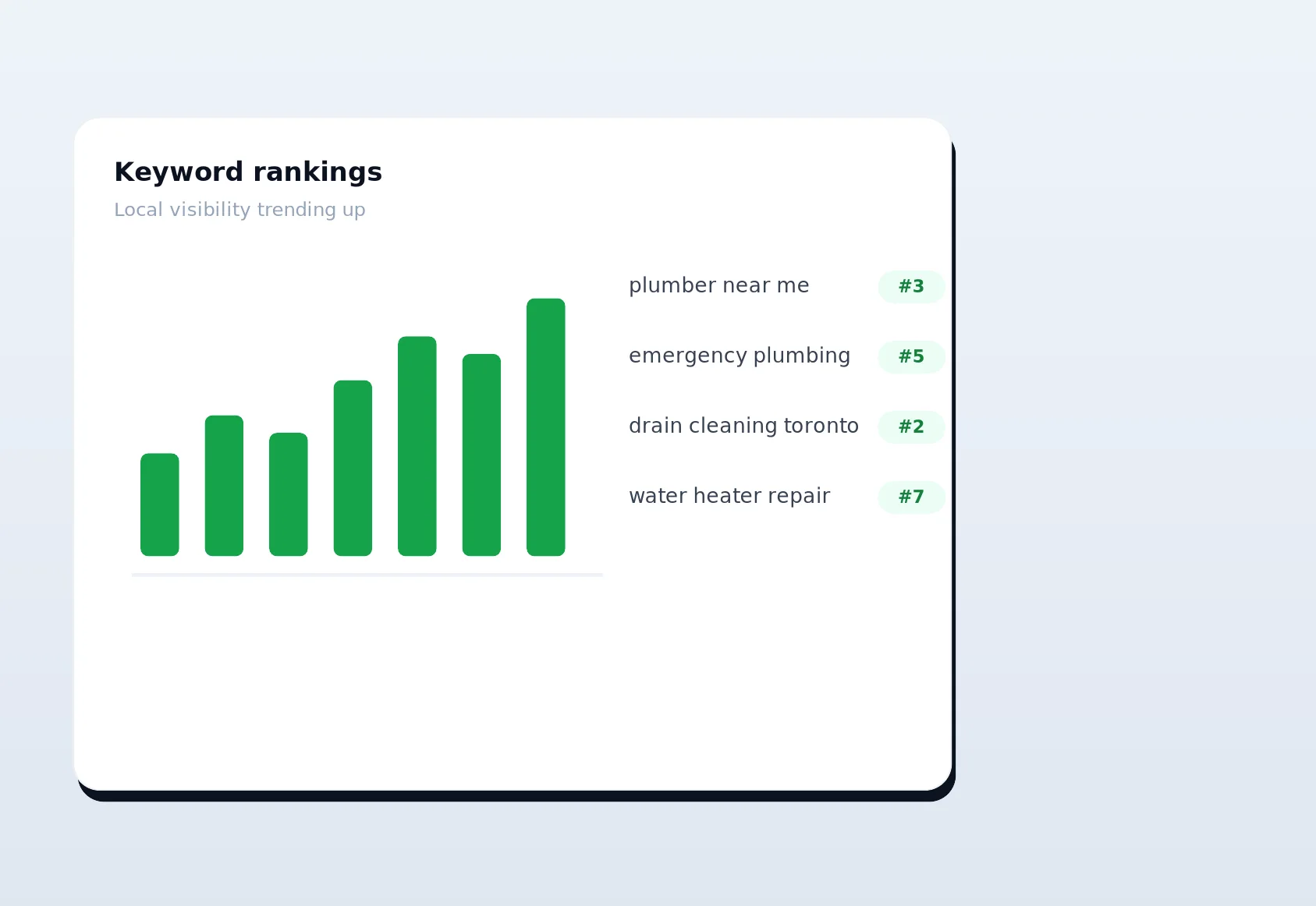
A record is only useful if a human or a downstream tool can do something with it immediately. That is why LinkSpear stores each business as a structured card rather than a free-text blob. The website field lets you run a rank check or schema audit on the spot. The category field lets you segment to exactly the vertical you are selling to. The parsed city and province fields let you assign territories. The phone and email fields, once enriched, are what turn a name into an actual outreach target. Every field earns its place because something in the platform consumes it.
How the Local Business Directory Software Works
The directory is designed to fill and clean itself with as little manual data entry as possible. Here is the realistic end-to-end flow most teams follow.
Step 1: Seed the catalogue with scraped leads
Start by pulling businesses from public sources. LinkSpear's built-in business lead scraping collects listings from OpenStreetMap and YellowPages by location and category, so you can build a targeted set, say every HVAC company within 40 km of a metro area, in a few clicks. These raw listings flow straight into the directory as candidate records.
Step 2: Deduplicate and normalise automatically
As records arrive, the catalogue matches them against what already exists and merges duplicates into a single canonical card. Categories are standardised by the same rules every time, addresses are parsed into structured fields, and inconsistent capitalisation or formatting is cleaned up. You end up with a tidy, queryable database instead of a pile of mismatched imports.
Step 3: Enrich the gaps with proxy-safe crawling
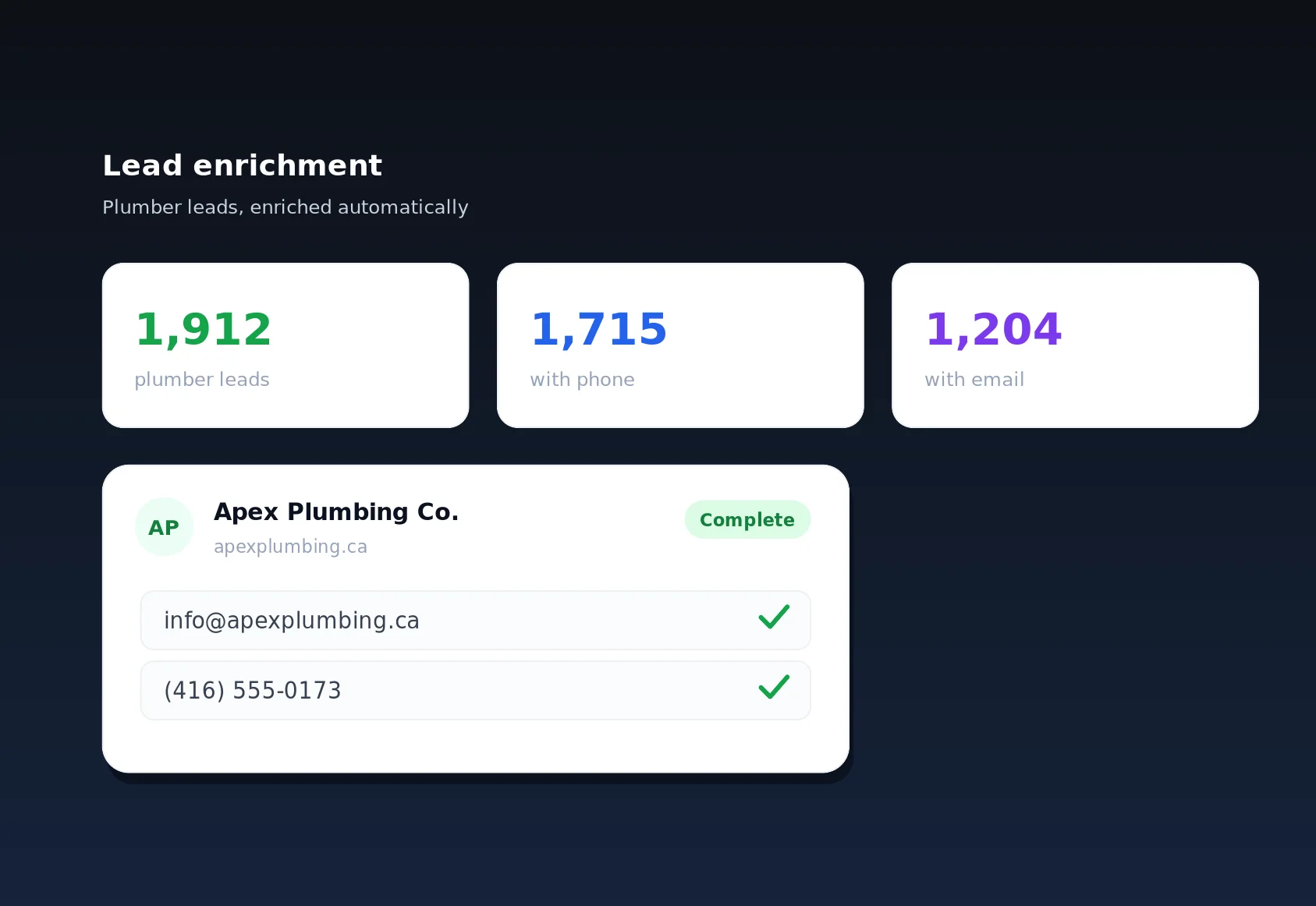
Scraped listings almost always have holes, usually a missing email or an unlisted phone. LinkSpear's lead enrichment visits each business's own website through rotating anonymous proxies and extracts the missing email and phone directly from the source. Because the crawl runs behind rotating proxies, your real IP never leaks and you are never rate-limited or blocked as "that company hammering our site." The result is contact cards that are genuinely complete, not just started.
Step 4: Queue records for calling
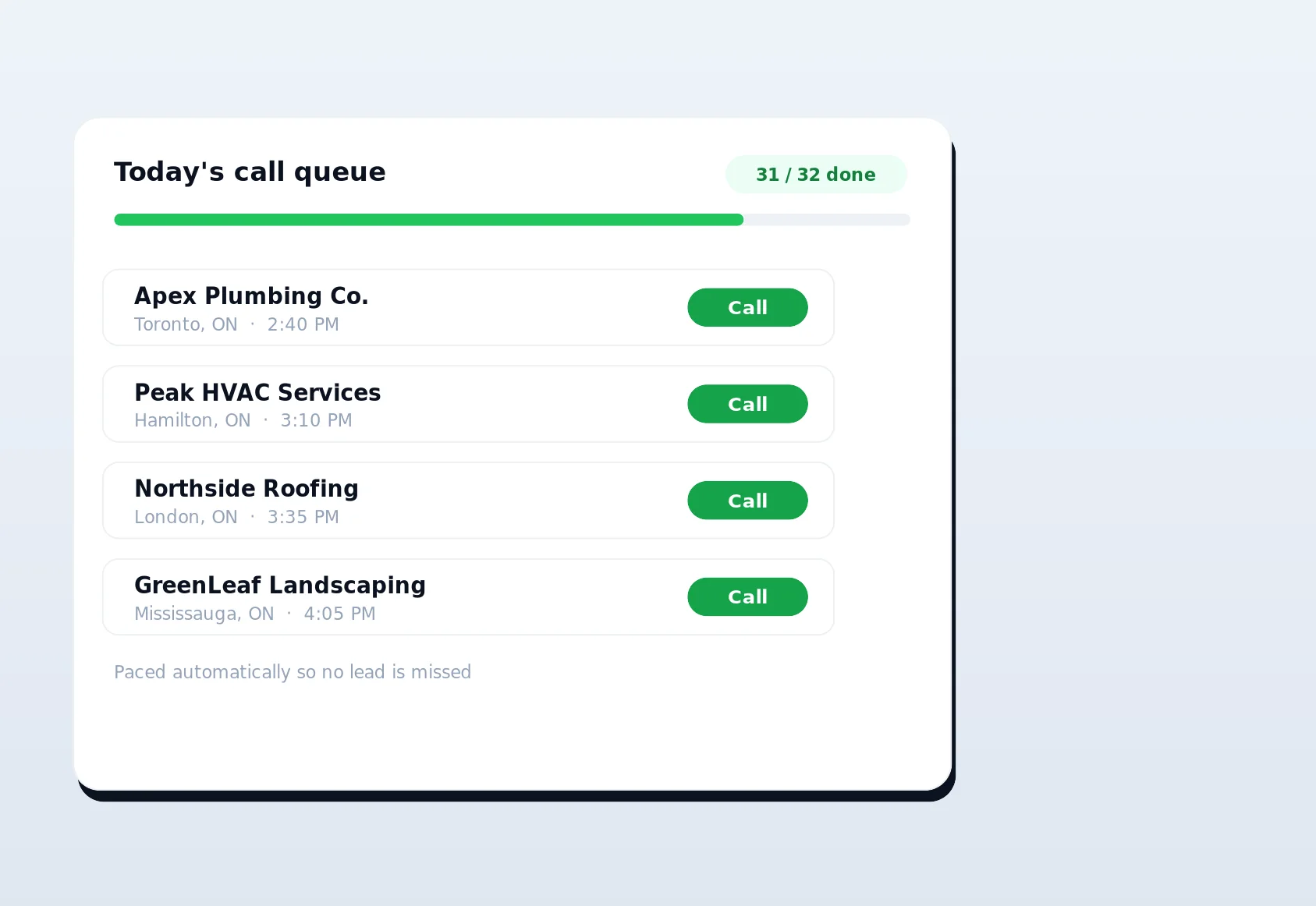
Once a record has a usable phone number, it becomes callable. Call queuing hands businesses to your sales reps one at a time, with cross-tenant fairness so no single account hogs the best leads, cooldowns so a business is never hammered, and daily call caps so reps stay productive without over-dialling. The directory is the pool; the queue is the disciplined way you draw from it.
Step 5: Feed outreach and backlink building
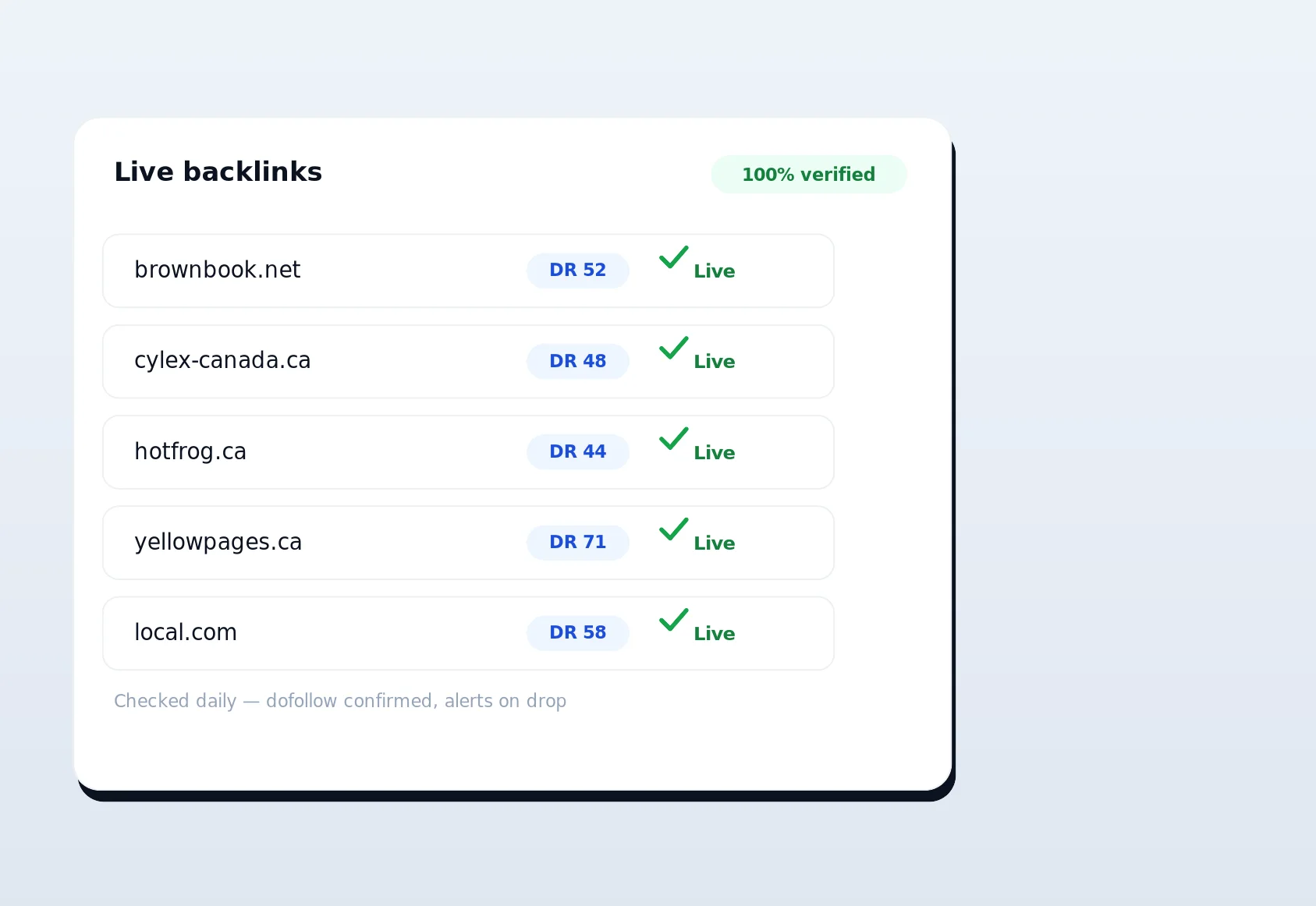
The same clean records power the rest of your funnel. A completed contact card gives you the website you need for a schema audit or a rank-tracking setup during a sales pitch, and once a business becomes a client, its details flow into automated directory backlink building. The directory is the connective tissue that keeps prospecting, selling and delivery working off the same trustworthy data.
What makes this flow different from stitching together separate tools is that no step requires re-entering data. A record scraped on Monday, enriched on Tuesday and queued for calling on Wednesday is the same record throughout, gaining fields rather than being copied into a new system at each stage. That continuity is where the time savings compound: a single afternoon of setup produces a pipeline that keeps feeding itself, and the data your reps rely on is the same data your delivery team will use months later. Fewer hand-offs mean fewer transcription errors, fewer stale copies and far less of the manual glue work that usually eats an agency's margins.
The Concrete Benefits and Outcomes
Choosing purpose-built local business directory software over a spreadsheet or a generic CRM import changes the economics of outreach in a few measurable ways.
- More conversations per hour. Complete, deduplicated contact cards mean reps dial real numbers and reach real decision-makers instead of wasting minutes on dead ends and repeats.
- Higher email deliverability. Because emails are pulled from each company's own website rather than guessed with patterns, your bounce rate drops and your sending reputation stays healthy.
- Zero footprint risk. Enrichment runs through anonymous rotating proxies, so gathering contact data never exposes your IP or trips a target site's defences.
- Fair, auditable distribution. Call queuing with cooldowns and caps means leads are shared fairly across reps and sub-accounts, and every hand-off is logged.
- A database that appreciates. Records are repaired and reactivated, never quietly discarded, so accuracy and coverage climb month over month.
- One list, many uses. The same catalogue feeds cold calling, email outreach, rank tracking and backlink building, so you stop maintaining parallel copies.
These outcomes reinforce each other. Cleaner data drives more conversations, more conversations produce more clients, and more clients give the directory more records to enrich and reactivate. Over a few months the practical effect is that your cost per booked conversation falls even as your list grows, which is the opposite of what happens with a bought list, where cost per conversation climbs as the data ages. The directory turns list quality from a recurring expense into a compounding advantage.
Directory Software vs. Buying a List vs. Spreadsheets
It helps to see the difference side by side. The table below compares the three ways most agencies try to solve the local-data problem.
| Capability | Bought list / CSV | DIY spreadsheet | LinkSpear directory |
|---|---|---|---|
| Deduplication | None — repeats common | Manual, error-prone | Automatic, canonical records |
| Full contact cards | Partial, often stale | Whatever you type in | Name, phone, email, site, address, category |
| Missing email / phone fill | Not possible | Manual research | Proxy-safe website enrichment |
| IP / footprint safety | N/A | Your own IP exposed | Rotating anonymous proxies |
| Fair call distribution | None | None | Queuing with cooldowns and caps |
| Freshness over time | Decays immediately | Decays as you forget it | Repaired and reactivated, improves |
| Feeds wider SEO workflow | No | No | Yes — calling, outreach, backlinks |
A bought list is cheap on day one and worthless by day thirty. A spreadsheet is flexible until it grows past a few hundred rows and quietly rots. Local business directory software is the only option that gets more valuable the longer you use it, because the system does the deduplication, enrichment and distribution that a human simply cannot keep up with at scale.
Who the Local Business Directory Is For
The directory is built for anyone whose growth depends on reaching lots of local businesses reliably.
Marketing and SEO agencies
Agencies live on a steady pipeline of local prospects. With sub-account support, an agency can maintain one shared master catalogue while each client team draws fairly from the queue. You can build a targeted list for a niche vertical, enrich it overnight, and have reps calling qualified prospects the next morning, all without exposing which agency is behind the outreach.
In-house sales teams at local service brands
Franchises, home-services brands and B2B suppliers that sell to local businesses use the directory to systematise territory coverage. Cooldowns and caps keep the effort disciplined, and the clean data means every rep works from the same accurate picture of the market.
Vertical specialists
If you focus on a single trade, the category normalisation makes it trivial to slice the catalogue to exactly your audience. Teams targeting plumbers, electricians, HVAC contractors or dentists can stand up a focused, fully enriched list in a single session and keep it current as new businesses open.
Consultants and freelancers scaling outreach
Solo operators and small consultancies feel data problems most acutely because they have no time to waste on bad numbers. For them the directory acts as a force multiplier: the scraping and enrichment do the grunt work of building a list that would otherwise take days of manual research, and the structured cards mean a one-person shop can run outreach with the discipline of a much larger team. When the time comes to hire, the same catalogue and queue scale up without a migration or a rebuild.
How It Fits the Wider LinkSpear Workflow
The directory is deliberately not a standalone address book. It is the foundation the rest of the platform stands on, and its value multiplies as it connects to the other tools.
- Prospecting: lead scraping and enrichment fill the catalogue with complete, callable records.
- Selling: call queuing distributes those records fairly, while rank tracking, keyword research and schema audits give reps concrete talking points for each prospect's website.
- Delivering: when a prospect converts, their record feeds automated directory backlink building, live-link verification and instant indexing, so the same data that won the client now helps you rank them.
Because everything reads from one master catalogue, a change made in one place is reflected everywhere. Enrich a phone number today and it is instantly available to the call queue; convert a lead and its contact card is ready for citation submissions without a single re-key. That single-source-of-truth design is what turns a directory from a static list into an operating system for local growth.
Data Quality, Safety and Control
Because the directory is an asset you depend on, LinkSpear treats its integrity as non-negotiable. Records are never casually deleted; the system favours repairing and reactivating over discarding, so you do not wake up to a shrunken catalogue after an import goes sideways. Enrichment respects the target: crawls run through rotating anonymous proxies, fail closed rather than hammering a site, and pull only the public contact details a business already publishes. You keep a clean, complete, growing database without ever putting your own reputation or IP on the line.
Structured, exportable, yours
Every field is structured and consistent, which means you can filter by city, category or completeness, hand records to reps, and export segments when you need them elsewhere. The catalogue is your data, organised the way outreach actually needs it.
Built for scale without becoming noise
As a catalogue grows into the tens or hundreds of thousands of records, the risk is that it becomes an unnavigable haystack. LinkSpear keeps large directories usable by leaning on the same structure that makes small ones clean: consistent categories, parsed addresses and completeness flags let you carve a working set out of a huge catalogue in seconds. You can ask for every enriched dental practice in a given province with a valid phone number and get exactly that, rather than scrolling through everything. Scale becomes an advantage instead of a burden, because the filtering does the narrowing for you.
Getting Started
Standing up your first directory takes minutes, not weeks. Pick a location and category, let the scraper seed the catalogue, run enrichment to complete the contact cards, and point the call queue at the result. From there the list only improves, and every other LinkSpear feature is ready to draw from it. The best way to feel the difference between a real local business directory and yet another spreadsheet is to build one with your own target market. New users get a 14-day free trial on the Starter plan, no long-term commitment, so you can seed a real list, enrich it, and put live prospects in front of your reps before you decide. Start your free trial today and turn clean local data into booked conversations.
If you have ever lost an afternoon reconciling three spreadsheets, or watched a rep call a business that closed last year, you already understand the problem this solves. Good local business directory software does not just store contacts; it keeps them honest, complete and ready to work, and it does that quietly in the background while your team focuses on selling. Build your first catalogue during the trial, watch the enrichment fill in the gaps, and let the call queue prove the difference on your own numbers.