A schema markup audit is the fastest way to find out why your pages aren't earning the rich results, star ratings, and knowledge-panel real estate your competitors already have. Structured data is the invisible layer that tells Google exactly what a page is about — that this string is a phone number, that block is your opening hours, this number is a 4.8-star rating. When it's correct, search engines reward you with eye-catching listings. When it's broken, missing, or subtly wrong, Google quietly ignores it and you never find out. LinkSpear's schema markup audit surfaces every one of those problems in plain language, ranks them by impact, and hands you the exact fix.
Most small businesses and agencies have no idea what state their structured data is in. A plugin injected some JSON-LD three years ago, a theme update mangled it, a developer hard-coded an address that no longer matches your Google Business Profile — and nobody checks because the page still looks fine to a human. Search engines are the only audience that reads schema, and they're far less forgiving. This page explains what a proper structured data audit checks, how LinkSpear runs one at scale, and how it plugs into the rest of your local SEO workflow.
What Is Schema Markup — and Why an Audit Matters
Schema markup is a standardized vocabulary (from Schema.org, usually delivered as JSON-LD) that describes the meaning of your content to machines. A LocalBusiness schema tells Google your business name, address, phone, hours, price range, and service area. A Product, Review, or FAQPage schema unlocks the enhanced listings — the star ratings, FAQ dropdowns, and price snippets — that dramatically lift click-through rate without moving you a single position in the rankings.
The catch is that schema fails silently. There is no error message in your browser, no red banner in your CMS. A missing required property, an invalid enum value, a date in the wrong format, or a rating without a reviewCount will cause Google to discard the whole block — and you'll simply never appear as a rich result. A recurring schema markup audit is the only reliable way to catch these regressions before they erode months of traffic. It's the SEO equivalent of a smoke detector: cheap to run, expensive to skip.
It's also worth being clear about what schema is not. Structured data doesn't rewrite your content, it doesn't guarantee a rich result, and it isn't a ranking cheat code. What it does is remove ambiguity. Search engines are extraordinary at reading language, but they still have to infer that "Call us on 0800 123 456, open till 6" is a phone number and a set of hours. Schema states it as fact. When Google doesn't have to guess, it's far more willing to display the enhanced listing — and far less likely to attribute your details to the wrong entity. An audit exists to guarantee that every one of those factual statements is present, valid, and consistent.
The hidden cost of broken structured data
- Lost rich results: One malformed property can strip star ratings from an entire product catalog.
- NAP mismatches: A name, address, or phone number in your schema that disagrees with your directory citations confuses Google and weakens local ranking signals.
- Wasted rankings: You can hold position #1 and still lose the click to a competitor at #3 whose listing shows reviews and FAQs.
- Manual-action risk: Marking up content the user can't see (fake reviews, hidden FAQs) can trigger a structured-data penalty.
How the LinkSpear Schema Markup Audit Works
LinkSpear's structured data audit tool crawls your site the way a search engine does, extracts every schema block it finds, validates it against both the Schema.org specification and Google's own rich-result eligibility rules, then cross-references it with the data LinkSpear already holds about your business. The result is a prioritized report you can act on in an afternoon, not a wall of raw JSON you have to decode yourself.
Step 1 — Discover and crawl every page
Point the audit at a domain and LinkSpear discovers your URLs from the sitemap and internal links, then fetches each page. Because rendering matters, it evaluates schema injected by JavaScript and tag managers — not just what's in the raw HTML — so plugin-generated and dynamically inserted markup is caught too.
Step 2 — Extract and parse structured data
Every JSON-LD, Microdata, and RDFa block on each page is extracted and parsed. LinkSpear maps out which schema types you're using (LocalBusiness, Organization, Product, Review, FAQPage, BreadcrumbList, Article, and more) and flags pages that have no structured data at all — often the biggest missed opportunity.
Step 3 — Validate against Schema.org and Google's rules
Each block is checked twice: once for spec-correctness (are required properties present, are types and formats valid?) and once for Google rich-result eligibility (does this qualify for a star-rating, FAQ, or breadcrumb enhancement?). Issues are graded as errors (block will be ignored), warnings (eligible but weakened), and opportunities (schema you could add).
Step 4 — Cross-check your NAP and business facts
This is where an integrated platform pulls ahead of a standalone validator. LinkSpear compares the name, address, and phone in your LocalBusiness schema against the master record in your local business directory and the contact data gathered by lead enrichment. If your schema says one phone number and your citations say another, the audit tells you — because consistency across all three is what actually moves local rankings.
Step 5 — Get the exact fix, then re-scan
For every issue, LinkSpear generates corrected, copy-paste-ready JSON-LD with the right properties filled in from your verified business data. Apply it, re-run the audit, and watch the error count fall to zero. Schedule the audit to run on a cadence so theme updates and plugin changes never silently break your markup again.
The re-scan step is more important than it sounds. Structured data is a moving target: a WordPress core update can change how a plugin renders JSON-LD, a page builder can wrap your markup in a way Google no longer parses, and a well-meaning developer can "tidy up" a template and strip a required property in the process. Treating the audit as a one-off gives you a clean report that's stale within weeks. Treating it as a recurring check turns structured data from a liability you forget about into a monitored asset that stays healthy on its own.
What the Audit Actually Checks
A credible structured data audit goes well beyond "is there any schema on the page." Here's the checklist LinkSpear runs on every URL:
- Presence and coverage: which pages have schema, which don't, and which schema types are missing for the page's purpose.
- Required properties: every mandatory field for the declared type (e.g. name, address, and telephone for LocalBusiness).
- Recommended properties: the optional fields that materially improve eligibility, like priceRange, openingHours, and geo.
- Value validity: correct data types, valid enums, ISO date/time formats, absolute URLs, and properly formatted phone numbers.
- Rich-result eligibility: whether each block qualifies for a specific Google enhancement.
- Policy compliance: marked-up content that's visible to users, no fabricated reviews, no spammy AggregateRating stuffing.
- NAP consistency: schema business facts matched against your directory and enrichment data.
- Duplication and conflict: multiple conflicting blocks of the same type, or an @id graph that doesn't resolve.
The Concrete Benefits You Can Expect
Fixing structured data is one of the highest-leverage moves in local SEO because it lifts click-through rate on rankings you already hold. You're not fighting for new positions — you're making the ones you own far more clickable.
- Higher click-through rate: star ratings, FAQ dropdowns, and breadcrumbs make your result physically larger and more trustworthy in the SERP.
- Stronger local signals: consistent, valid LocalBusiness schema reinforces the entity Google associates with your brand.
- Faster wins: a schema fix can show up in rich results within days, versus months for a link-building campaign.
- Fewer silent regressions: scheduled audits catch breakage the moment a plugin or theme update introduces it.
- Agency-ready reporting: a clear before/after error count you can put in front of a client.
Put a number on it and the case makes itself. Say a service page ranks fourth for a valuable local term and earns a 4% click-through rate. Add valid review and FAQ schema, and that same position can realistically lift to 6-7% as your listing grows stars and expandable answers. On a term driving a few hundred impressions a day, that's dozens of extra qualified visits a month from work you did once — no new content, no new links, no change in rank. Multiply that across every page on the site and you understand why experienced SEOs audit structured data before they chase anything harder.
Standalone Validator vs. LinkSpear's Integrated Audit
Free validators are fine for spot-checking a single URL. They fall apart the moment you need to audit a 200-page site, track fixes over time, or reconcile schema against your real business data. Here's the honest comparison:
| Capability | Free Single-URL Validator | LinkSpear Schema Markup Audit |
|---|---|---|
| Pages per run | One at a time | Entire site, crawled automatically |
| JavaScript-rendered schema | Inconsistent | Rendered and evaluated |
| Issue prioritization | Raw error list | Errors, warnings, and opportunities ranked by impact |
| NAP cross-check | None | Matched against your directory + enrichment data |
| Suggested fix | You write it | Copy-paste JSON-LD generated for you |
| Scheduling & regression alerts | Manual only | Recurring audits with change tracking |
| Client reporting | Screenshots | Shareable before/after reports |
Who Schema Markup Auditing Is For
Structured data pays off most for businesses whose customers compare options in the search results before clicking — which is nearly every local business.
Local service businesses
Trades and service providers live and die by local pack visibility and click-through. A clean LocalBusiness schema with valid hours, service area, and reviews is table stakes. Whether you run a plumbing company (see local SEO for plumbers) or a clinic (see SEO for dentists), the audit makes sure Google can read your contact card perfectly.
Multi-location brands
The more locations you run, the more places schema can drift out of sync. A site-wide audit catches the one branch whose phone number never got updated across the template.
Agencies managing many clients
For agencies, the audit is a repeatable deliverable: onboard a client, run the scan, show a prioritized fix list, then re-run to prove the win. It pairs naturally with LinkSpear's agency sub-accounts so each client's audits stay cleanly separated. Because the report speaks in outcomes — "we made twelve of your service pages eligible for star ratings" rather than a screenshot of raw JSON — it's the kind of quick, visible win that justifies a retainer in the first month. Many agencies lead new engagements with a schema audit precisely because it produces something tangible before the slower work of content and links has had time to move the needle.
E-commerce and content sites
Product, Review, and Article schema unlock some of the most valuable enhancements Google offers — price snippets, rating stars, and article carousels. These are also the schema types that break most often, because they're generated dynamically from templates and databases. A single malformed Product block in a template can quietly de-list an entire category from rich results, so systematic auditing matters even more at scale.
How the Audit Fits the Wider LinkSpear Workflow
Schema auditing isn't a standalone tool bolted on the side — it draws on the same verified business data that powers the rest of the platform, which is exactly what makes its NAP checks trustworthy.
- Directory as source of truth: your local business directory record is the canonical name, address, and phone the audit validates schema against.
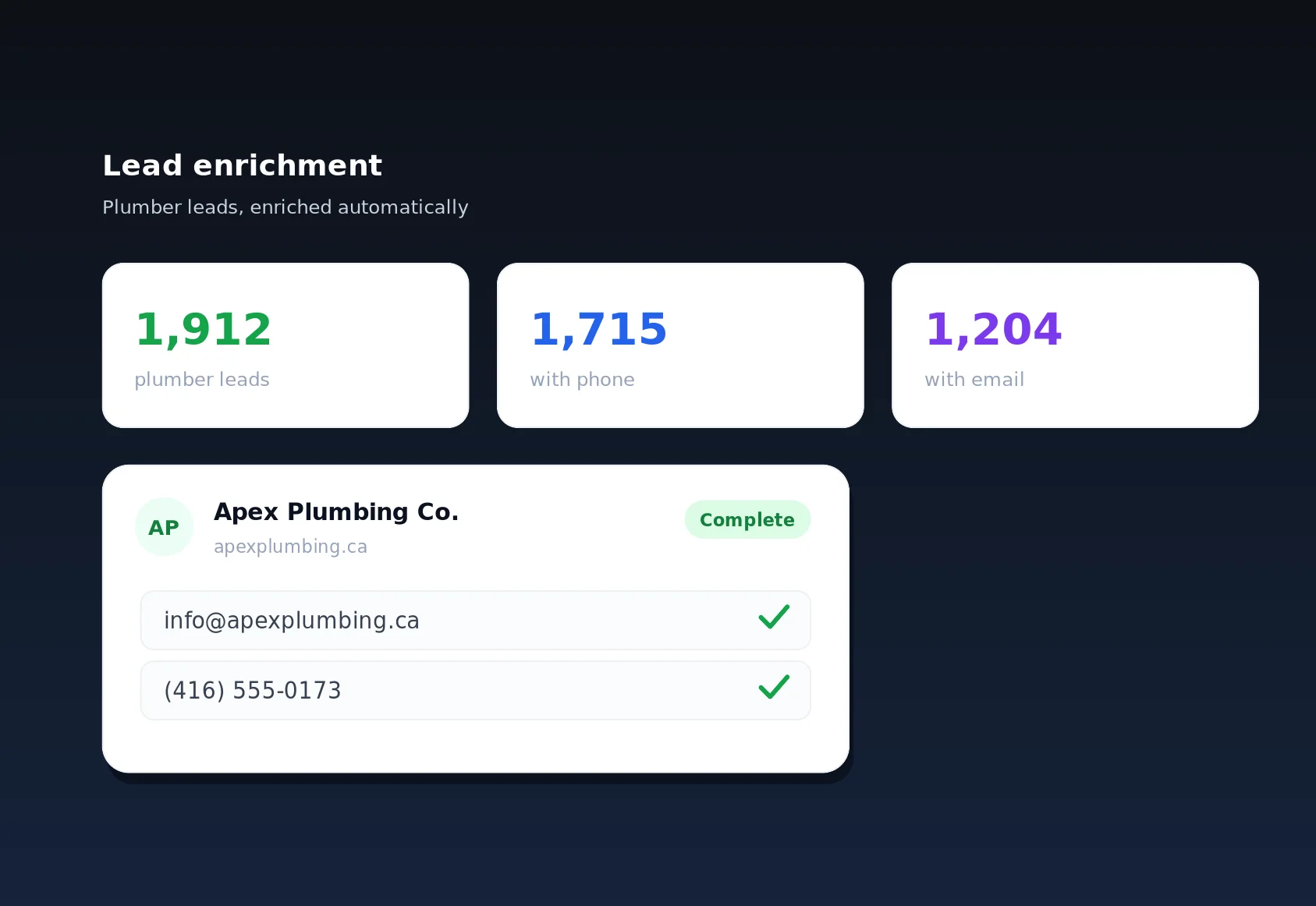
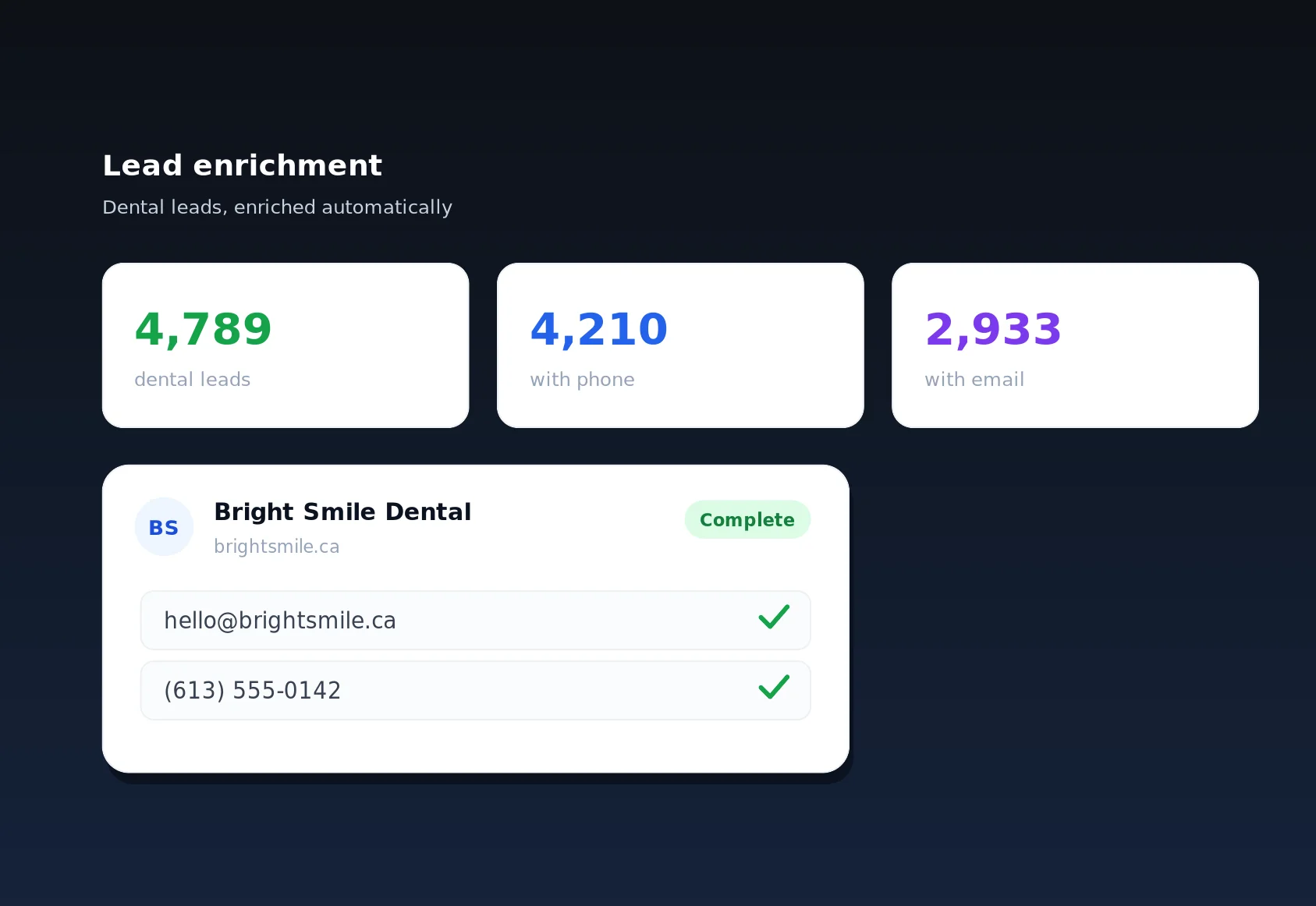
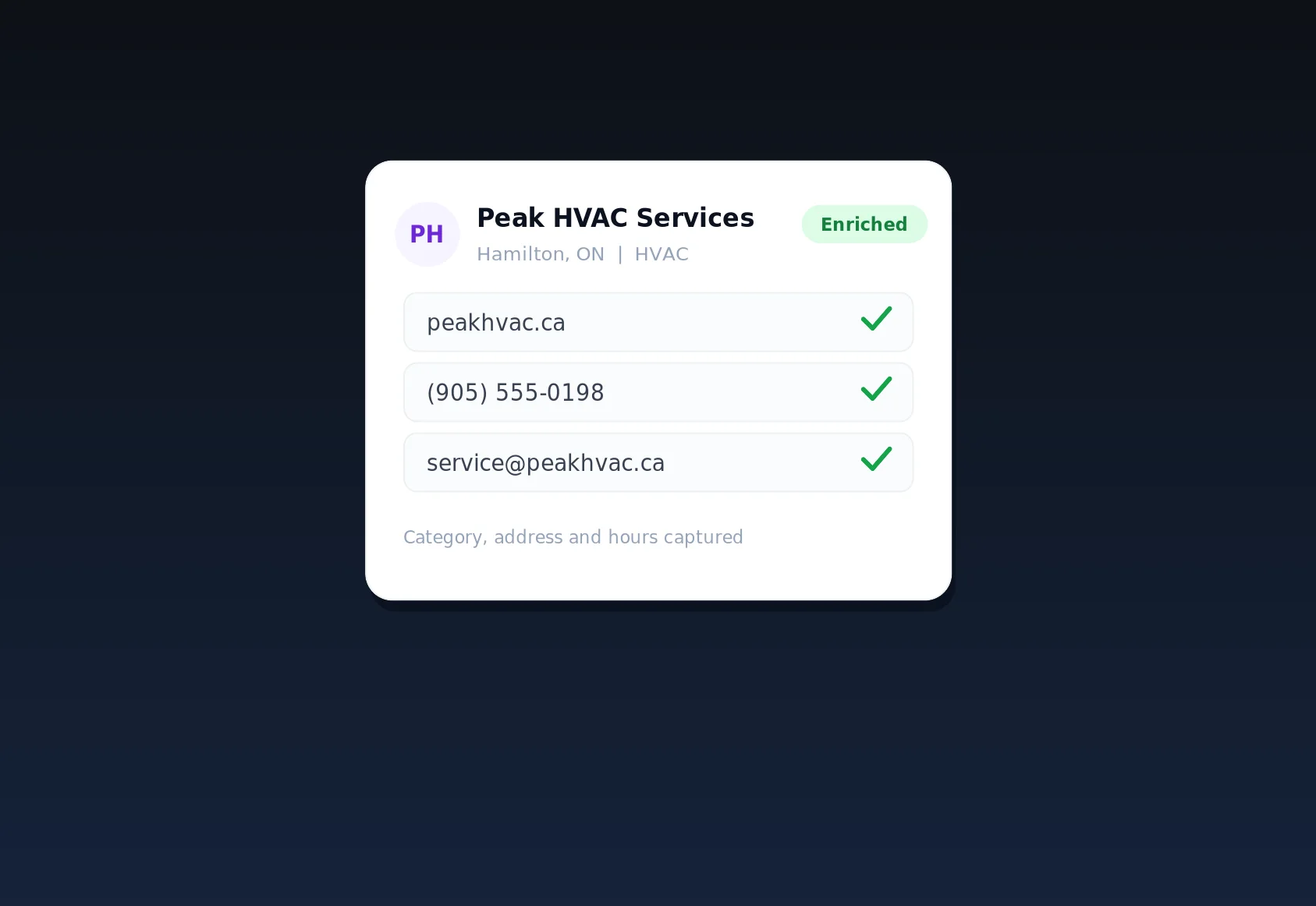
- Enrichment fills the gaps: lead enrichment visits your site through rotating anonymous proxies to confirm the email and phone that should appear in your markup.
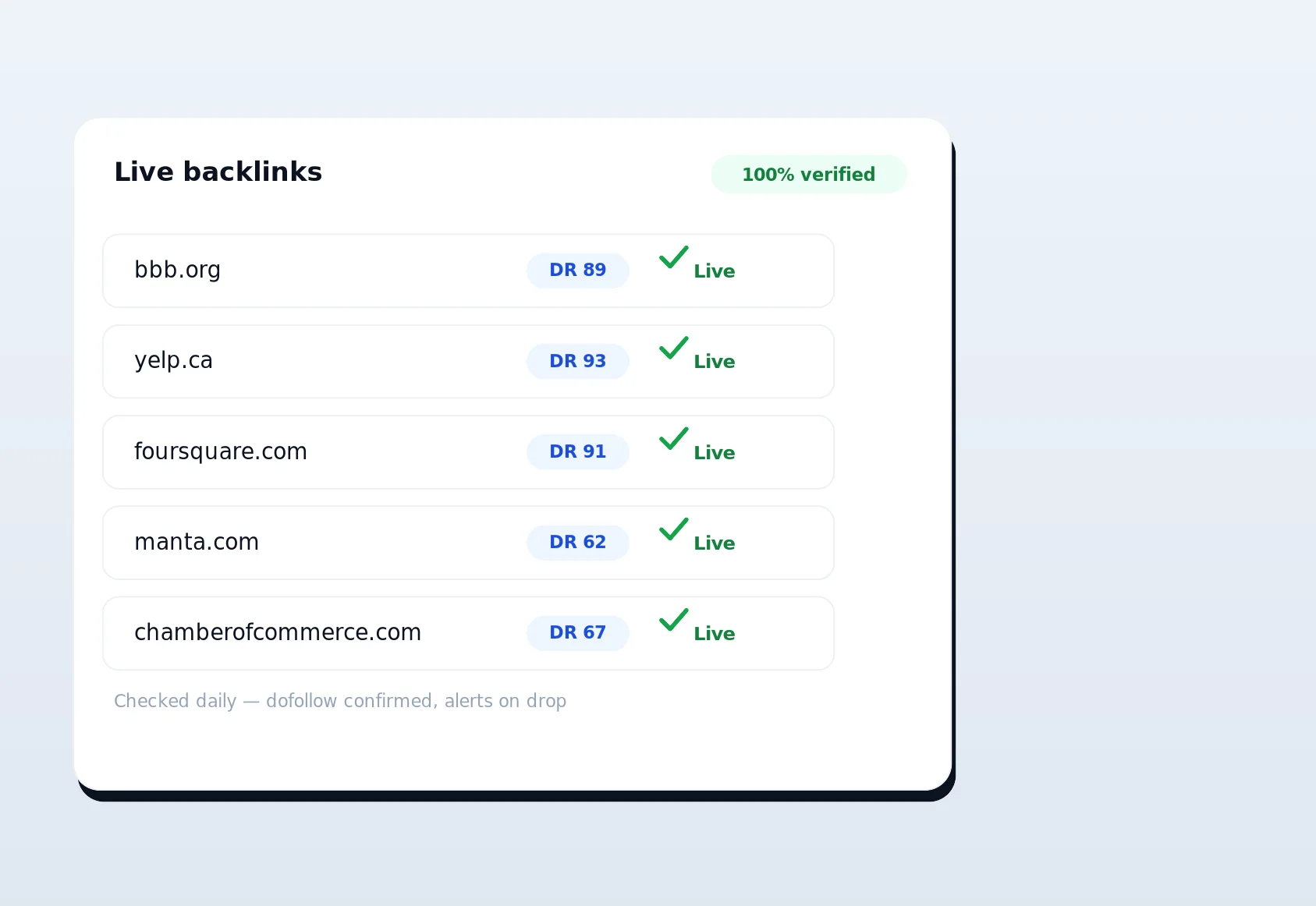
- Backlinks reinforce the entity: once your schema is clean, automated directory backlink building pushes consistent citations across the web, so your on-page and off-page signals agree.
- Rank tracking closes the loop: monitor whether the pages you fixed start earning rich results and climbing.
The through-line is data consistency. Your schema, your citations, and your directory listings should all tell Google the exact same story about your business. LinkSpear is built to make that alignment automatic rather than a quarterly manual chore.
A practical sequence looks like this: enrichment and the directory establish your verified, canonical business facts; the schema audit makes sure those exact facts are marked up correctly on every page; backlink building broadcasts the same facts to authoritative citation sources across the web; and rank tracking measures whether the pages you cleaned up start winning enhanced listings. Each stage feeds the next, and none of them relies on you remembering to re-check the others by hand. That's the payoff of running your structured data audit inside the same platform that already knows the truth about your business, instead of pasting URLs into a disconnected tool and reconciling the differences yourself.
Common Schema Errors the Audit Catches
Once you've run a few audits you start to see the same culprits again and again. Here are the ones LinkSpear flags most often:
- AggregateRating with no reviewCount: a rating that Google can't display because it can't tell how many reviews back it up.
- Address as a plain string: a LocalBusiness that never wraps its address in a proper PostalAddress object.
- Invalid openingHours format: human-readable hours that don't match the required specification.
- Orphaned @id references: a schema graph that points to an entity that isn't defined on the page.
- Duplicate conflicting blocks: two LocalBusiness definitions with different phone numbers, so Google trusts neither.
- FAQ schema without visible FAQs: a policy violation waiting to trigger a manual action.
Each of these is invisible to a casual glance and each one quietly costs you a rich result. That's the whole point of auditing: turning silent failures into a checklist you can actually clear.
What ties these errors together is that none of them throws a warning where a normal person would see it. The page renders, the business looks correct to a visitor, and everyone assumes the markup is fine. Meanwhile the only reader who actually parses that JSON — the search engine — is discarding it. A schema audit is really a translation service between how your site looks to humans and how it reads to machines, and closing that gap is often the difference between a plain blue link and a listing that pulls the click.
Start Auditing Your Structured Data Today
If you've never run a schema markup audit, you almost certainly have errors sitting on pages you assumed were fine — and every one of them is a rich result you're leaving on the table for a competitor to take. The good news is that structured data is one of the few SEO fixes where a single afternoon of work can produce visible, measurable gains in the search results within days. LinkSpear takes the guesswork out of it: crawl the whole site, see exactly what's broken, get the corrected JSON-LD, and re-scan to confirm the win. New users start on a 14-day free trial of the Starter plan — no credit card required — so you can run your first full audit, fix your worst issues, and watch the enhanced listings roll in before you ever pay a cent. Point LinkSpear at your domain today and find out precisely what Google can and can't read on your site.