Your competitors didn't earn their rankings by accident. Every link pointing to their site is a clue: a directory they submitted to, a guest post they placed, a supplier that lists them, a local paper that mentioned them. Competitor backlink analysis is the discipline of reverse-engineering those clues so you can rebuild the winning parts of their link profile faster than they built it themselves. LinkSpear turns that from a weekend of tedious spreadsheet work into a guided workflow that surfaces the exact domains, anchors and pages driving your rivals' authority, then hands you an actionable, prioritized shortlist you can act on the same day.
If you run a local business or an agency managing dozens of clients, you already know that "just build more links" is useless advice. The question is which links, from where, and in what order. This page explains how LinkSpear's competitor backlink analysis works, what it costs you (little) versus what it saves you (weeks), and how it plugs into the rest of your local SEO stack.
What competitor backlink analysis actually is
At its core, a competitor backlink analysis compares the inbound links pointing at a competitor's domain against your own, then isolates the difference. That difference — the links they have and you don't — is your link gap. It's the single most useful list in local SEO, because it's a pre-qualified set of sites that already link to businesses exactly like yours. Someone already decided those directories, blogs and citation sources were worth linking to. You're not guessing whether a site accepts submissions; you have proof.
LinkSpear doesn't just dump a raw link list on you. It classifies every referring domain by type (directory, citation source, editorial mention, supplier page, forum, sponsorship), scores it for relevance and difficulty, flags which ones you can win with the tools already in your account, and tells you which anchors your competitors are leaning on. The result is less "here are 4,000 links" and more "here are the 60 that will move your rankings, sorted by effort."
Link gap vs. raw backlink counts
Raw backlink counts are a vanity trap. A competitor with 10,000 links from scraped spam sites is weaker than one with 200 links from real regional directories and local news. LinkSpear weights for quality and local relevance, so a plumber in Leeds sees the citations and regional sites that matter in their market — not a global firehose of irrelevant domains. That focus is what makes the analysis usable rather than overwhelming.
Think of it this way: two businesses can have identical link counts and completely different competitive positions. What determines who ranks isn't volume, it's the concentration of relevant, trusted, locally-meaningful links. A competitor backlink analysis that respects that distinction gives you a to-do list. One that ignores it gives you a headache. LinkSpear is built firmly for the former.
Why the gap is more actionable than an audit
A backlink audit tells you what you already have. A link gap tells you what you're missing and where to get it — which is the far more useful direction. Auditing your own profile is worth doing occasionally, but it rarely changes your next move. The gap does, every time, because it points at specific, reachable sites with a proven willingness to link to businesses in your category. That's why we lead with the gap and treat your own-profile audit as a supporting view rather than the headline.
How LinkSpear's competitor backlink analysis works
The workflow is built to go from "who are my competitors" to "here's what I'm submitting today" in a single sitting. Here are the concrete steps.
Step 1 — Name your competitors (or let LinkSpear find them)
Enter up to five competitor domains. If you don't know who's outranking you, LinkSpear pulls them automatically from your rank tracking data: the sites that consistently sit above you for your money keywords are, by definition, the competitors worth studying. You can also seed competitors straight from a keyword — "emergency electrician Manchester" — and let the tool identify who owns page one.
Step 2 — Crawl and consolidate referring domains
LinkSpear gathers each competitor's referring domains and deduplicates them against a master index, so a site linking from twenty pages counts as one opportunity, not twenty rows of noise. Every referring domain is enriched with the linking page URL, the anchor text used, the link type, whether it's dofollow, and a first-seen date so you can spot which links are new momentum versus old legacy citations.
Step 3 — Build the link gap
Your own backlink profile is overlaid on top. Anything a competitor has that you don't gets tagged as a gap opportunity. Anything two or more competitors share gets boosted to the top — if three of your rivals all sit in the same regional directory, that directory is effectively a requirement to compete, not a nice-to-have.
Step 4 — Score, filter and prioritize
Each opportunity is scored on relevance, authority and difficulty, then filtered by what you can realistically win. Directory and citation opportunities are matched against LinkSpear's catalogue of live, verified submission sites. Editorial and outreach targets are flagged separately with contact hints, because those need a human touch.
Step 5 — Act without leaving the platform
This is where LinkSpear separates from pure analytics tools. When the analysis finds a directory or citation source your competitors used, and it's in our catalogue, you can push it straight into the automated directory backlink building queue. The Chrome extension then auto-fills the submission using your real browser and real IP — no footprints, no spun-up server signature. You go from "they have this link" to "I've submitted for the same link" in a couple of clicks.
The reason the real-IP detail matters is subtle but important. Many automated link tools submit from datacenter servers, which directories and citation platforms increasingly detect and reject or flag. Because LinkSpear's extension works inside your own browser session, every submission looks exactly like a business owner filling in a form — because that's effectively what it is. You get the speed of automation with the trust signature of manual work, which is the combination that keeps acceptance rates high and profiles clean.
Step 6 — Verify and monitor
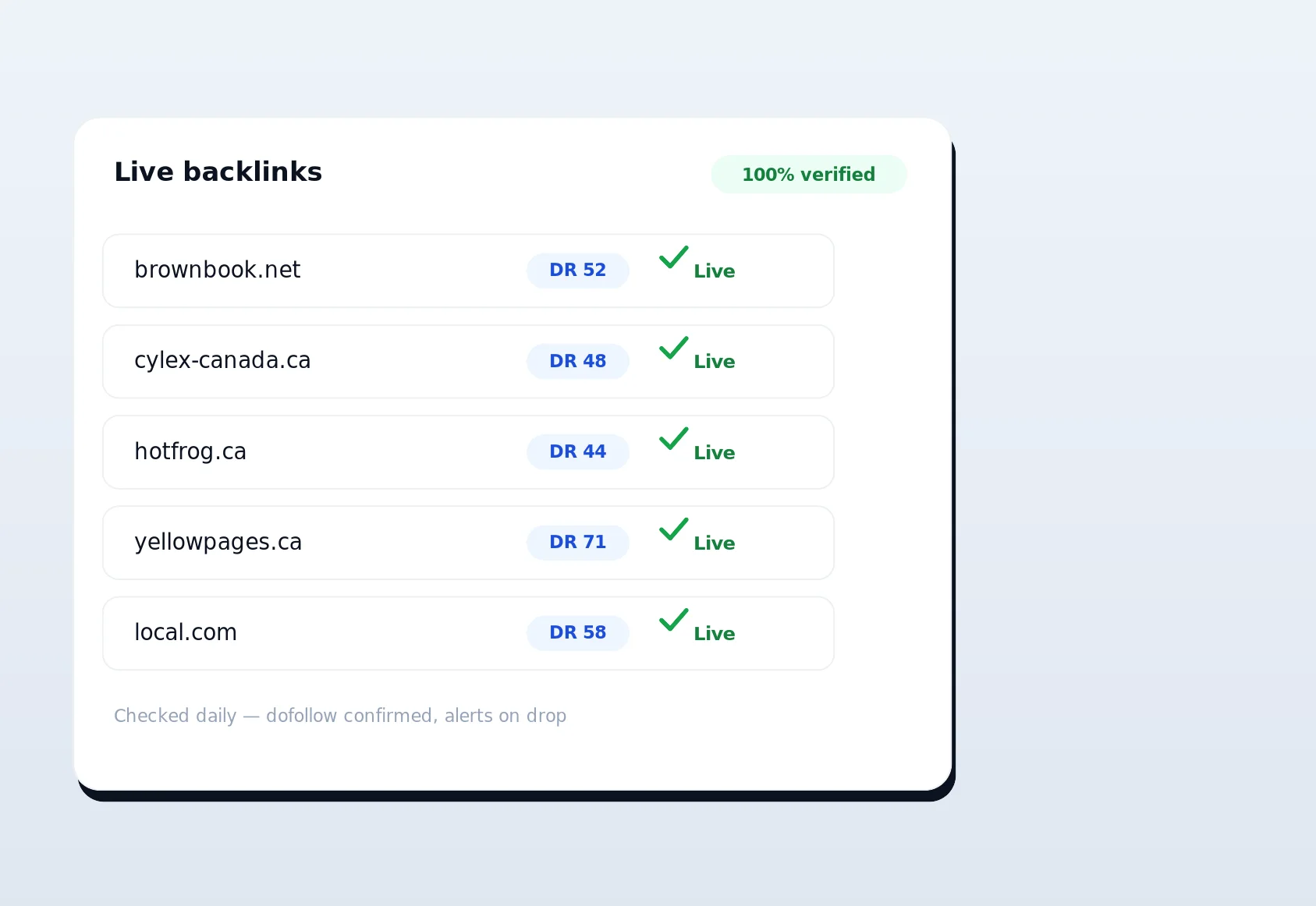
Building a link is only half the job; keeping it is the other half. Directories go offline, editors edit, and links quietly turn nofollow or vanish. LinkSpear's live-link verification re-checks each link you build on an ongoing basis and tells you if one drops, so your hard-won gap-closing work doesn't silently erode. New competitor links are picked up on subsequent analyses too, so the gap stays current instead of going stale the moment you generate it.
| Stage | Manual approach | With LinkSpear |
|---|---|---|
| Finding competitors | Guesswork + manual SERP checks | Auto-pulled from rank tracking |
| Gathering links | Export CSVs from 3 tools, merge by hand | Crawled & deduplicated automatically |
| Building the gap | VLOOKUP marathon in a spreadsheet | One-click gap with shared-competitor boosting |
| Judging quality | Eyeball each domain | Relevance + difficulty scoring |
| Actually getting links | Copy-paste into forms for hours | Push to auto-fill submission queue |
| Verifying links stuck | Re-check by hand weeks later | Automatic live-link verification |
The concrete benefits and outcomes
A good competitor backlink analysis changes what you do on Monday morning, not just what a dashboard shows. Here's what teams get out of it.
- A pre-qualified target list. Every opportunity already links to a business like yours, so acceptance rates are far higher than cold-guessing directories.
- Faster time-to-authority. Instead of building links randomly, you close the exact gap between you and the sites outranking you — the shortest path to page one.
- Anchor intelligence. See which anchors competitors over-use (and where they're exposed) so your own anchor-text optimization stays natural and defensible.
- Local relevance built in. Scoring favors regional directories, local news and niche citations that actually influence local pack and organic rankings.
- No wasted spend. Difficulty scoring stops you pouring hours into links you'll never win, and routes the winnable ones into automation.
- Defensible reporting. Agencies can show clients a link-gap report and a shrinking gap month over month — a metric clients actually understand.
What the anchor breakdown tells you
Beyond which sites link to your competitors, the analysis shows how those sites link — the anchor text distribution. This is quietly one of the most valuable outputs. If a competitor's profile is stuffed with exact-match commercial anchors, that's both a vulnerability you can note and a pattern you should avoid copying. If their profile leans on branded and natural anchors, that tells you the healthy distribution to aim for as you build. LinkSpear surfaces this so your own anchor-text optimization stays natural, varied and defensible rather than accidentally over-optimized.
Who competitor backlink analysis is for
The tool earns its keep for anyone whose rankings are contested — which, locally, is almost everyone.
Local service businesses
If you're a plumber, electrician or dentist fighting for the same three map-pack slots, competitor backlink analysis tells you exactly which local directories and citation sites your top rivals share — the ones you're probably missing. Close that gap and you're competing on equal footing before you touch content.
Marketing agencies
Agencies live and die by efficient, repeatable link building across many clients. Running a competitor backlink analysis per client, then batching the winnable directory opportunities into the automated queue, turns link building from a per-client grind into a scalable process. With agency sub-accounts, each client's gap, targets and progress stay cleanly separated.
In-house SEOs and founders
If you're a founder doing your own SEO, this replaces three subscriptions and a lot of spreadsheet time. You get the "what should I do next" answer without needing to be a link-building expert. And because the analysis connects to LinkSpear's other tools — from business lead scraping to instant indexing — you're building on one coherent dataset rather than stitching exports together from a stack of disconnected apps.
The common thread across all three audiences is time. Competitor backlink analysis, done by hand, is a research task that eats a day and produces a spreadsheet nobody acts on. Done inside LinkSpear, it's a fifteen-minute planning step that ends with links already queued. That shift — from analysis-as-report to analysis-as-action — is why teams keep coming back to it monthly rather than treating it as a one-off audit.
How it fits the wider LinkSpear workflow
Competitor backlink analysis isn't a standalone report — it's the planning layer that feeds the rest of the platform. The insight only matters if it turns into links, and LinkSpear is built so it does.
- Feeds directory building. Winnable directory and citation gaps flow directly into automated directory backlink building, submitted via your real browser and IP by the Chrome extension.
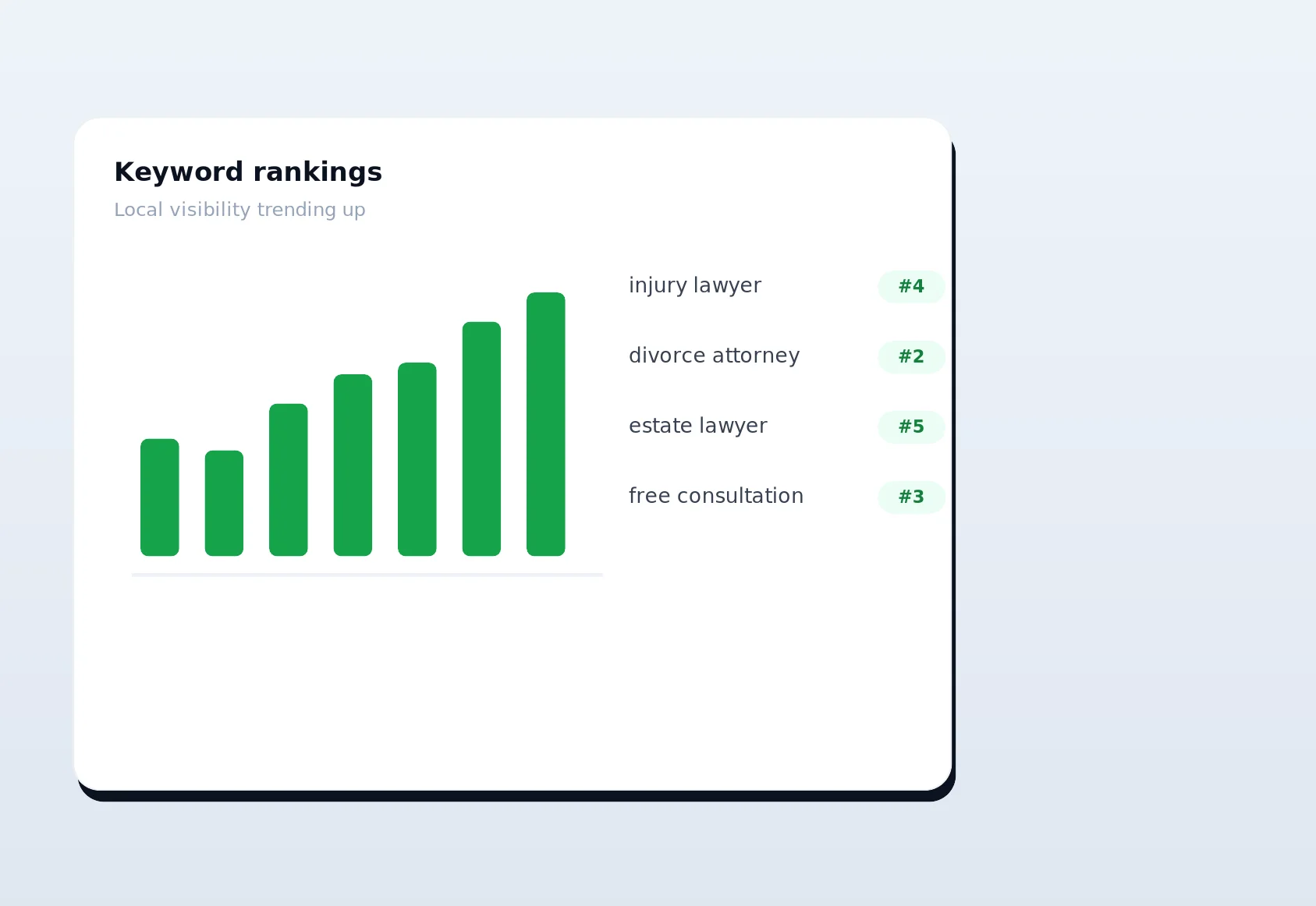
- Pairs with rank tracking. As you close gaps, rank tracking shows movement on the exact keywords those competitors dominated, so you can attribute cause to effect.
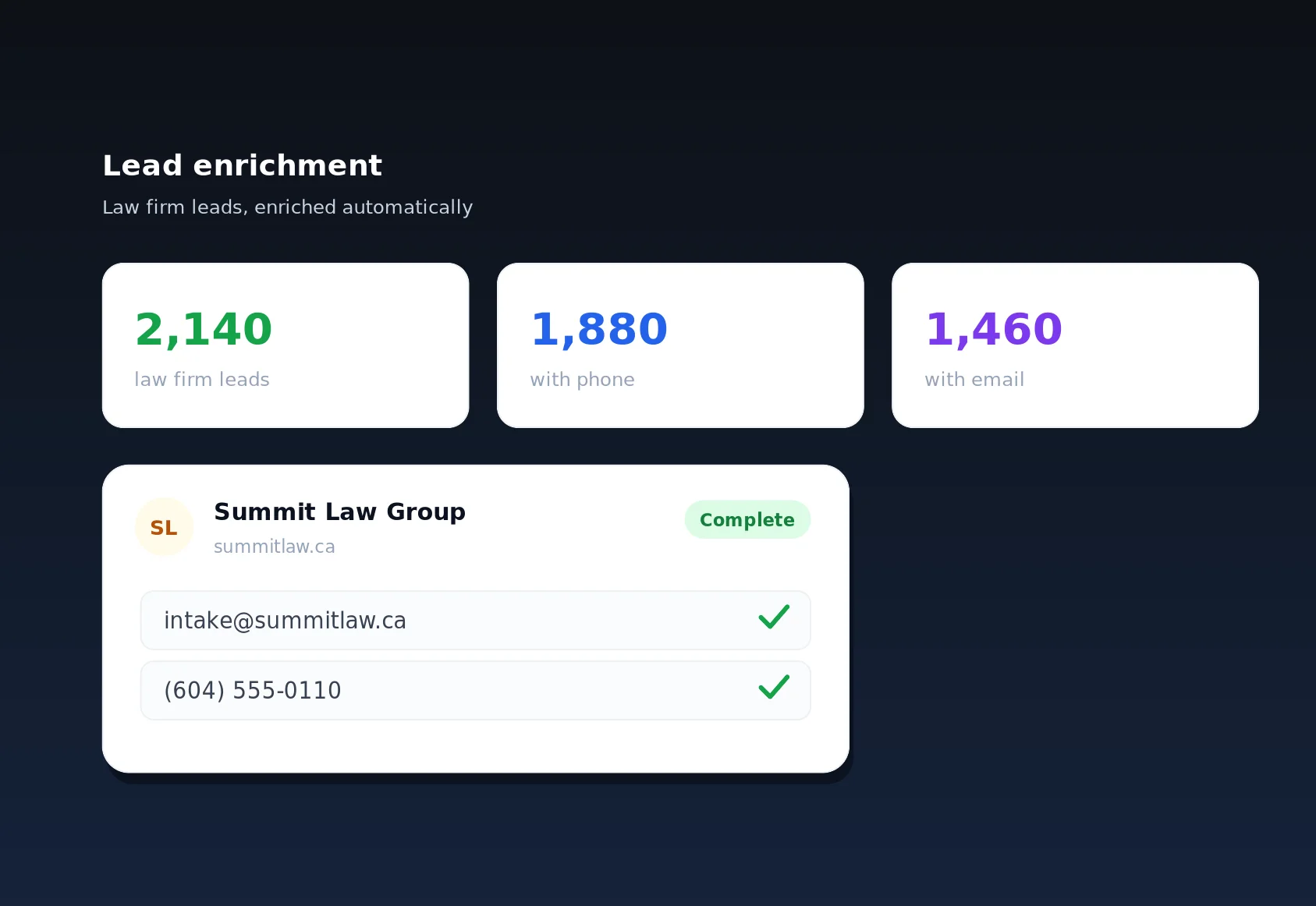
- Cleans up your data first. Before you build, lead enrichment and the local business directory make sure your NAP details are consistent — inconsistent citations undermine every new link you earn.
- Verifies the result. Live-link verification re-checks every link you build so you know it's still live and dofollow, and the disavow tool handles anything toxic you spot along the way.
Competitor backlink analysis vs. standalone SEO tools
Plenty of tools will show you a competitor's backlinks. Very few connect that insight to the act of building the links, and almost none are built around local relevance. That gap between "analysis" and "action" is where most link-building projects stall — the report gets exported, admired, and forgotten.
| Capability | Generic backlink tool | LinkSpear |
|---|---|---|
| Link gap analysis | Yes | Yes, with shared-competitor boosting |
| Local relevance scoring | Rarely | Built in for local markets |
| Matches gaps to live submission sites | No | Yes, against a verified catalogue |
| One-click push to auto-submission | No | Yes, via Chrome extension |
| Real-IP, footprint-free submissions | No | Yes |
| Live-link verification loop | Sometimes | Yes, ongoing |
| Agency multi-client separation | Add-on | Native sub-accounts |
Getting a trustworthy analysis (not garbage in, garbage out)
A competitor backlink analysis is only as good as the profile it's built from. LinkSpear works hard to keep the data honest so your decisions are sound.
- Deduplication first. One opportunity per referring domain, so your target list reflects real, distinct sites rather than inflated page counts.
- Freshness signals. First-seen dates separate a competitor's recent momentum from links they earned years ago, so you can prioritize what's working now.
- Quality weighting. Low-authority scraped domains are down-ranked so they don't drown out the citations and regional sites that actually move local rankings.
- Difficulty realism. Editorial links that need outreach are labelled honestly and kept separate from the directory wins you can automate today.
Honest data also means honest expectations. LinkSpear won't promise that every gap opportunity converts — some directories reject, some editors ignore outreach, some links take weeks to appear. What the platform guarantees is that you're spending your effort on the highest-probability wins first, with clear labelling of what's automatable versus what needs a personal email. That prioritization compounds: close the easy, high-value gaps this month, and next month's analysis starts from a stronger base with a smaller, sharper list.
A realistic example
Say you run an HVAC company and three competitors consistently outrank you for "boiler repair" in your city. You add their domains, LinkSpear crawls and deduplicates their referring domains, and the link gap surfaces 74 opportunities. Of those, 41 are directories and citation sources already in LinkSpear's catalogue — you batch them into the submission queue and the extension auto-fills them over the week. Another 18 are regional editorial mentions the analysis flags for manual outreach with contact hints. The remaining 15 are low-value and skipped by design. Two weeks later, your rank tracking shows movement on exactly the terms those competitors dominated, and your live-link verification confirms the new citations are holding. That's the whole loop — analysis to action to measurable result — inside one platform.
Start closing the gap today
You don't need another dashboard to admire. You need a prioritized list of the links standing between you and the businesses outranking you — and a fast, footprint-free way to actually get them. LinkSpear's competitor backlink analysis gives you both, and it's wired into the directory building, rank tracking and verification tools that turn insight into rankings. Every new user gets a 14-day free trial on the Starter plan — no risk, no long onboarding. Point LinkSpear at your top three competitors, generate your first link gap, and see exactly what it takes to overtake them. Start your free trial and run your first competitor backlink analysis today.