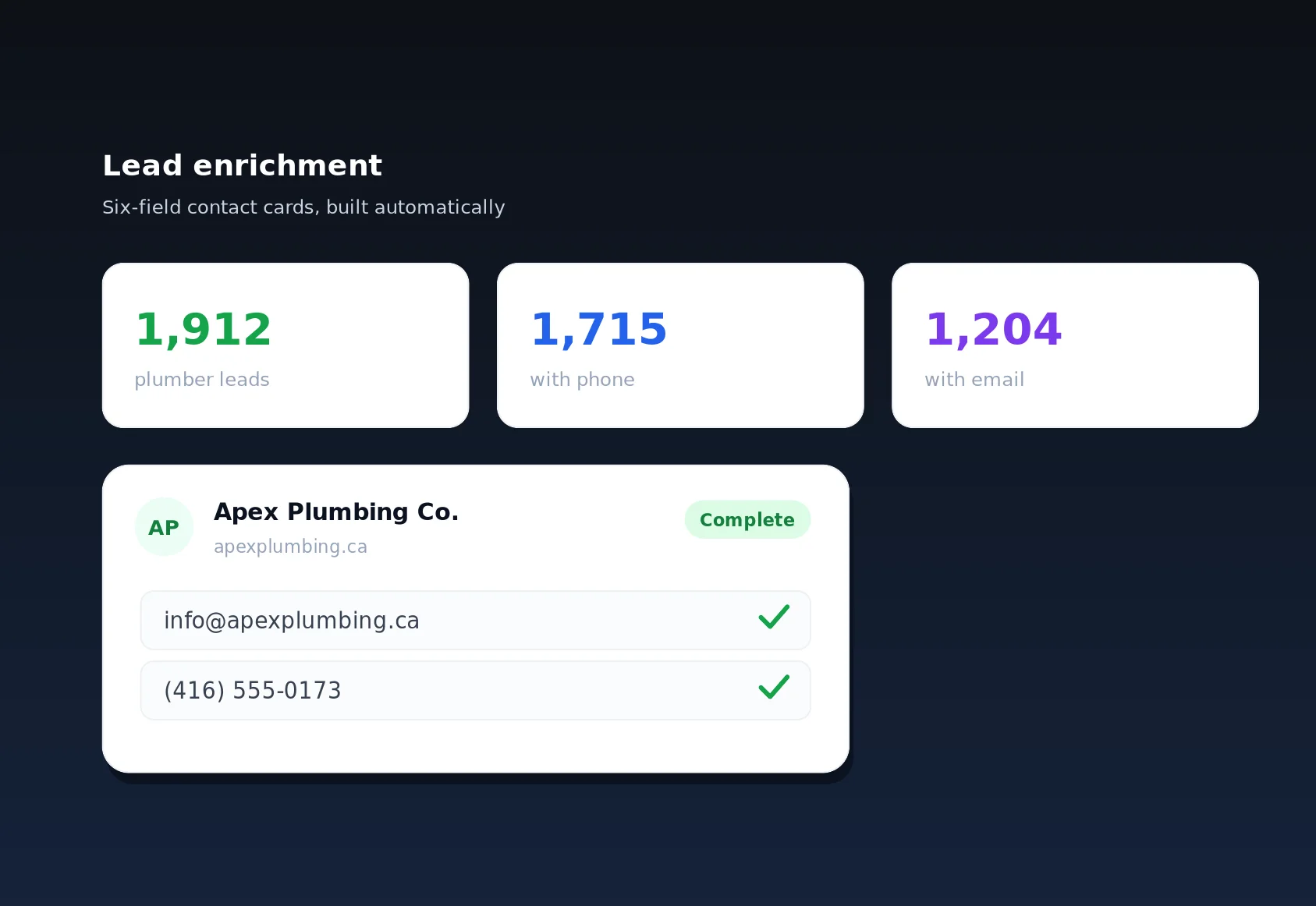
Scrape the same city from two sources and you will pull the same plumber three times: once as "Joe's Plumbing", once as "Joe's Plumbing LLC", and once with a trailing space and a different phone format. Left alone, those three rows become three calls, three enrichment jobs, and three chances to annoy the same business owner. Lead deduplication is the process that collapses all of them back into one canonical contact card, so your reps see a single business, dial it once, and trust that the record in front of them is the record everyone else is working from too.
This page explains what LinkSpear's lead deduplication actually does, how it matches and merges records step by step, the concrete outcomes it produces, who benefits most, and how it underpins the rest of the LinkSpear workflow alongside scraping, enrichment, and call queuing.

What lead deduplication actually means
Deduplication is the work of recognising that two or more records describe the same real-world business and folding them into one. It sounds simple until you look at real data. The same restaurant can appear as "The Corner Cafe" and "Corner Cafe", with one listing carrying an email and the other a street address. A trades company can show up under a personal name in one directory and a registered company name in another. Duplicates are not usually exact copies you can catch with a spreadsheet filter; they are near-matches that need judgement.
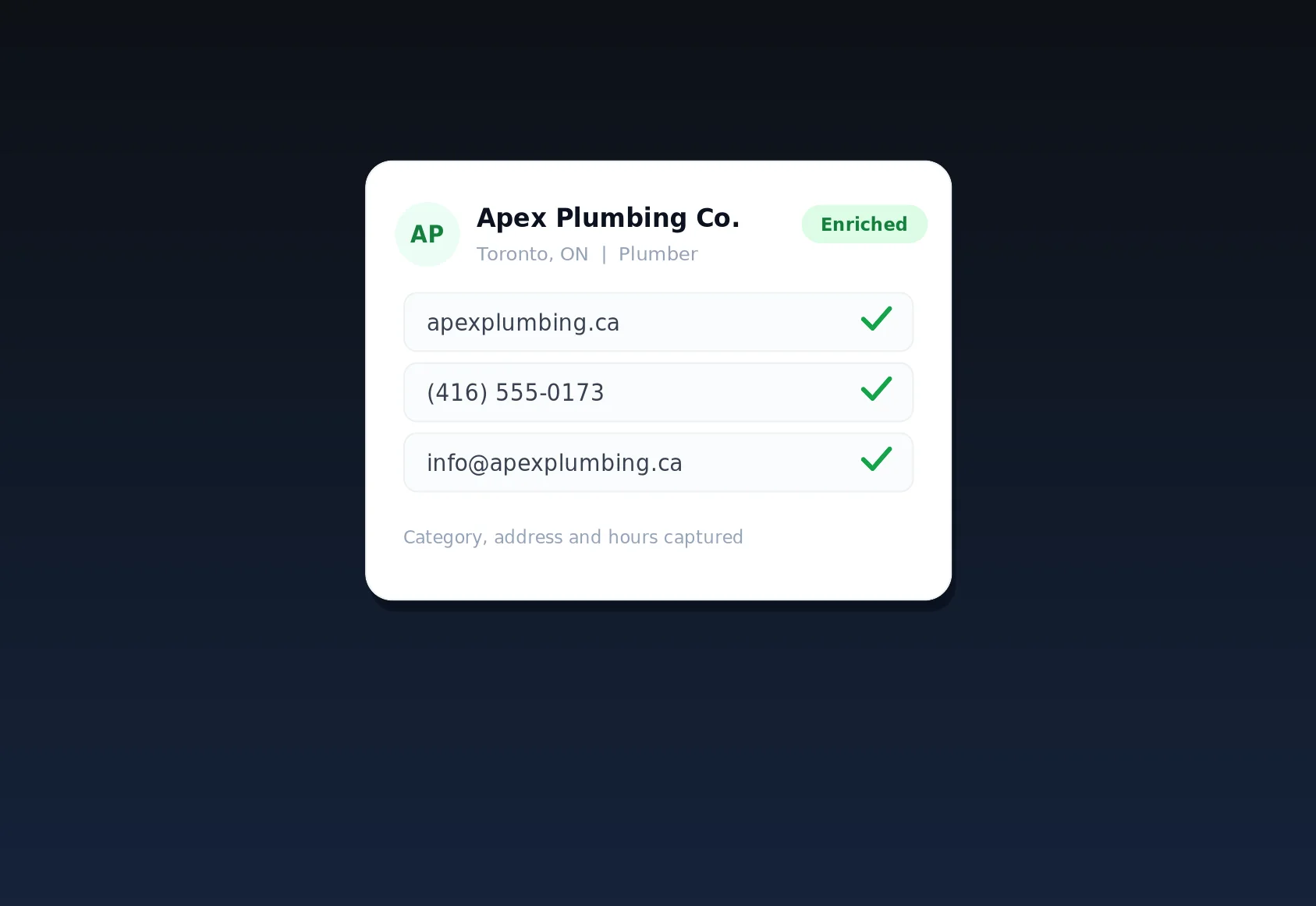
LinkSpear treats the Local Business Directory as a deduplicated master catalogue rather than a growing pile of imports. Every business is meant to exist exactly once, as a single canonical contact card carrying the business name, phone, email, website, street address, city, province or state, country, and category. When new leads arrive, from a scrape, an upload, or an enrichment pass, deduplication decides whether each one is a genuinely new business or another face of one you already hold, and it keeps the catalogue clean automatically instead of leaving you to reconcile it by hand.
The important distinction is that deduplication is not deletion. LinkSpear never throws a business away. When it decides two records are the same, it merges them, combining their fields into one richer card and keeping a record of what was joined. You end up with fewer rows but more complete data, because the email from one duplicate and the address from another now sit on the same card.
How it works, step by step
Deduplication runs as part of the import pipeline and can also be run on demand across your existing directory. Here is the sequence for each incoming record.
1. Normalise the incoming record
Before anything can be compared, the raw fields are cleaned. Business names are lowercased and stripped of legal suffixes like "LLC", "Inc", and "Ltd" and of noise like extra whitespace and punctuation. Phone numbers are reduced to their digits, websites are trimmed to a bare domain, and addresses are standardised. Normalisation is what lets "Joe's Plumbing, LLC" and "joes plumbing" line up as candidates in the first place.
2. Generate matching signals
LinkSpear builds several comparison keys from the normalised record: a domain key from the website, a phone key from the digits, a name-plus-city key, and a fuzzy name signature. Multiple signals matter because no single field is reliable on its own. Two businesses can share a shopfront phone; one business can list two domains. Using several signals together lets the system be confident without being brittle.
3. Score candidate matches
The incoming record is compared against existing cards that share any signal. Each comparison produces a similarity score: an exact domain or phone match weighs heavily, a fuzzy name match in the same city adds weight, and conflicting fields subtract it. The score, not a single field, decides the outcome, which is what keeps two different dentists in the same building from being wrongly fused.
4. Decide: merge, keep separate, or flag
Records scoring above a confident threshold are merged automatically. Records that clearly describe different businesses are kept separate and imported as new. The ambiguous middle, close but not certain, is flagged for review rather than silently guessed, so a human makes the call on the genuinely borderline cases instead of the system making an irreversible mistake.
5. Merge fields into one canonical card
When two records merge, their fields are combined rather than overwritten. Empty fields are filled from whichever duplicate has them, and where both hold a value, the more complete or more recently verified one wins. The result is a single card that is more complete than either input, carrying the union of everything known about that business.
6. Preserve the merge history
Every merge is recorded. You can see which source records were combined into a card and when, and the action is surfaced in the audit log. Because LinkSpear's guiding rule is that data is never destroyed, a merge consolidates without losing the trail of where each field came from.
Why matching on multiple signals is the whole point
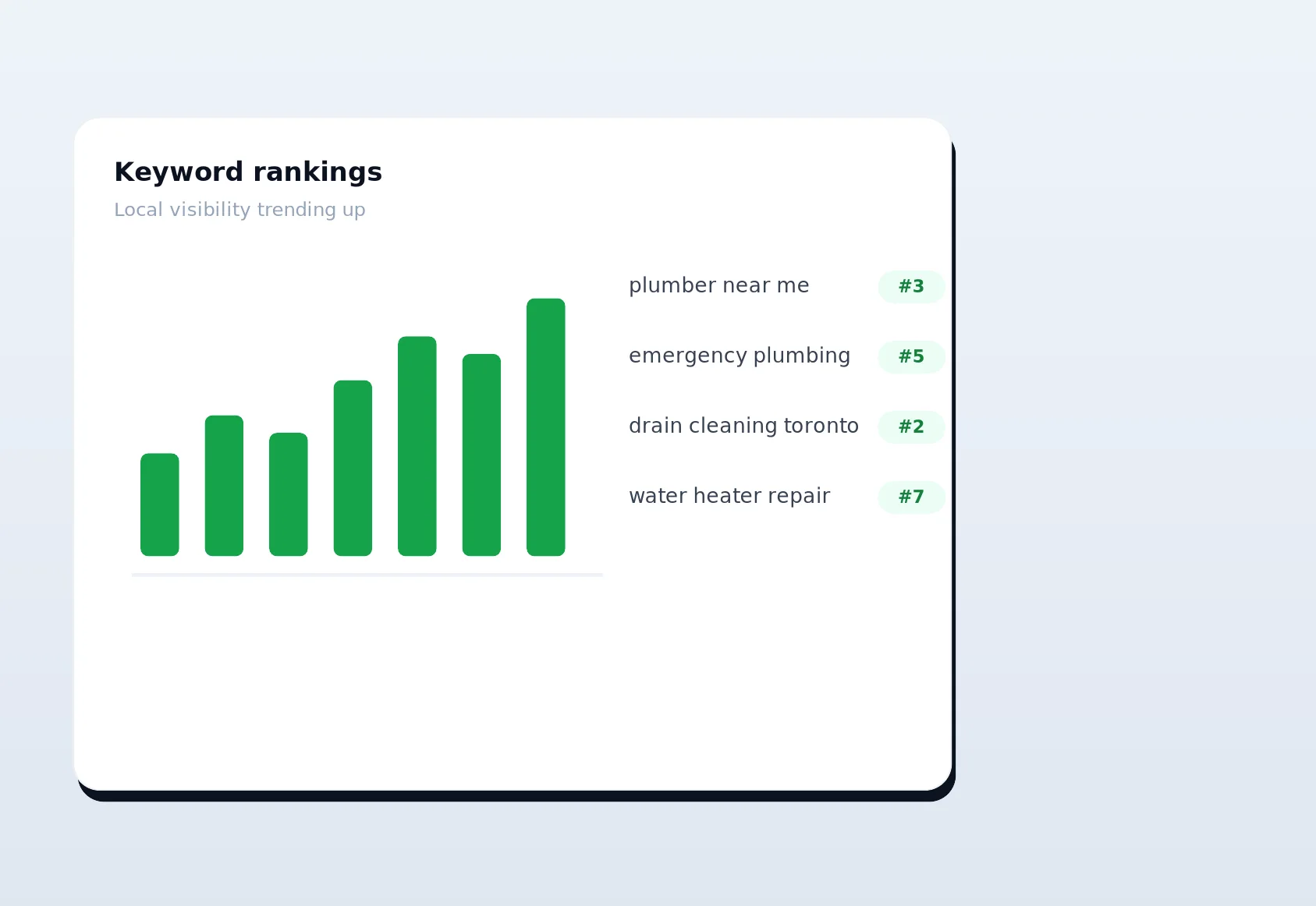
Plenty of tools "dedupe" by matching on a single column, usually exact business name or exact email. That is where naive deduplication goes wrong in both directions. Match too loosely and you fuse two different businesses that happen to share a name or a switchboard number. Match too strictly and you miss the near-duplicates that make up the bulk of real-world mess, letting "Corner Cafe" and "The Corner Cafe" both survive. LinkSpear scores across several signals precisely to avoid both failure modes.
- Fewer false merges. Requiring corroborating signals means two distinct businesses in the same plaza are not fused just because they share a landlord's phone line.
- Fewer missed duplicates. Fuzzy name matching plus domain and phone keys catches the spelling and formatting variations an exact-match filter sails straight past.
- Human review where it matters. The genuinely uncertain cases are flagged, not guessed, so the automation stays confident and the edge cases get a person's judgement.
This is the same fail-safe philosophy that runs through LinkSpear: when in doubt, preserve rather than destroy. Deduplication would rather leave two possible duplicates flagged for a moment than merge two real businesses into an unrecoverable blob.
The concrete outcomes you can expect
Deduplication is not an abstract tidiness exercise. It changes what your team experiences every day.
- You call each business once. No rep dials a business a colleague spoke to yesterday because a second copy looked untouched. That protects your reputation with prospects and your reps' credibility.
- You stop paying to enrich the same lead twice. Lead enrichment spends a proxy request on every record with a gap. Three copies of one business means three times the spend for one result. Deduplication removes that waste before enrichment runs.
- Your data compounds in one place. Because every field lands on a single canonical card, the email from one source and the address from another combine instead of scattering across exports.
- Your reporting is honest. A directory of 40,000 unique businesses is worth far more than 60,000 rows that are really 40,000 businesses. Deduplication makes your counts mean something.
- Call queuing stays fair. Call queuing distributes leads across reps with cooldowns and daily caps. Duplicates break that fairness by letting the same business enter the queue twice; a clean catalogue keeps the rules honest.
Put those together and the effect is not marginal. Every downstream stage, enrichment, queuing, calling, and citation building, does its job once per business instead of once per duplicate. That is wasted spend removed, wasted dials removed, and wasted trust preserved, all from cleaning the list before anyone works it.
Deduplication versus the manual alternative
The fastest way to see the value is to compare automated deduplication against the two things most teams do instead: manual spreadsheet cleanup, or simply living with the duplicates.
| Dimension | Manual spreadsheet cleanup | Living with duplicates | LinkSpear lead deduplication |
|---|---|---|---|
| Matching method | Exact filters, eyeballing | None | Multi-signal similarity scoring |
| Catches near-matches | Rarely | Never | Yes, fuzzy plus keys |
| Speed at scale | Hours per thousand rows | Instant but costly later | Automated across the whole list |
| Data loss risk | High, easy to delete wrong row | None, but data stays messy | Merges, never deletes |
| Fills gaps while merging | Manually, if at all | No | Combines fields into one card |
| Auditability | None | N/A | Every merge logged |
| Ongoing effort | Repeats every import | Compounds forever | Runs automatically at import |
Manual cleanup is accurate only if someone is careful and patient, and it has to be redone every time you import. Living with duplicates feels free until you count the wasted dials, duplicated enrichment spend, and the prospect who fields the same pitch twice. Automated deduplication gives you the judgement of a careful human at the speed of the whole list, and it never risks deleting the wrong row because it merges rather than destroys.
Why merging beats deleting
A common instinct when cleaning a list is to delete the duplicates and keep "the good one". That is exactly the wrong move, because there usually is no single good one. One copy has the email, another has the verified phone, a third has the full street address. Delete two of them and you throw away real data to save a row. LinkSpear merges instead, so the surviving card inherits every field its duplicates held. You lose the redundancy and keep the information, which is the whole point of cleaning a list rather than shrinking it.
Who it is for
Lead deduplication earns its keep for anyone whose list is assembled from more than one source, which in practice is almost everyone.
Local service businesses
If you build prospect lists by scraping businesses from OpenStreetMap and YellowPages, the two sources overlap heavily. A supplier prospecting plumbers or HVAC companies across a metro will pull the same firms from both, and deduplication is what stops that overlap from turning into double the calls.
Marketing and SEO agencies
Agencies running outreach for many clients accumulate leads constantly, often importing client-supplied lists on top of scraped ones. Deduplication keeps each client's catalogue clean, and agency sub-accounts keep the merge logic scoped so one client's records never bleed into another's.
Sales teams doing cold outreach
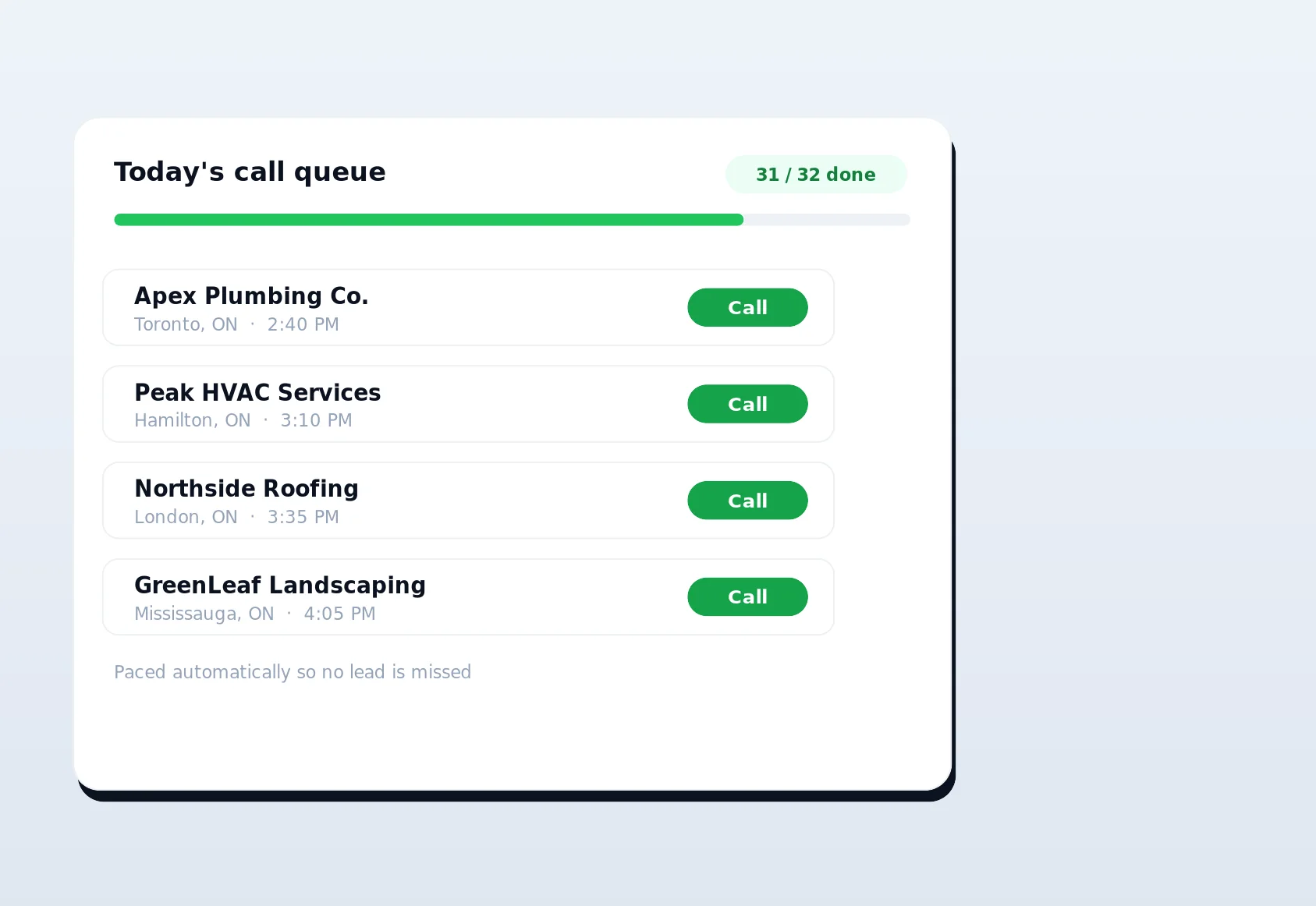
Teams that live in the dialer feel duplicates most acutely, because a duplicate is a call that makes them look disorganised to a prospect. Feeding a deduplicated directory into the queue means every record a rep touches is a distinct, first-contact business. The reps never see the plumbing; they see a queue with no repeats.
How deduplication fits the wider LinkSpear workflow
Deduplication is the stage that makes every other stage trustworthy. It sits early in the pipeline, right after data arrives, because everything downstream inherits its cleanliness.
- Scrape. Pull businesses from OpenStreetMap and YellowPages into your directory. The two sources overlap, so many arrive as near-duplicates.
- Deduplicate. Lead deduplication collapses those overlaps into one canonical card per business before any effort is spent on them.
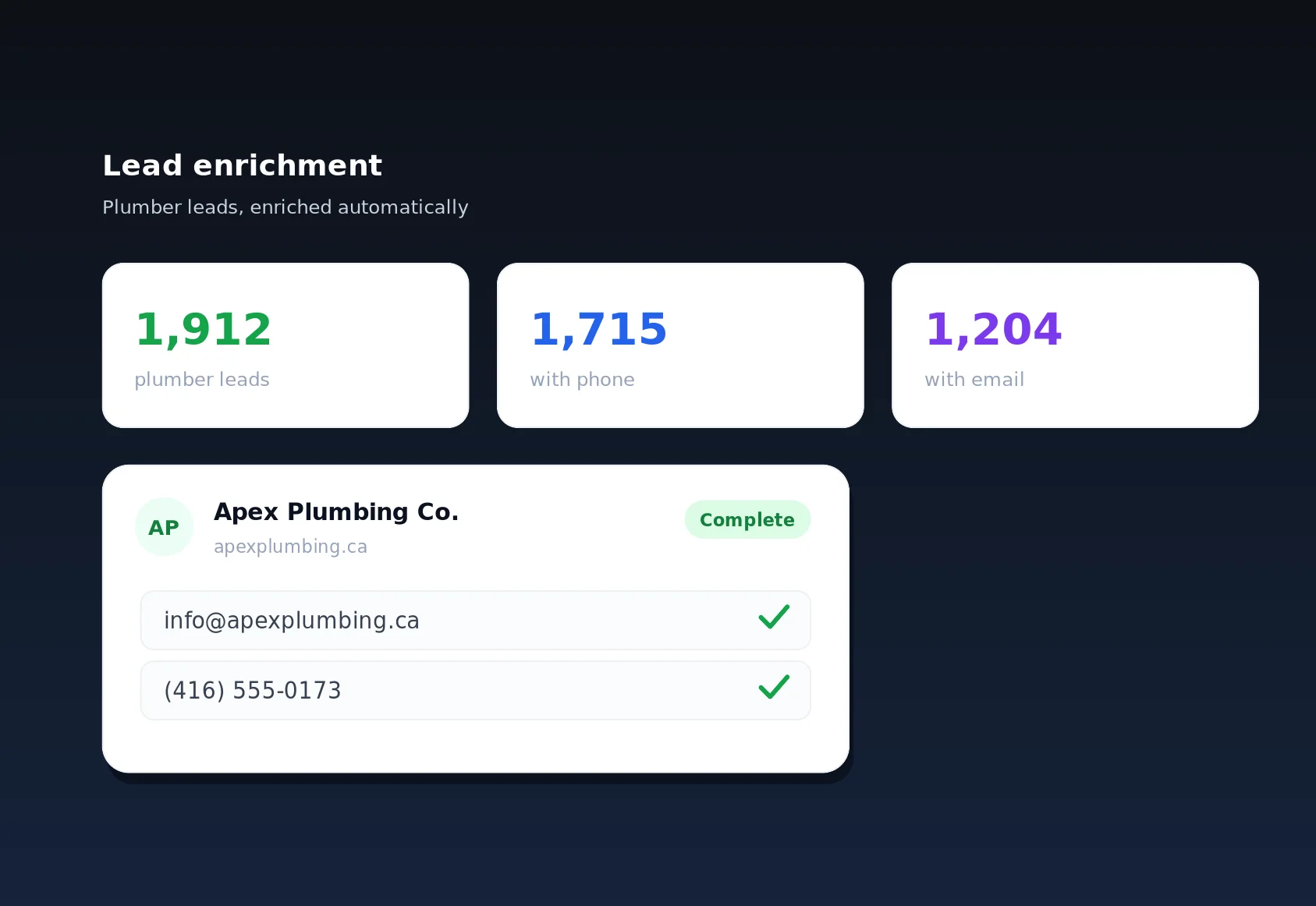
- Enrich. Lead enrichment fills the missing emails and phones through anonymous proxies, once per business rather than once per copy.
- Queue and call. Clean cards flow into call queuing, which hands them to reps one at a time with cross-tenant fairness, cooldowns, and daily caps.
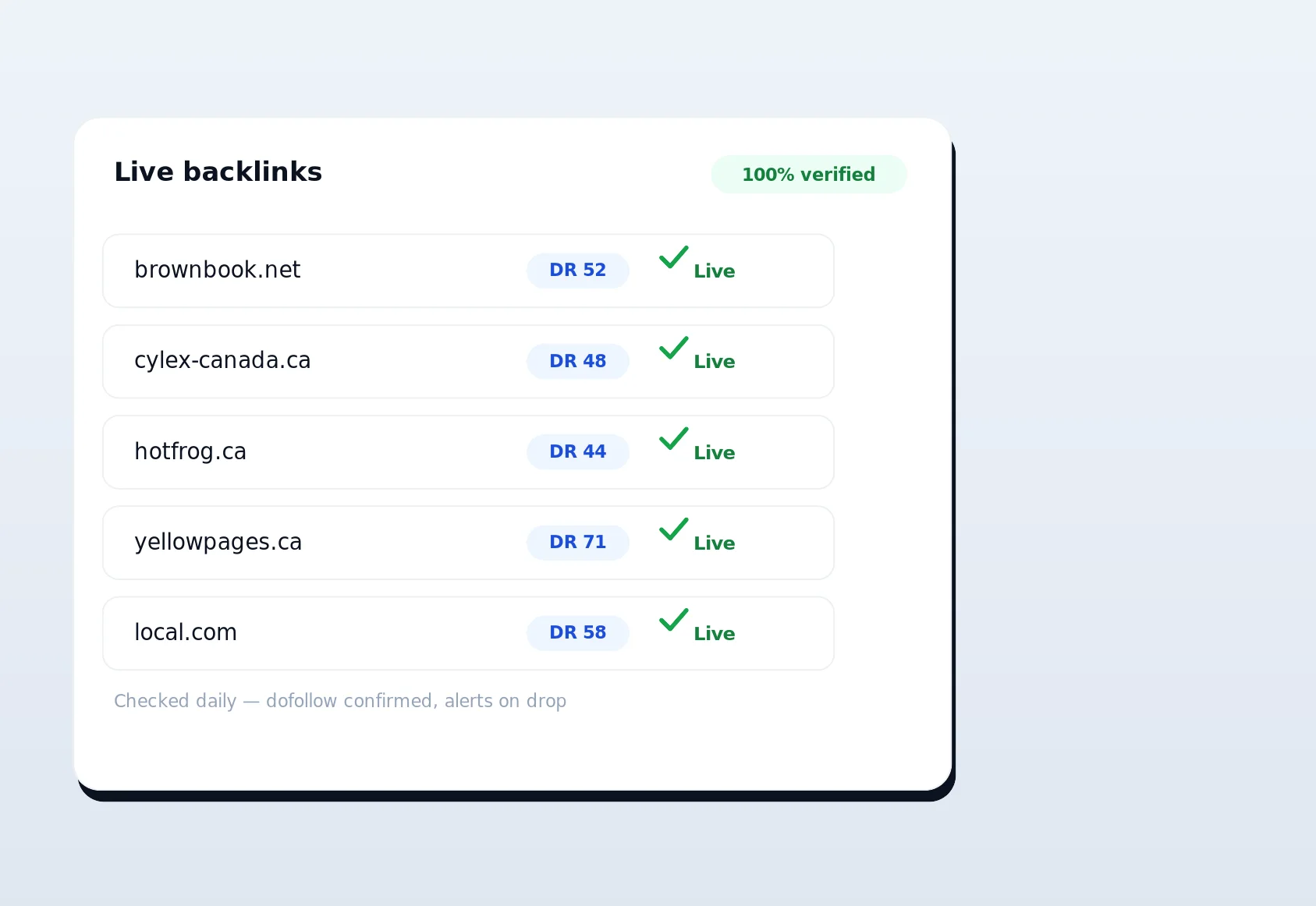
- Build citations. For clients you take on, the Chrome extension auto-fills directory and citation submissions using your real browser, building directory backlinks with no footprint.
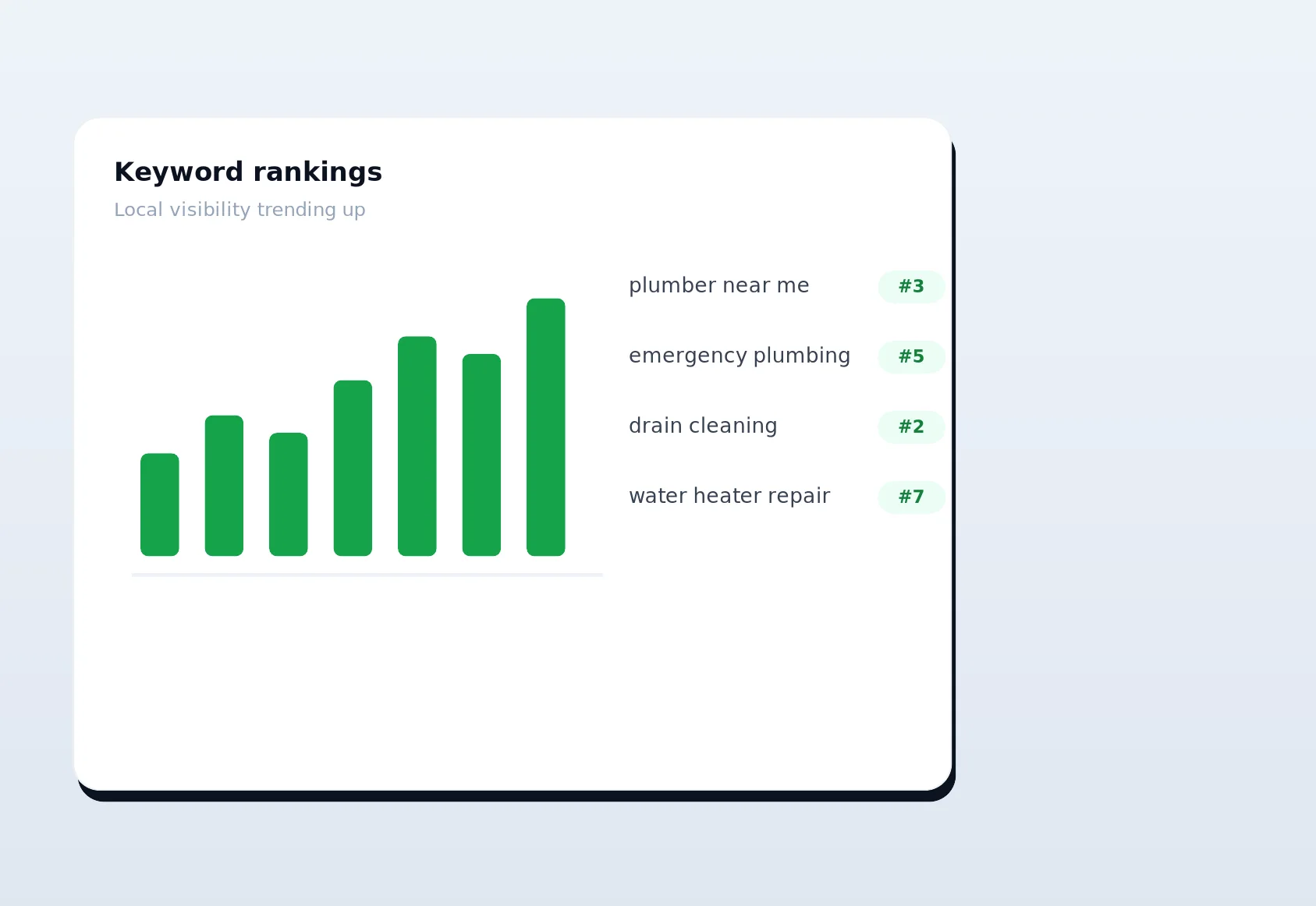
- Track and prove. Rank tracking and live-link verification show the work is landing.
Because the directory is shared across these tools, deduplicating a business once benefits every downstream stage forever. The single card you keep today is the one your reps dial, the one enrichment completes, and the one a citation points at next week.
Data quality, safety, and control
Deduplication is careful by design. Its cardinal rule is that a business is never deleted; duplicates are merged into a richer canonical card, and the merge is logged so you can always see what was combined and when. Automatic merges only happen above a confident similarity threshold, and the borderline cases are flagged for review rather than fused on a guess. If a merge is ever questioned, the history of which sources contributed which fields is right there in the audit trail.
You stay in control of scope. Run deduplication automatically at import, or trigger a pass across an existing category or city. Tune whether you want the system to lean conservative, flagging more for review, or to merge more aggressively. Because nothing is destroyed, you can always be bolder knowing the trail is preserved.
Deduplication as an ongoing state, not a one-off cleanup
The biggest mistake teams make is treating dedupe as a project they do once. Duplicates are not a backlog you clear; they are a tide that comes in with every new import. Because LinkSpear deduplicates at the point of import, your directory stays in a clean state continuously rather than drifting back into mess between quarterly cleanups. You do not schedule a deduplication project; you simply never accumulate the debt in the first place, which is a far cheaper place to be.
Common questions teams ask before they start
A few practical points come up often enough to address directly.
Will it merge two different businesses by mistake?
Automatic merges require several corroborating signals and a confident score, so two distinct businesses that merely share a phone line or a name are not fused. The genuinely ambiguous cases are flagged for a human rather than merged silently. And because merges are logged and reversible in principle, a mistaken merge is recoverable, not a dead end.
What happens to the data on the duplicate records?
Nothing is thrown away. When records merge, their fields are combined onto one canonical card: empty fields are filled and, where both hold a value, the more complete or more recently verified one is kept. The surviving card is more complete than any single input, and the merge history records where each field came from.
Do I have to run it manually?
No. Deduplication runs automatically as part of the import pipeline, so scraped and uploaded leads are deduplicated as they land. You can also trigger an on-demand pass across an existing category or city if you want to reconcile records that predate a rule change.
Start cleaning your list today
A list full of duplicates is not a bigger list, it is a more expensive one, paid for in double dials, doubled enrichment spend, and prospects who field the same pitch twice. Lead deduplication is what turns that mess into a deduplicated master catalogue where every business exists exactly once, on a single canonical card that carries the union of everything you know about it. It matches on multiple signals so it catches the near-duplicates a spreadsheet filter misses, and it merges rather than deletes, so cleaning your list makes it richer instead of smaller. New users get a 14-day free trial on the Starter plan, so you can point deduplication at a real scraped list, watch three copies of the same plumber collapse into one complete card, and see how much cleaner every downstream stage becomes, before you pay anything. Start your free trial and let LinkSpear keep your directory honest for you.