You spent weeks earning citations, submitting to directories and chasing editorial mentions — so the last thing you want is for those links to quietly disappear. Live backlink verification is the safety net that watches over every link you build, re-checks that it still exists on the page, still points at your URL and still passes authority, and flags the moment anything breaks. LinkSpear runs this verification continuously across your whole profile, so a removed listing or a silent nofollow swap never goes unnoticed until a ranking drop forces you to investigate.
Link building is only half the job. Links rot. Editors prune outbound sections, free directories expire, site owners redesign and drop your citation, and CMS migrations turn clean links into 404s or endless redirect chains. Without ongoing checks you are paying for equity you no longer receive. This page explains exactly how LinkSpear's live backlink verification works, what it detects, who benefits most, and how it plugs into the wider LinkSpear workflow alongside automated directory backlink building and rank tracking.
What live backlink verification actually is
Live backlink verification is the automated, repeated process of visiting each page that is supposed to link to you and confirming, in real time, that the link is genuinely present and healthy. It is not a one-time export from a third-party index that may be weeks or months stale. It is an active fetch of the live HTML, followed by a set of checks against the anchor, the destination URL, the link attributes and the HTTP response.
The distinction matters. Most "backlink" data you see in SEO suites comes from a crawler's cached snapshot of the web. That snapshot tells you a link was seen at some point. It cannot tell you the link is on the page right now. LinkSpear closes that gap by fetching the source page on demand and parsing it, so every status you see reflects the current state of that URL rather than a historical guess.
What each check confirms
- Presence: the anchor and your destination URL still appear in the rendered page markup.
- Link target: the href resolves to your exact URL, not a redirected, truncated or parameter-stripped version.
- Follow status: whether the link carries rel="nofollow", sponsored or ugc — attributes that change how (or whether) equity flows.
- HTTP health: the response code of the source page (200 OK vs 404, 410, 500 or a redirect chain) and of your destination.
- Anchor text: the exact clickable text, so you can spot when an editor rewrites your anchor to something off-brand or off-topic.
How LinkSpear verifies your links, step by step
The workflow is designed to run hands-off in the background and only demand your attention when something is actually wrong. Here is the full cycle.
Step 1: Build your monitored link list
Links flow into verification automatically from the places you create them. Every submission made through the Chrome extension autofill and every citation from the directory backlink builder is registered with the source URL, the expected destination and the intended anchor. You can also bulk-import existing backlinks by CSV or paste a list of URLs, so links you earned before joining LinkSpear are covered too.
Step 2: Fetch each source page anonymously
LinkSpear requests the live source page through the same pool of rotating anonymous proxies used for lead enrichment. Fetching through rotating IPs means high-volume verification never hammers a single directory from one address, avoids rate-limit blocks, and keeps your own IP and identity out of the request. The fetch captures the final rendered HTML and the full response chain.
Step 3: Parse, match and classify
The parser locates every outbound link on the page and matches against your expected destination. It records whether the link exists, what anchor text wraps it, which rel attributes are set, and the HTTP status of both the source and the target. Each monitored link is then classified into a clear state — live and followed, live but nofollow, redirected, missing, or errored.
Step 4: Detect change against the last known good state
Verification is a diff, not just a snapshot. LinkSpear compares today's result with the last successful check. If a link that was live and followed yesterday is missing today, or a dofollow link quietly gained a nofollow attribute, that transition is what triggers an alert — not the steady state. This keeps noise down and surfaces only genuine changes.
Step 5: Surface issues where you already work
When a link breaks or degrades, LinkSpear raises it in your in-app Audit Log as an operational alert, with the source URL, the old state, the new state and the timestamp. You see a running feed of exactly what changed and when, so remediation is a click away rather than a forensic investigation.
Step 6: Re-verify on a schedule
The cycle repeats automatically. High-value or historically flaky links can be checked more frequently; stable links are re-checked less often to conserve resources. You set the cadence; LinkSpear keeps the whole profile under continuous watch without you lifting a finger.
Because each step is automated, the practical experience is quiet. You do not log in every morning to run a report. You get on with building links and running campaigns, and LinkSpear only interrupts you when a link that mattered has changed. That inversion — silence when everything is fine, a precise alert when it is not — is what makes continuous verification sustainable at scale instead of a chore that slips down the to-do list until it is forgotten.
Why links break in the first place
Understanding the failure modes makes the value of monitoring obvious. Links almost never disappear because you did something wrong; they disappear because the web around them keeps changing. Knowing the common causes also helps you write a smarter remediation playbook when an alert lands.
- Editorial pruning: a blog or resource page gets tidied up and your outbound link is one of several cut during the edit, with no notice to you.
- Directory expiry and tier changes: free listings lapse, or a directory moves your entry behind a paid tier and strips the live link until you upgrade.
- Redesigns and CMS migrations: a site moves platforms, URLs change, and your citation either 404s or survives only as a broken redirect.
- Nofollow policy shifts: a publisher decides to nofollow all outbound links sitewide, quietly cutting the equity from links that stay visible.
- Spam cleanups: a host purges user-generated content and takes legitimate citations down alongside genuine spam.
- Domain lapse: the linking site itself expires, gets parked or changes ownership, taking every link on it with it.
None of these events sends you a warning email. The only reliable way to learn about them is to look at the live page — which is exactly what verification does on every run.
What live backlink verification detects
A link can fail in more ways than simply vanishing. Effective live backlink verification distinguishes between failure modes, because each one calls for a different response.
| Detected state | What it means | Recommended action |
|---|---|---|
| Live & followed | Link present, points at you, passes equity | Nothing — this is the goal |
| Missing / removed | Link no longer on the source page | Re-submit, request reinstatement, or replace |
| Turned nofollow | Link present but now tagged nofollow/sponsored/ugc | Assess value; ask for dofollow or move on |
| Redirected | Destination now 301/302s elsewhere | Update the target or reclaim the link |
| Source 404 / 410 | The whole linking page is gone | Rebuild the citation on a live page |
| Anchor changed | Clickable text was edited | Review for relevance and brand fit |
| Source unreachable | Server error or timeout on the host | Re-check later; flag if persistent |
By separating a temporary server hiccup from a permanent removal, LinkSpear prevents both false alarms and missed disappearances — the two failures that make manual link checking so unreliable.
Why it matters: the concrete benefits
Verification is not busywork. It protects the return on every hour and every dollar you invested in link acquisition. The payoffs are direct and measurable.
- Protect rankings before they slip: catch a lost link the day it disappears, not weeks later when a keyword drops and you are scrambling to find the cause.
- Stop paying for links you no longer have: if you or a client pay for placements or premium directory listings, verification proves the link is still live and earning its keep.
- Report with proof, not hope: agencies can hand clients a defensible record of live, followed links instead of a stale export that may already be wrong.
- Prioritise remediation: a followed link on an authority domain going missing matters far more than a nofollow footer link; verification tells you which fires to fight first.
- Catch silent nofollow swaps: a link that stays visible but loses its equity is invisible to the naked eye — attribute checks are the only way to see it.
- Feed cleaner data downstream: confirmed-live links give your anchor-text optimization and disavow decisions a trustworthy foundation.
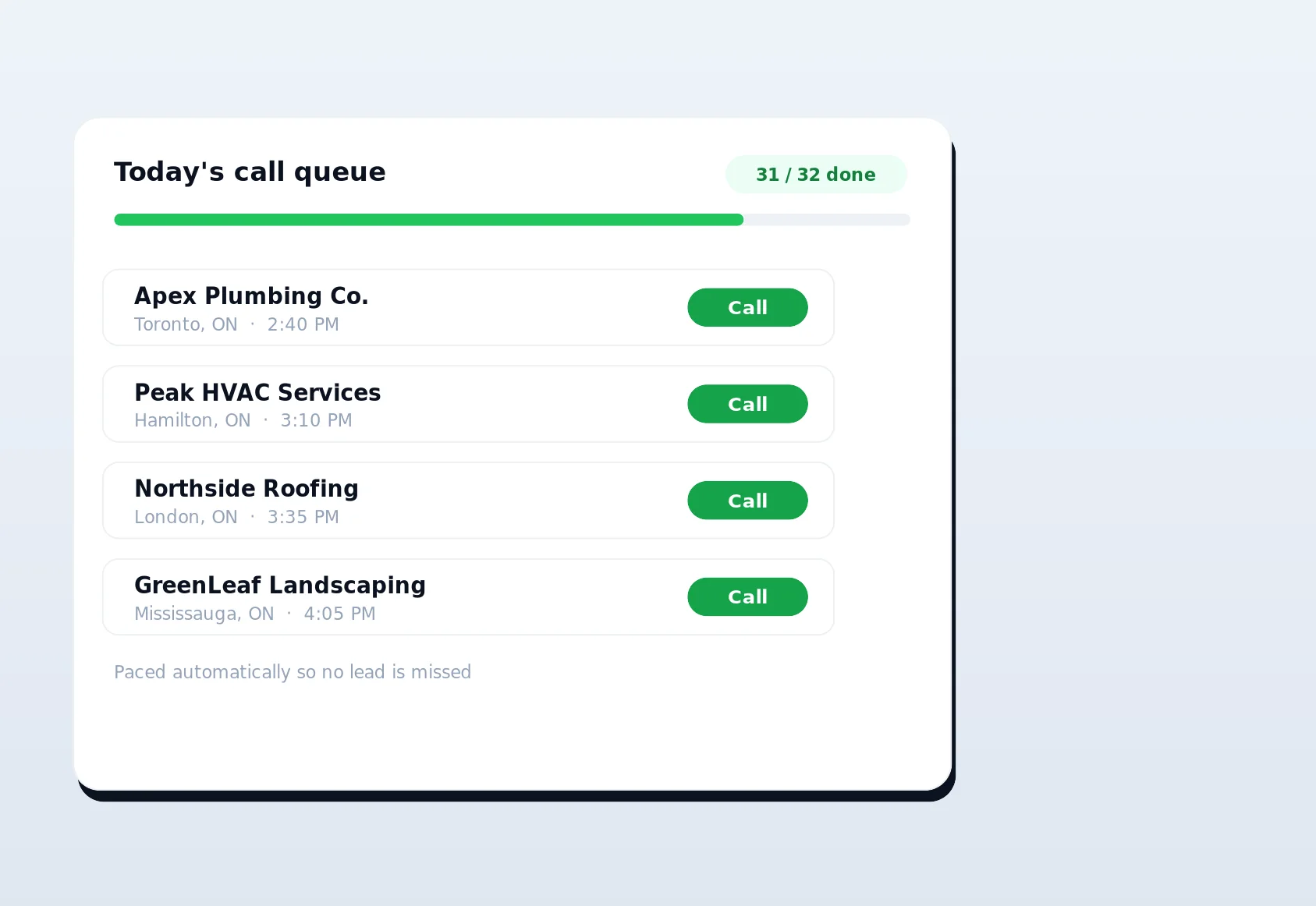
Live verification vs. the usual alternatives
Most people check backlinks in one of three ways: they never do, they do it manually once a quarter, or they trust a stale index inside a big SEO suite. Here is how continuous live backlink verification compares.
| Approach | Freshness | Detects nofollow swaps? | Effort | Alerts on change? |
|---|---|---|---|---|
| No monitoring | None | No | Zero — until rankings drop | No |
| Manual spot checks | Whenever you remember | Rarely | High, tedious | No |
| Third-party index export | Days to months old | Sometimes | Medium | No |
| LinkSpear live verification | Real-time on each run | Yes | Automated | Yes, on transition |
The difference is timing. A quarterly manual audit or a stale crawl might eventually tell you a link is gone — long after the ranking damage is done. Live verification compresses that lag to a single check cycle, turning link maintenance from reactive damage control into routine upkeep.
Who live backlink verification is for
Any business that relies on earned links benefits, but a few groups feel the value immediately.
Local businesses and citation-heavy niches
Local SEO lives on directory and citation consistency. Trades like plumbers, electricians and other service businesses build dozens of citations across local directories, and every dropped or altered listing chips away at local pack visibility. Verification keeps those citations honest.
Marketing agencies with sub-accounts
Agencies managing many clients cannot manually check thousands of links. Verification scales across every agency sub-account, so each client's link profile is monitored independently and reported on with live proof — a genuine retention and upsell lever.
Anyone who pays for placements
If money changes hands for a link — a paid directory tier, a sponsored placement, an outreach fee — verification is the only way to confirm you keep getting what you paid for after the invoice is settled. It is common for a paid link to be live at hand-off and quietly removed months later; without monitoring, you would keep paying renewal fees for equity that no longer flows.
In-house SEO and content teams
Teams that publish resource hubs, comparison pages and internal cross-links also benefit. Verification is not only about external backlinks — the same live check confirms that your own internal links and outbound partner links still resolve, so a broken internal structure never silently drags down the pages you worked hardest to rank.
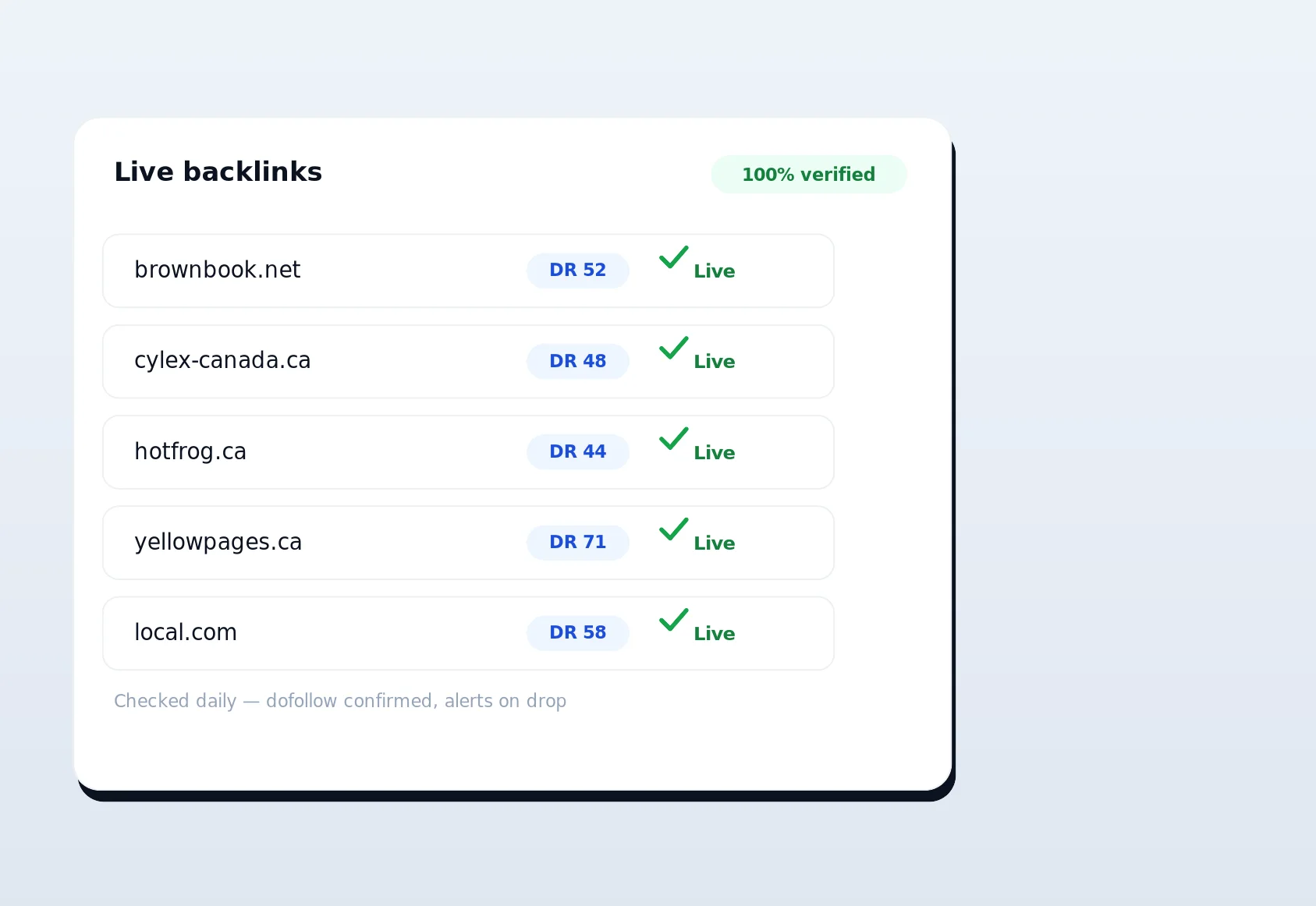
Reading and acting on the results
Detection is only useful if it leads to a fast fix. LinkSpear presents results as a prioritised worklist rather than a raw data dump, so the highest-impact problems rise to the top and trivial ones stay out of your way.
Triage by impact, not by volume
A followed link lost on a strong, relevant domain is treated as far more urgent than a nofollow footer link on a low-value site. The Audit Log orders alerts so you spend your remediation time where it moves the needle. You can see at a glance which losses threaten rankings and which are cosmetic.
A clear remediation path for each state
Every alert pairs the detected change with a sensible next action: re-submit through the directory backlink builder when a citation is dropped, request reinstatement when an editor removes an editorial link, update the destination when a redirect appears, or, in the rare case of a genuinely toxic new neighbour, feed the source into the disavow tool. The point is that you always move from "something changed" to "here is what to do" without leaving the platform.
An audit trail you can defend
Because every check is timestamped and logged, you build a historical record of each link's lifecycle — first seen live, any transitions, and the current state. That trail is invaluable when a client questions a ranking dip, when you need to prove a paid placement was removed, or when you simply want to understand how durable a given directory's links tend to be over time.
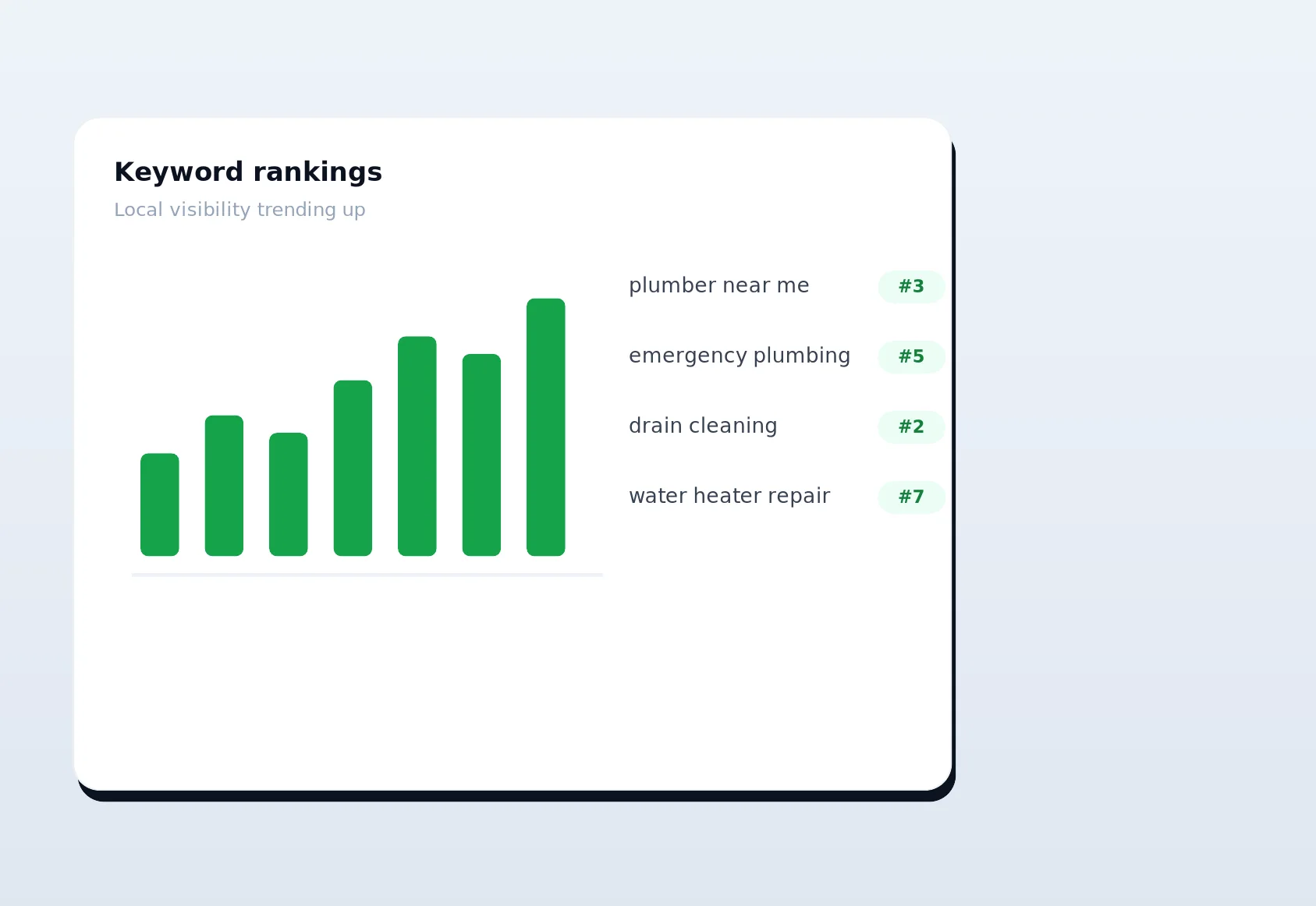
How it fits the wider LinkSpear workflow
Verification is the closing loop of LinkSpear's build-and-protect cycle rather than a standalone gadget. The flow is straightforward: you find prospects and build the underlying local business directory, enrich records with lead enrichment, then create citations and backlinks through the directory backlink builder and Chrome extension using your real browser and real IP for a clean footprint.
Once those links exist, live verification takes over and guards them. Confirmed-live links then feed the rest of your program: rank tracking correlates link health with movement in the SERPs, instant indexing gets new links discovered faster, and anchor-text optimization works from an accurate picture of what actually points at you. Every stage trusts the same verified data, so decisions downstream are grounded in reality, not in a months-old crawl.
Built for safe, resilient checking
Volume link verification can look abusive to a host if it is done carelessly. LinkSpear's design keeps checks polite and resilient. Requests route through rotating anonymous proxies so no single directory sees a flood from one IP, retries are spaced to distinguish a momentary timeout from a true removal, and a link is never marked dead on a single transient error. Crucially, verification is report-only — it observes and alerts, and never deletes or deactivates a link record on your behalf. You always decide what to do with the information, which means a false negative can never silently erase a real, valuable link from your records.
Start verifying your backlinks today
Every link you have ever built is either still working for you or quietly slipping away — and without live backlink verification you have no way to know which. LinkSpear turns that uncertainty into a clear, continuously updated picture: live and followed, or flagged for action. You stop losing equity in the dark, you report to clients with proof, and you fix problems in hours instead of discovering them a quarter too late. New users get a 14-day free trial on the Starter plan — no long-term commitment — so you can point LinkSpear at your existing links, watch the first verification run complete, and see for yourself exactly which of your backlinks are still earning their keep. Start your free trial and put your link profile under continuous watch today.