Every SEO engagement eventually hits the same moment: a client leans back and asks, "So what am I actually paying for?" Proof-of-value SEO reports exist to answer that question before it's ever asked. Instead of vague promises and a monthly PDF nobody reads, LinkSpear turns the concrete work you do, rankings won, backlinks placed, citations built, leads called, into dated, defensible evidence a small-business owner can understand in thirty seconds. The result is fewer cancellations, faster renewals, and a client who can see the needle moving.
This page explains what a proof-of-value SEO report is, how LinkSpear assembles one automatically from the data already flowing through the platform, the outcomes it drives for agencies and in-house teams, and how it stitches together the rest of your workflow, from lead enrichment to directory backlink building. If you've ever lost a client who was actually getting results simply because they couldn't see them, this is the fix.
What a proof-of-value SEO report actually is
A proof-of-value SEO report is a client-facing document that ties your invoice to observable outcomes. It's not a data dump of impressions and bounce rates, and it's not a screenshot of a rankings tool with no context. A good proof-of-value SEO report answers three plain questions: what did you do this period, what changed because of it, and what is the plan next. Everything else is noise.
The distinction matters because most SEO reporting fails in one of two directions. Either it's too thin, a single rankings screenshot that a skeptical owner dismisses as cherry-picked, or it's too dense, a forty-tab spreadsheet that buries the story under metrics nobody outside the agency understands. LinkSpear's reports sit in the middle on purpose: enough hard evidence to be credible, framed simply enough that a plumber, dentist, or roofer can nod along and feel confident writing next month's cheque.
Crucially, the evidence isn't manufactured for the report. It's the same operational data LinkSpear already records as you work: neutral proxy-based rankings, verified live backlinks, submitted citations, enriched and called leads. Because it's a byproduct of the actual work rather than a marketing exercise, it holds up under scrutiny. Every number in a proof-of-value SEO report traces back to a real, dated event in the system.
Why proof of value decides whether clients stay
Churn in local SEO is rarely about results, it's about perceived results. Owners are busy, non-technical, and naturally suspicious of a recurring bill they can't map to something tangible. A client who is genuinely climbing the local pack will still cancel if, from where they sit, nothing seems to be happening. The work was real; the visibility of the work was not.
Proof-of-value reporting closes that perception gap. When a business owner can see that they moved from position 14 to the three-pack on their money keyword, that eleven new citations went live this month, and that their sales rep worked forty fresh leads from the queue, the recurring invoice stops feeling like a leap of faith and starts feeling like a subscription to measurable growth. The evidence does the retention work for you.
- It converts patience into trust. Local SEO is a climb, not a switch. A dated trend line lets owners see progress during the slow early weeks instead of assuming nothing is happening.
- It defuses the "why am I paying?" conversation. The report answers the question before the client asks it, which is the difference between a renewal and an awkward call.
- It shifts the anchor from cost to outcome. When the conversation is about rankings gained and leads worked, price stops being the headline.
- It protects you from a single bad month. A rankings dip during a Google update is far less alarming when the client can see the longer trend and the work still going in.
What goes into a LinkSpear proof-of-value report
A LinkSpear proof-of-value SEO report pulls from every corner of the platform so the story is complete rather than one-dimensional. Rankings alone can look flat in a given month even while the groundwork that will move them is being laid, so the report shows the leading indicators too: the backlinks and citations that cause tomorrow's ranking gains, and the lead activity that turns those rankings into revenue.
Rankings and visibility
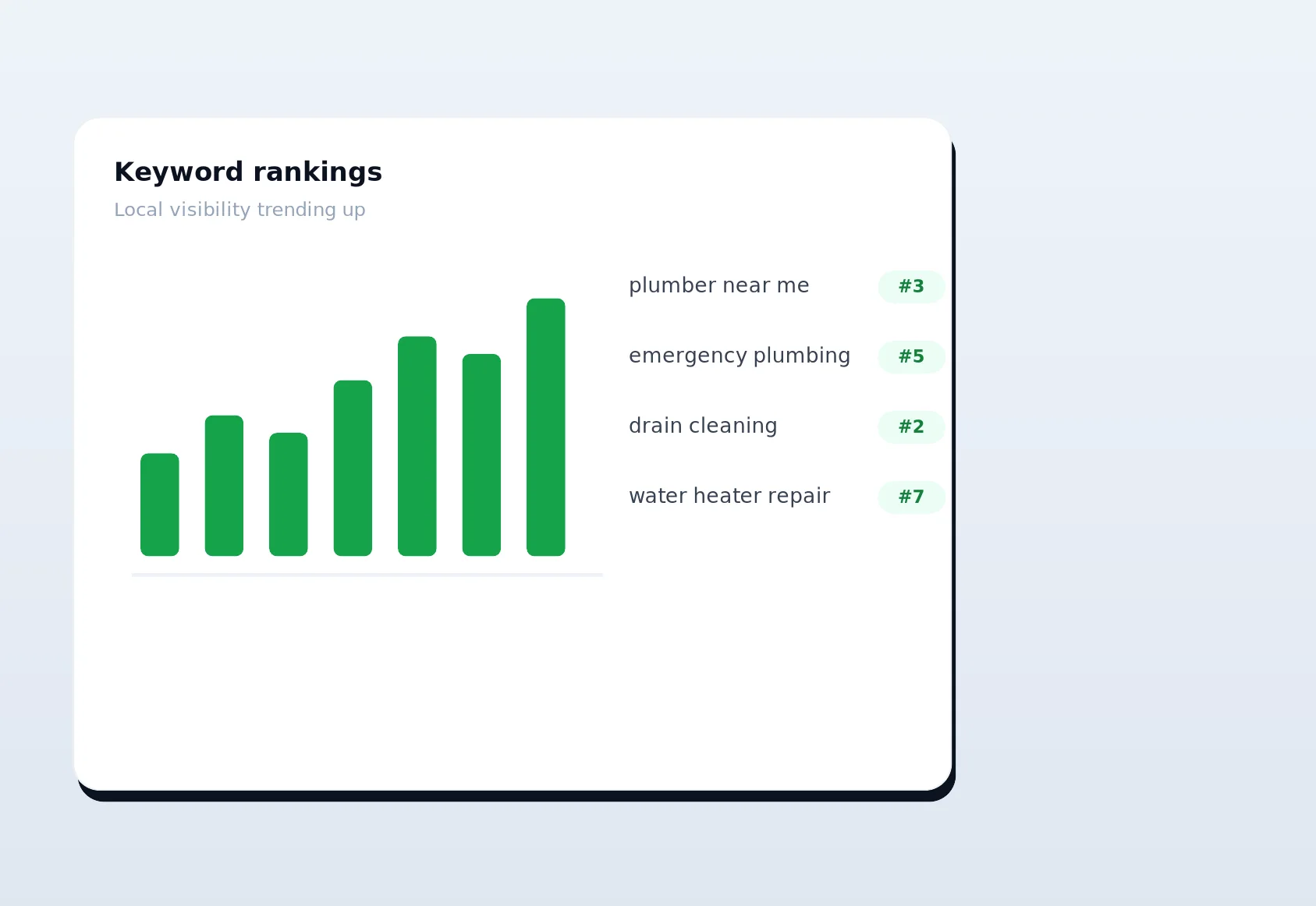
Neutral, proxy-based positions for the client's target keywords, pulled straight from rank tracking, with dated history and separate local-pack presence. Because the checks run through anonymous proxies, the positions are the customer's-eye results, not a personalized figure the client could debunk in their own browser.
Links and citations built
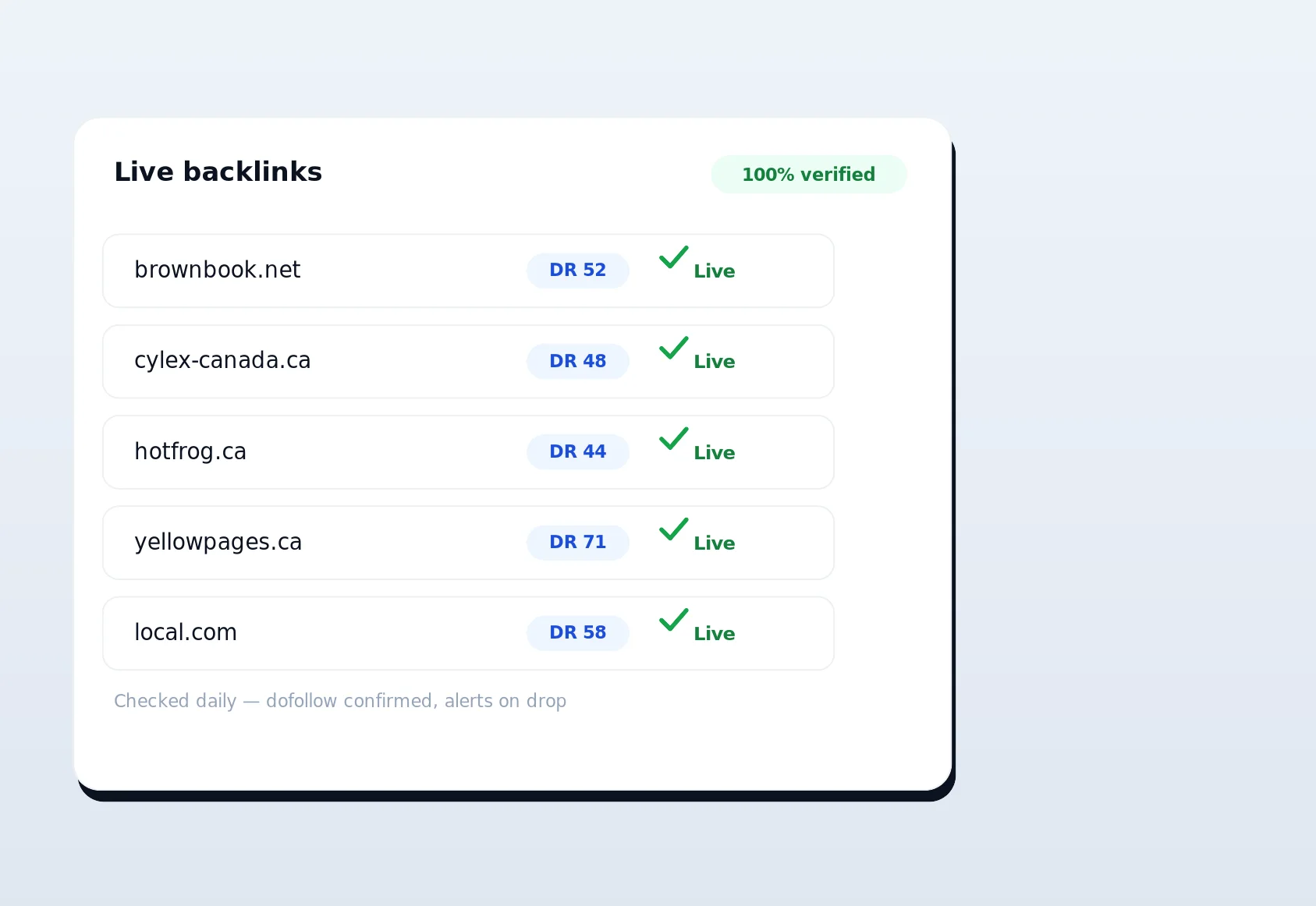
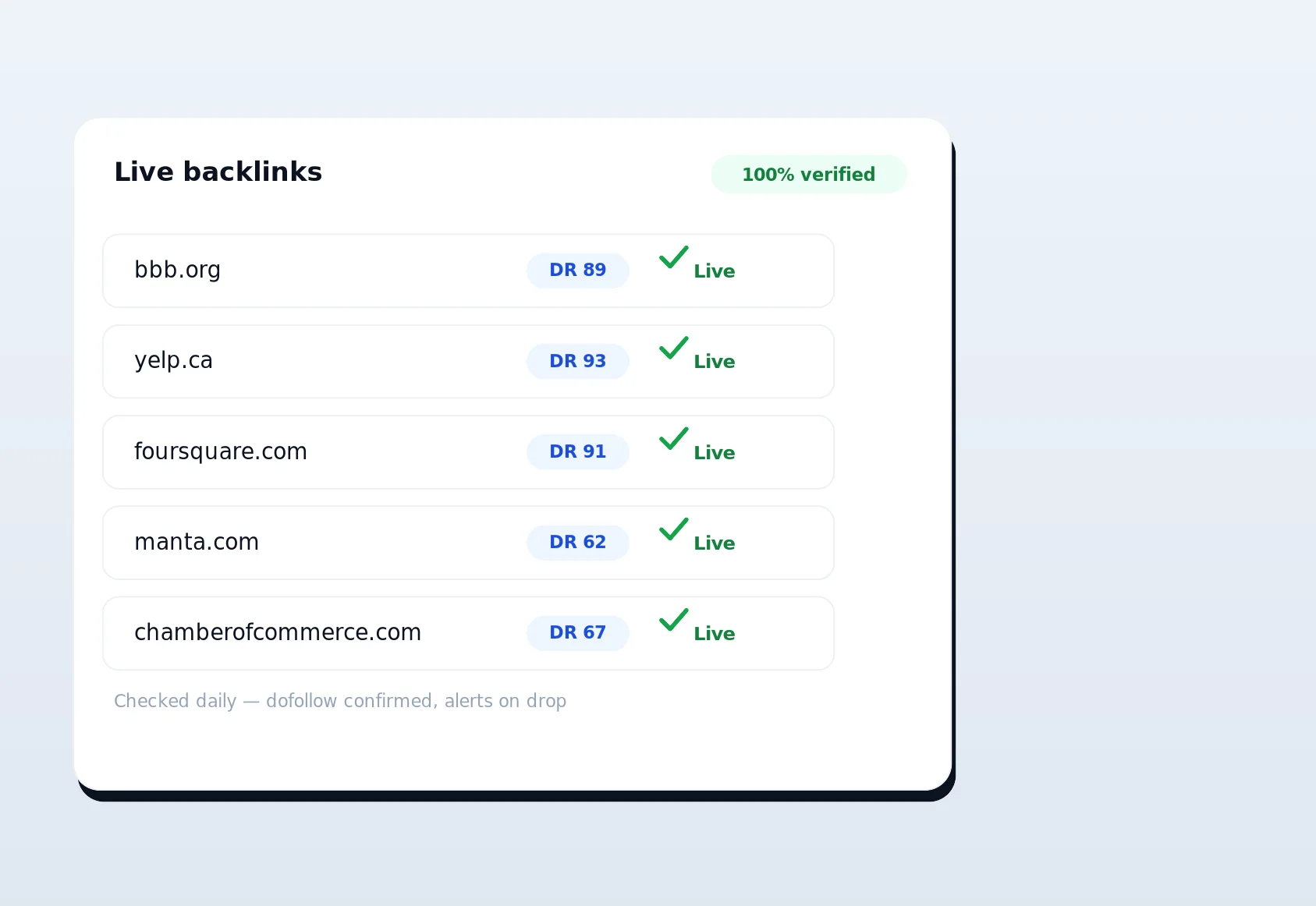
Every directory submission and citation placed during the period, drawn from the directory backlink builder and confirmed by live-link verification, so you're reporting links that actually exist and resolve, not ones that quietly 404'd a week after submission.
Lead generation and outreach
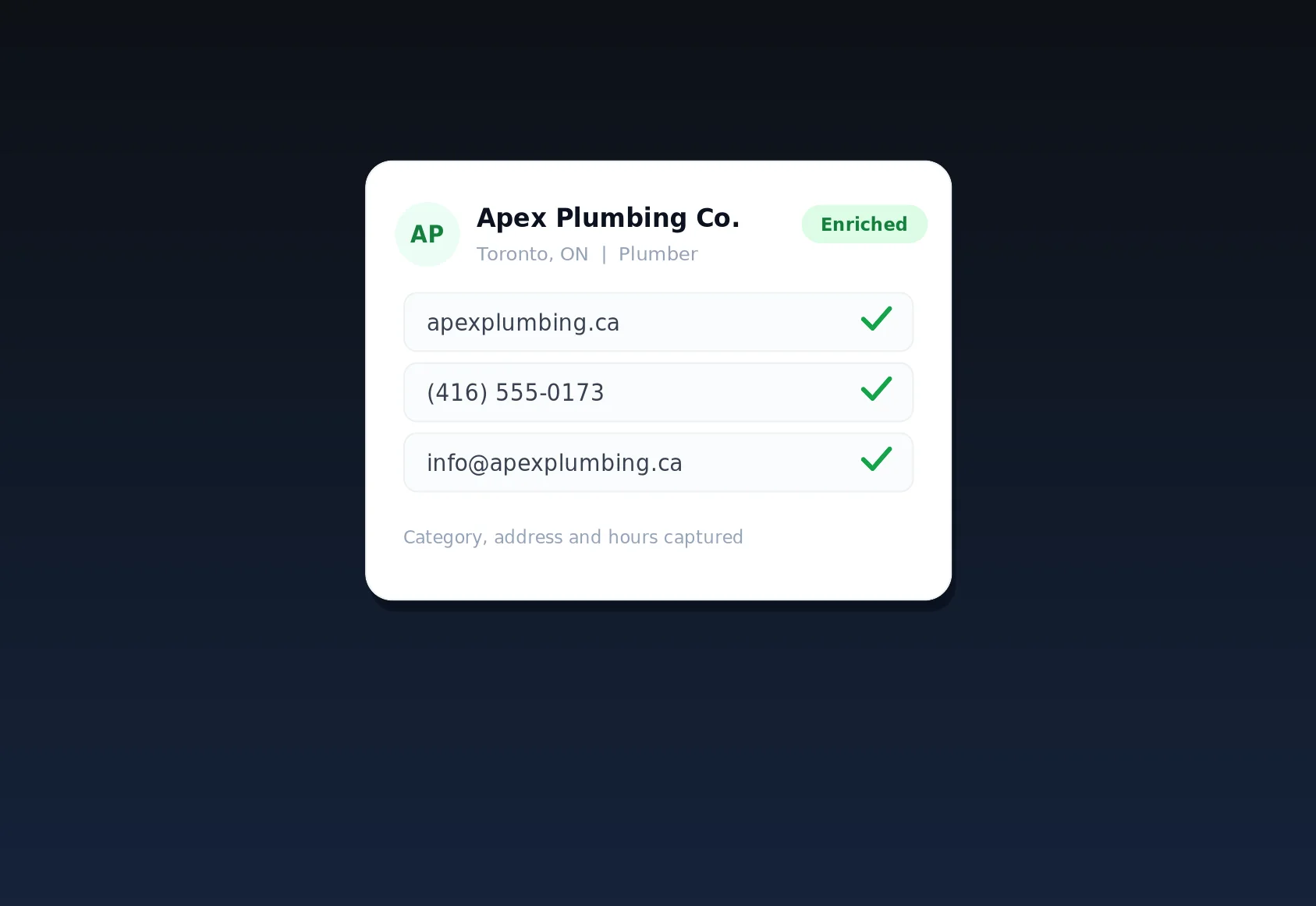
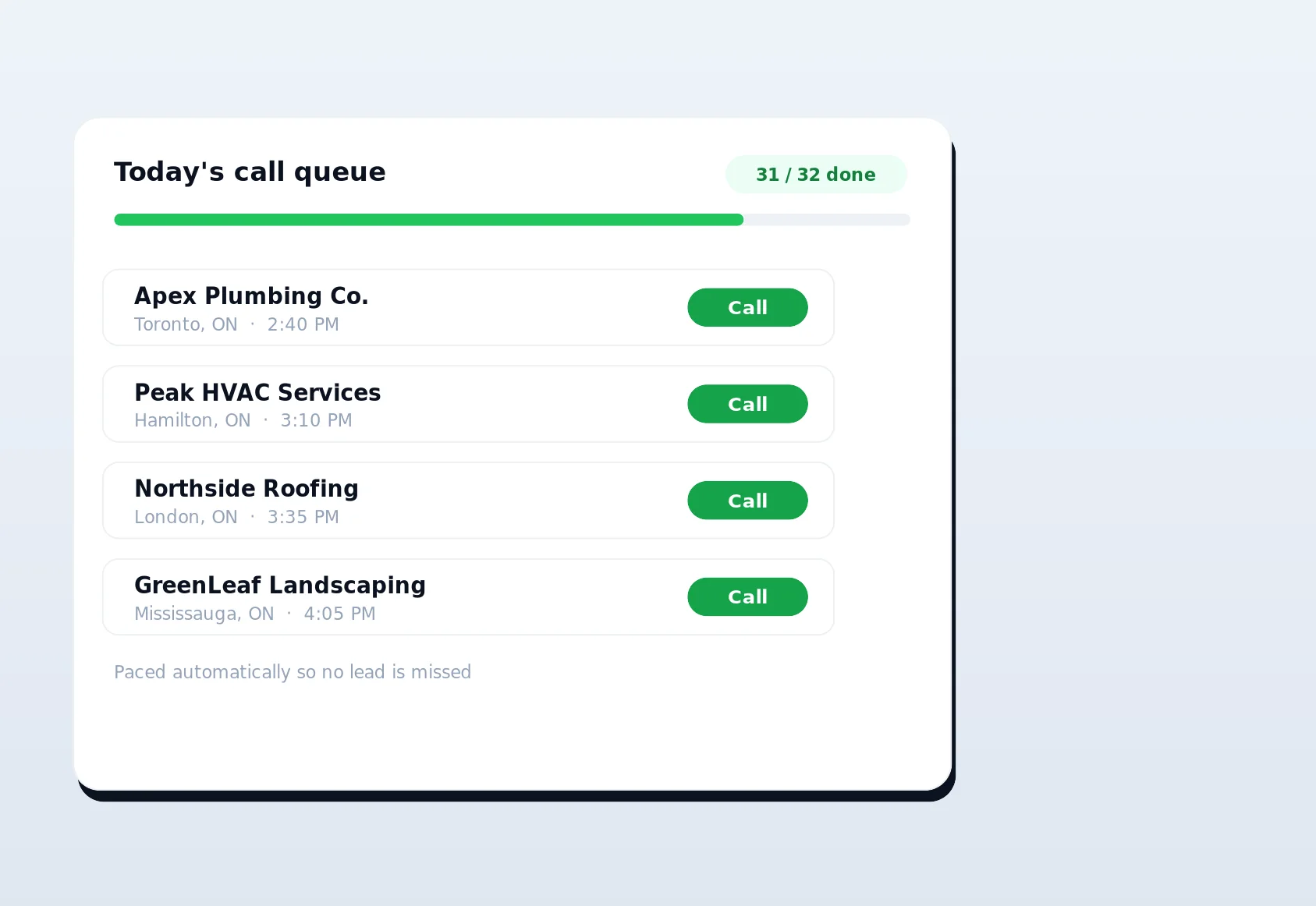
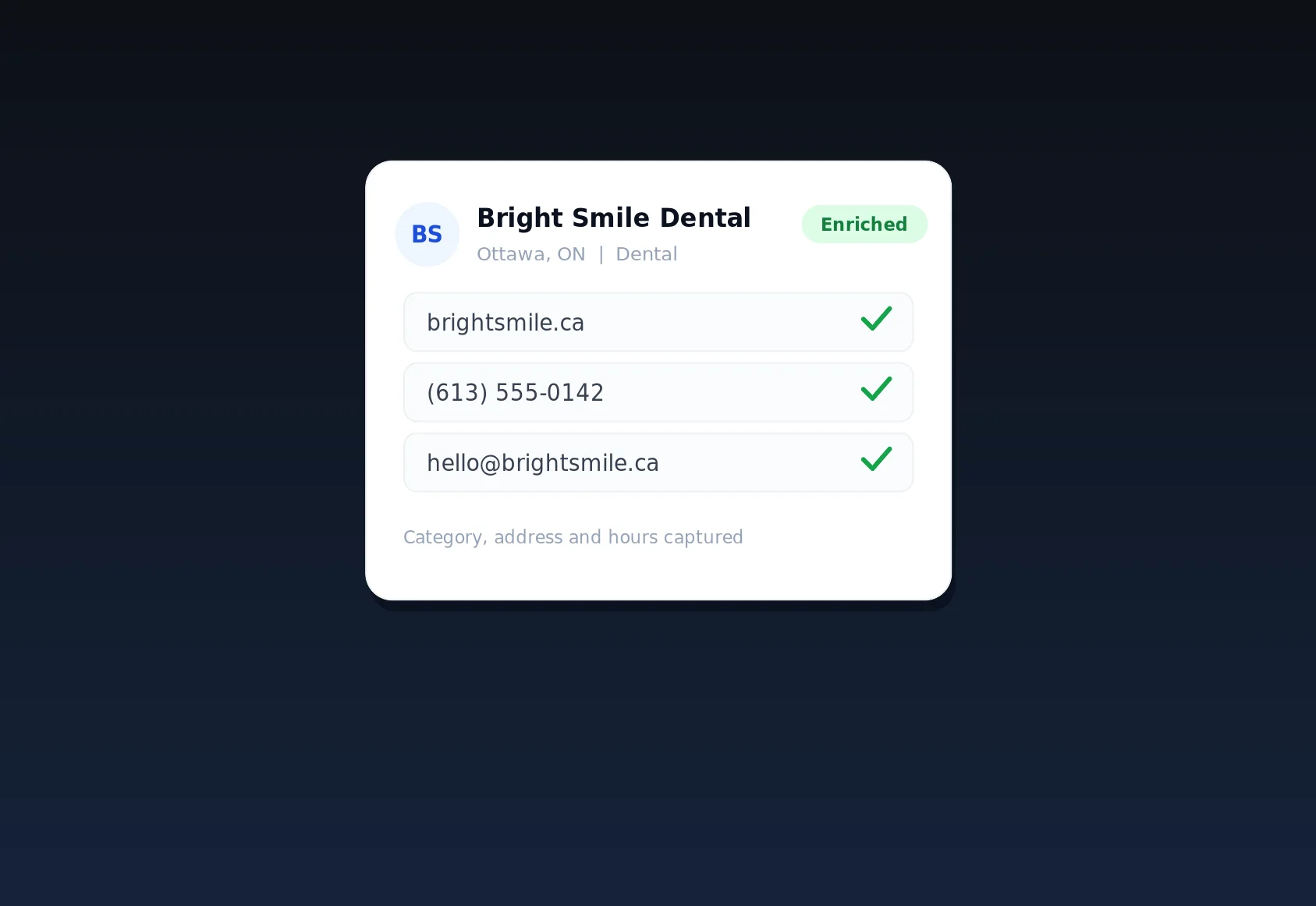
For agencies running the full LinkSpear pipeline, the report can show how many prospects were enriched and how many were worked through call queuing, tying SEO visibility to real sales motion. That connection, rankings to leads to conversations, is what makes the value undeniable to an owner who cares about the phone ringing, not abstract metrics.
On-page and technical wins
Schema fixes, instant-indexing submissions, disavows filed, and anchor-text optimizations completed in the period, so the invisible technical work finally becomes visible. These are the tasks clients never see and rarely credit; surfacing them reframes a quiet month as a productive one.
How it works, step by step
Building a proof-of-value SEO report in LinkSpear is deliberately close to zero effort, because a report that takes three hours to assemble is a report that quietly stops getting made. The platform is already logging the events; the report just narrates them.
Step 1 — LinkSpear records the work as you do it
Nothing extra is required day to day. As rankings are checked, citations submitted, links verified, and leads called, each action is timestamped and stored against the client. The reporting layer sits on top of data that already exists, so there's no separate tracking to maintain.
Step 2 — Pick the client and the reporting window
Choose a client sub-account and a date range, last month, last quarter, or since kickoff. Everything that happened for that client in the window is gathered automatically: their keywords, their links, their citations, their lead activity.
Step 3 — LinkSpear assembles the narrative
The platform compiles a before-and-after view: where rankings started versus where they ended, how many links and citations went live, what technical work was completed, and how much lead activity ran. The dense internal metrics stay internal; the client sees the outcomes that matter to them.
Step 4 — Review, add commentary, and brand it
Add a short plain-English summary and next-step plan, apply your agency branding through agency sub-accounts, and the report is client-ready. The numbers are automatic; the strategic framing is yours, which is exactly the split that keeps reports credible without eating your week.
Step 5 — Deliver and repeat
Share the report, walk the client through it, and the cadence takes care of itself next period. Because assembly is near-instant, you can report monthly without the month-end dread, and consistency itself becomes a retention tool, clients come to expect and trust the rhythm.
Benefits and outcomes you can expect
The point of a proof-of-value SEO report isn't tidier documents, it's a healthier business. When evidence of value is automatic and consistent, the downstream effects show up in your retention numbers, your pricing power, and your team's time.
- Lower churn. Clients who can see progress cancel far less often. The report makes the work visible during exactly the weeks when owners are most tempted to walk.
- Faster, calmer renewals. A renewal conversation backed by a dated trend line and a stack of verified links is a formality, not a negotiation.
- Stronger pricing. When value is provable, you compete on outcomes instead of being dragged into a race to the bottom on monthly fees.
- Hours back every month. Automated assembly replaces the end-of-month scramble of screenshots and spreadsheets, freeing your team for actual SEO work.
- Fewer "what are you doing?" emails. Proactive proof answers the question before it's asked, cutting the reactive support load that quietly drains agency margins.
- Referrals from confidence. A client who can clearly see they're winning is a client who recommends you, because they can articulate exactly what they're getting.
Proof-of-value reports vs. typical SEO reporting
Most agencies already send something each month. The question is whether that something actually retains clients or just fills an inbox. The table below contrasts the usual approaches with a LinkSpear proof-of-value SEO report.
| Capability | Screenshot / manual PDF | Raw analytics dump | LinkSpear proof-of-value report |
|---|---|---|---|
| Ties work to outcomes | Weakly | Rarely | Yes, explicitly |
| Rankings are neutral, not personalized | Often biased | N/A | Proxy-based, customer's-eye |
| Links reported are verified live | No | No | Yes, via live-link verification |
| Understandable by a non-technical owner | Sometimes | No | Yes, by design |
| Assembly time per client | Hours | Minutes but unreadable | Minutes and client-ready |
| Shows lead / sales activity | No | No | Yes, when using the full pipeline |
| Scales across many clients | Painfully | Somewhat | Yes, via sub-accounts |
The gap isn't cosmetic. A screenshot can be dismissed as cherry-picked, and an analytics dump is unreadable to the person signing the cheque. A proof-of-value SEO report is built to be both credible and legible, the two properties that actually keep clients.
Who proof-of-value reports are for
Anyone billing for SEO benefits from provable value, but a few groups feel the difference most.
Marketing agencies managing local clients
Agencies live or die by retention, and retention lives or dies on perceived value. With agency sub-accounts, each client's rankings, links, citations, and lead activity are already siloed, so a branded proof-of-value SEO report is a filter click away. For an agency juggling twenty accounts, that's the difference between reporting being a monthly crisis and a five-minute routine.
Freelancers and solo consultants
Solo operators can't afford to lose a client to a communication gap. Automated proof lets one person deliver agency-grade reporting without hiring an account manager, protecting the recurring revenue that makes freelancing sustainable.
In-house teams reporting upward
An in-house SEO reporting to a skeptical owner or CFO faces the same challenge as an agency: prove the budget is working. Dated, outcome-focused reports turn a defensive budget conversation into a confident one.
Service businesses that want accountability
Owners of businesses like plumbers, HVAC firms, and clinics increasingly demand accountability from whoever runs their SEO. If you serve these owners, giving them proof they can understand is the surest way to keep them, and to stand out from the last agency that sent them a jargon-filled PDF.
How proof-of-value reports fit the wider LinkSpear workflow
Proof-of-value reporting isn't a bolt-on, it's the scoreboard for everything else LinkSpear does. The platform's job is to find local businesses, reach them, win them, and grow their visibility; the report is how you make that entire arc visible to the client at the end.
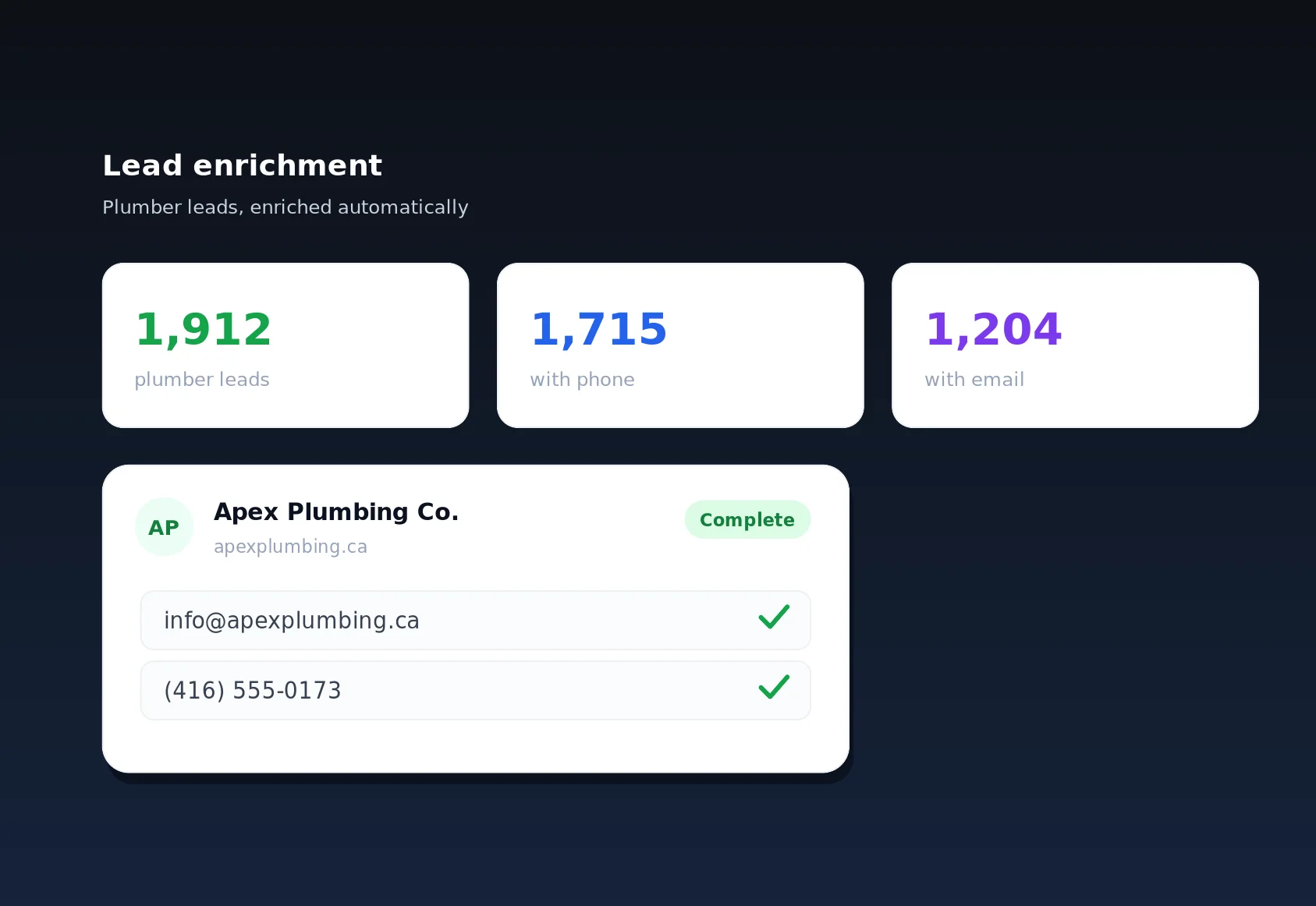
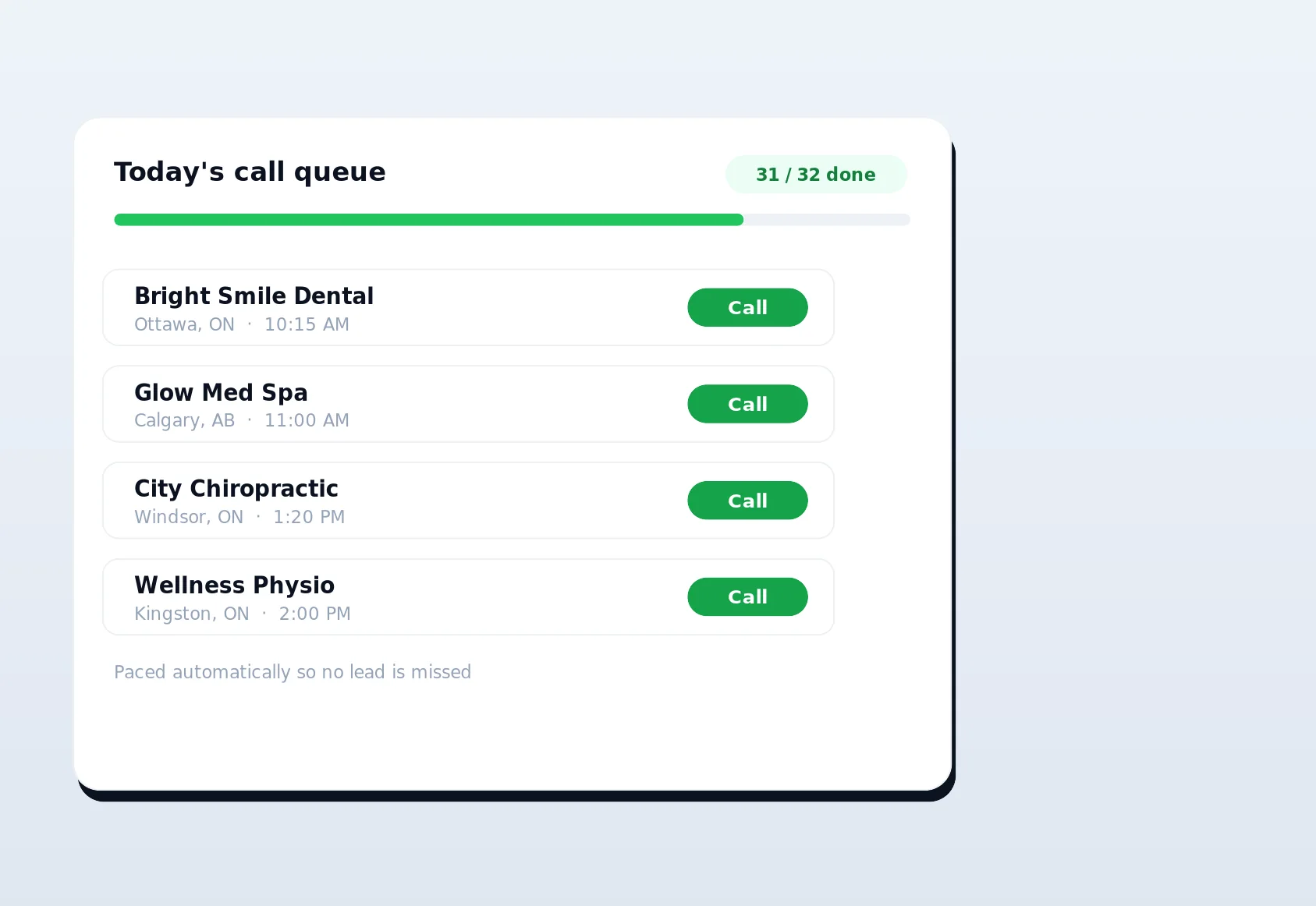
The loop starts upstream. Business lead scraping pulls fresh prospects from OpenStreetMap and YellowPages into a deduplicated local business directory with full contact cards. Lead enrichment fills in missing emails and phones by visiting each business's own site through rotating anonymous proxies, so your IP never leaks. Call queuing then hands those enriched businesses to reps one at a time with fairness rules and daily caps. Every one of those actions is timestamped, which is precisely why it can later appear in a client's report.
Once a business becomes a client, the SEO engine takes over: keyword research finds the terms worth chasing, the directory backlink builder places citations using the client's real browser and real IP for a clean footprint, and rank tracking measures the climb through neutral proxies. Schema audits, instant indexing, and anchor-text optimization tighten the on-page picture. The proof-of-value report sits on top of all of it, gathering the dated evidence each subsystem generates and narrating it back to the client. Without the report, that work is invisible. With it, every action you take feeds a story the client can see and trust.
Best practices for reports that retain clients
A report is a communication tool, not just a data artifact. A few habits turn a decent report into one that actively grows the relationship.
- Lead with the outcome, not the activity. Open with the ranking gain or the leads worked, then support it with the links and citations underneath. Owners care about results first, mechanics second.
- Always include a next-step plan. A report that only looks backward invites the question "so what's next?" Answer it proactively and you reinforce that there's a strategy in motion.
- Report the same metrics every period. Consistency lets clients build a mental trend line and makes progress obvious. Swapping metrics month to month reads as hiding something.
- Verify before you report. Only include links confirmed live, so a client who spot-checks never catches a dead citation. Credibility is fragile and worth protecting.
- Keep the language plain. Write for the owner, not the algorithm. If a metric needs a paragraph to explain, it probably belongs in your internal view, not the client's report.
- Deliver on a predictable rhythm. A report that always arrives on the first of the month becomes something clients rely on, and reliability itself builds trust.
Above all, remember that the report is a conversation, not a document you fire off and forget. The strongest retention comes from walking the client through it, connecting the dated evidence to the outcomes they care about, and framing the road ahead. LinkSpear does the heavy lifting of gathering credible, verified data so that you're free to spend your energy on that conversation instead of on assembling screenshots.
Start proving your value free
You can do brilliant SEO work and still lose the client if they can't see it. Proof-of-value SEO reports close that gap by turning the rankings, links, citations, and lead activity LinkSpear already records into dated, credible, plain-English evidence that keeps clients confident and renewing. And because the reporting sits on top of the full platform, from lead scraping and enrichment through backlink building and rank tracking, the proof is a natural byproduct of the work, not a separate chore. Every new account starts with a 14-day free trial on the Starter plan, no credit card required to begin. Run your first proof-of-value report, watch a skeptical client turn into a confident one, and make retention something your data does for you. Start free today.