
If you sell to local businesses, your pipeline is only as good as the data feeding it. OpenStreetMap business data gives LinkSpear a free, global, permissively licensed foundation of real-world places — every plumber, dentist, restaurant, law firm and auto shop that has been mapped by a human contributor — and turns it into clean, deduplicated, callable leads. Instead of buying stale list dumps or leaning on one fragile scraper, you pull structured location intelligence straight from the world's largest open map and enrich it into full contact cards your sales team can actually work.
This page explains exactly what LinkSpear's OpenStreetMap integration does, how the pipeline works step by step, the concrete outcomes you can expect, who benefits most, and how it slots into the wider LinkSpear lead-generation and SEO workflow.
What is OpenStreetMap business data?
OpenStreetMap (OSM) is a collaborative, openly licensed map of the world, built and maintained by millions of contributors. Beyond roads and coastlines, OSM records countless points of interest: shops, offices, clinics, tradespeople, hospitality venues and services, each tagged with attributes like name, category, opening hours, phone number, website and precise coordinates. Because the data is released under the Open Database License, it can be extracted, processed and combined with other sources in ways that closed commercial datasets simply forbid.
LinkSpear taps this ecosystem through the OSM data model and its query tooling, then does the hard part for you: normalizing inconsistent tags, resolving duplicates, geocoding addresses, and mapping OSM's tag vocabulary onto the business categories your reps and campaigns care about. The result is OpenStreetMap business data that behaves like a premium lead list — without the premium list's licensing traps, hidden staleness, or single-vendor lock-in.
The distinction matters because most local lead data on the market is either a snapshot someone scraped once and resold for years, or an aggregation whose original sources are impossible to inspect. When a phone number is wrong, you have no way to trace it back and no way to fix it at the root. OSM inverts that: every business is a live object anyone can view, correct and improve, and the community has strong incentives to keep local information accurate because they use the map themselves. LinkSpear rides on top of that self-correcting foundation rather than freezing it in time.
Why open data beats a bought list
- Coverage that keeps growing. Local contributors add and correct places every day, so long-tail categories and smaller towns are often better represented than in commercial databases skewed toward big metros.
- Transparent provenance. Every place traces back to a real, editable map object — not an anonymous aggregated row you can't verify.
- No per-record resale fees. The open license permits extraction and processing, so you're not paying a toll every time you touch a lead.
- Geospatial precision. Coordinates are baked in, which makes radius search, territory carving and route planning trivial.
What the raw data looks like
Under the hood, OSM stores each place as a node, way or relation carrying a set of key/value tags. A dentist might be tagged amenity=dentist with name, phone, website, addr:street and addr:city values attached. A tradesperson might sit under shop=trade or craft=plumber. The vocabulary is rich but inconsistent — contributors around the world tag the same kind of business in slightly different ways, and optional fields are often left blank. That inconsistency is exactly why a raw export is unusable for sales without a normalization layer, and exactly the problem LinkSpear solves before a single record reaches your account.
How LinkSpear's OpenStreetMap pipeline works
Raw OSM extracts are powerful but messy: the same cafe might appear as a node and a building outline, phone numbers arrive in a dozen formats, and categories hide inside cryptic key/value tags. LinkSpear runs every record through a hardened, repeatable pipeline so what lands in your account is sales-ready, not homework. Turning raw OpenStreetMap business data into a working queue takes six stages.
Step 1 — Define your search
Pick a location (city, region, or a radius around a pin) and one or more categories — say "plumbers within 40 km of Manchester" or "dental clinics across Greater Toronto." LinkSpear translates your plain-English selection into precise OSM tag queries behind the scenes, so you never touch a query language.
Step 2 — Pull and parse the raw places
The platform fetches matching OSM objects — nodes, ways and relations — and extracts the useful attributes: name, category tags, address components, phone, website, email and coordinates. Geometry is collapsed to a single canonical point per business so a shop mapped as both an outline and a pin doesn't become two leads.
Step 3 — Normalize and geocode
Phone numbers are reformatted to a consistent national and international pattern, addresses are parsed into street, city, province/state and country fields, and OSM's tag soup is mapped onto LinkSpear's clean category taxonomy. Where a street address is missing but coordinates exist, reverse geocoding fills the gap.
Step 4 — Deduplicate against the master catalogue
Every candidate is matched against LinkSpear's deduplicated local business directory using name, phone, domain and proximity signals. Existing businesses are updated in place; genuinely new ones are inserted. You never re-import the same lead twice or hand a rep a business a colleague already called. This step is quietly the most valuable in the whole pipeline: fuzzy name matching plus proximity means "Joe's Plumbing Ltd" and "Joe's Plumbing" at the same coordinates collapse into one record, and a business whose phone already exists in your catalogue is recognised even if OSM spells its name differently.
Step 5 — Enrich the gaps
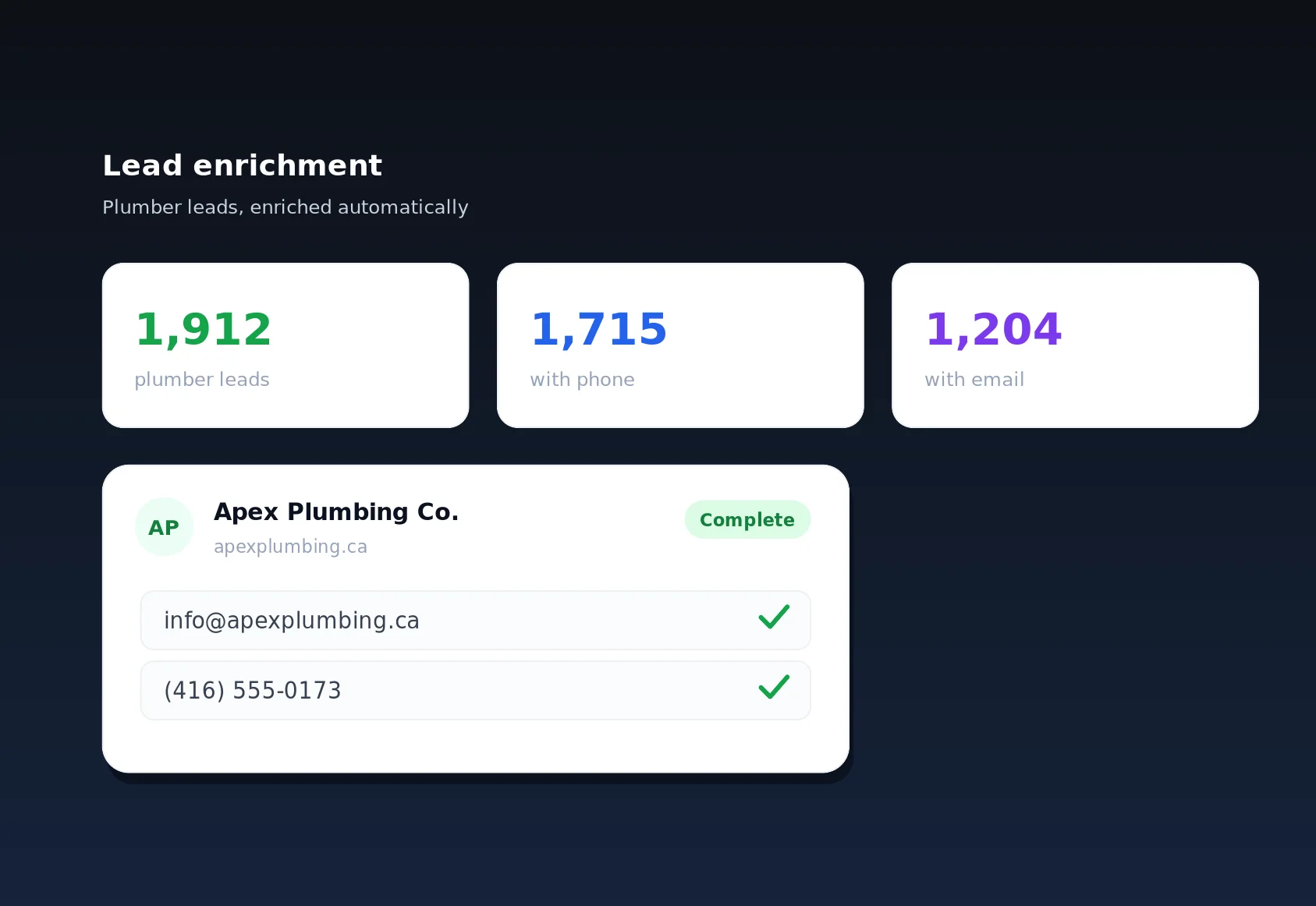
OSM often has a website but no email, or a name but no phone. LinkSpear closes those gaps with lead enrichment, visiting each business's own site through rotating anonymous proxies to recover the missing email and phone — so your IP never leaks and the target never sees a scraper knocking from your office network.
Step 6 — Build the contact card
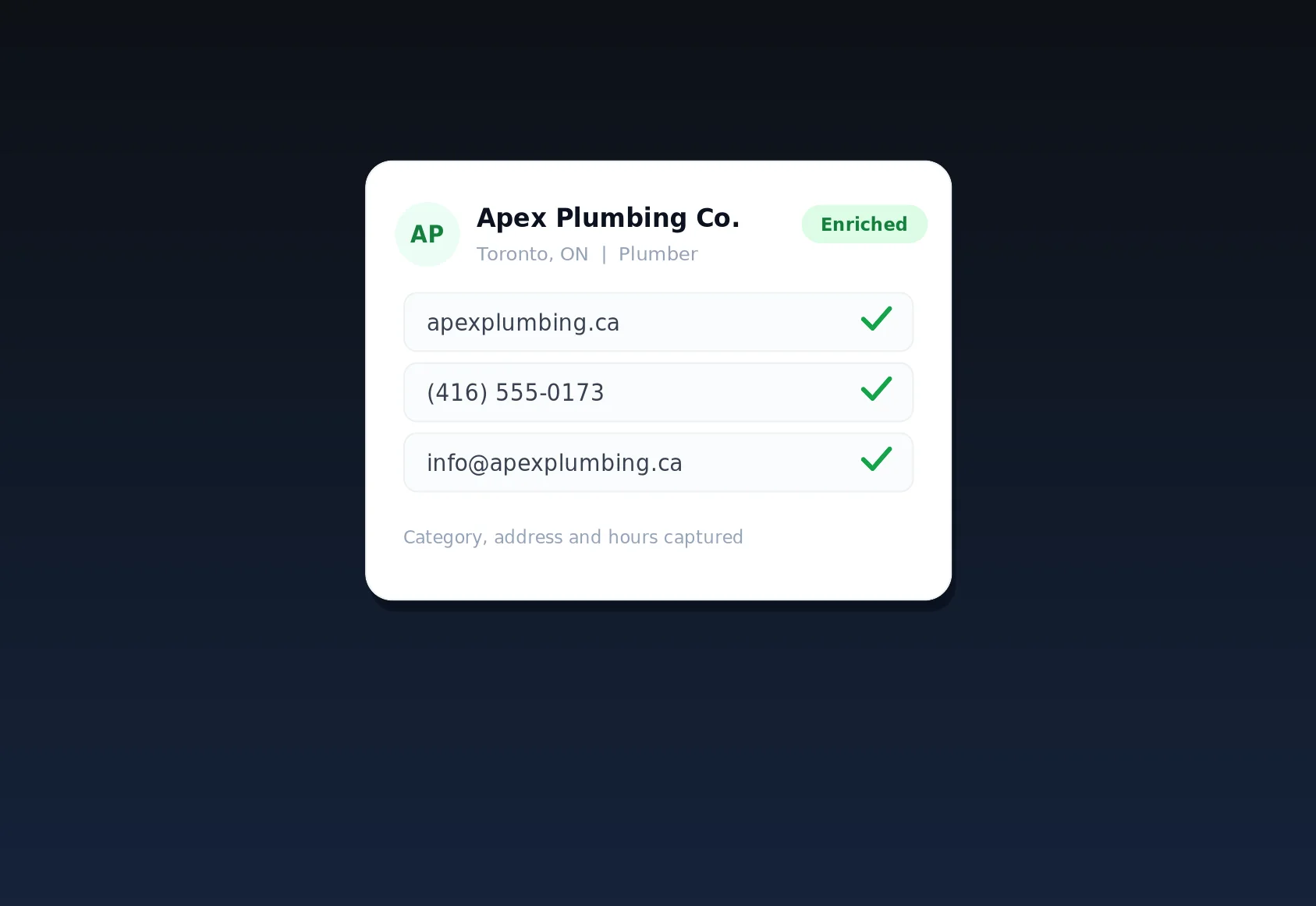
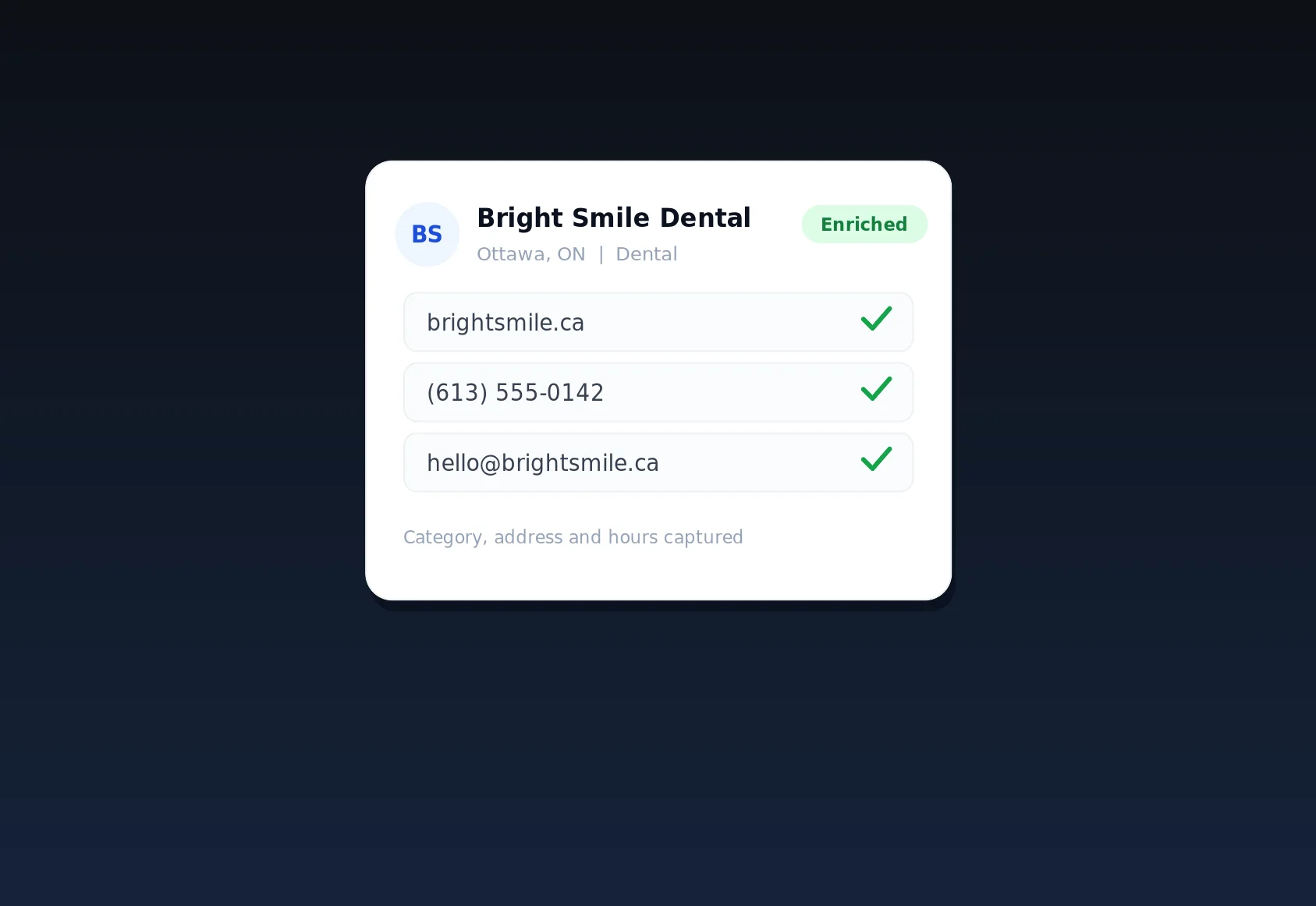
The finished record becomes a full contact card: business name, phone, email, website, street address, city, province/state, country and category. From there it flows straight into call queuing for cold outreach, or into your citation and backlink campaigns.
From raw map object to callable lead
It helps to see the transformation concretely. Here is roughly what one record looks like at each stage of the pipeline.
| Stage | What the record contains | Sales-ready? |
|---|---|---|
| Raw OSM node | name "Northgate Plumbing", shop=trade, addr:street "Northgate", phone present, website tag present | No — no city parsed, no email, category cryptic |
| Parsed & normalized | Name, category Plumber, phone reformatted, street/city/country split out, coordinates attached | Partly — still missing email |
| Deduplicated | Matched as new; not already in your directory or a teammate's queue | Partly — unique, but thin |
| Enriched | Email recovered from the business website via anonymous proxy; phone confirmed | Yes — full contact card |
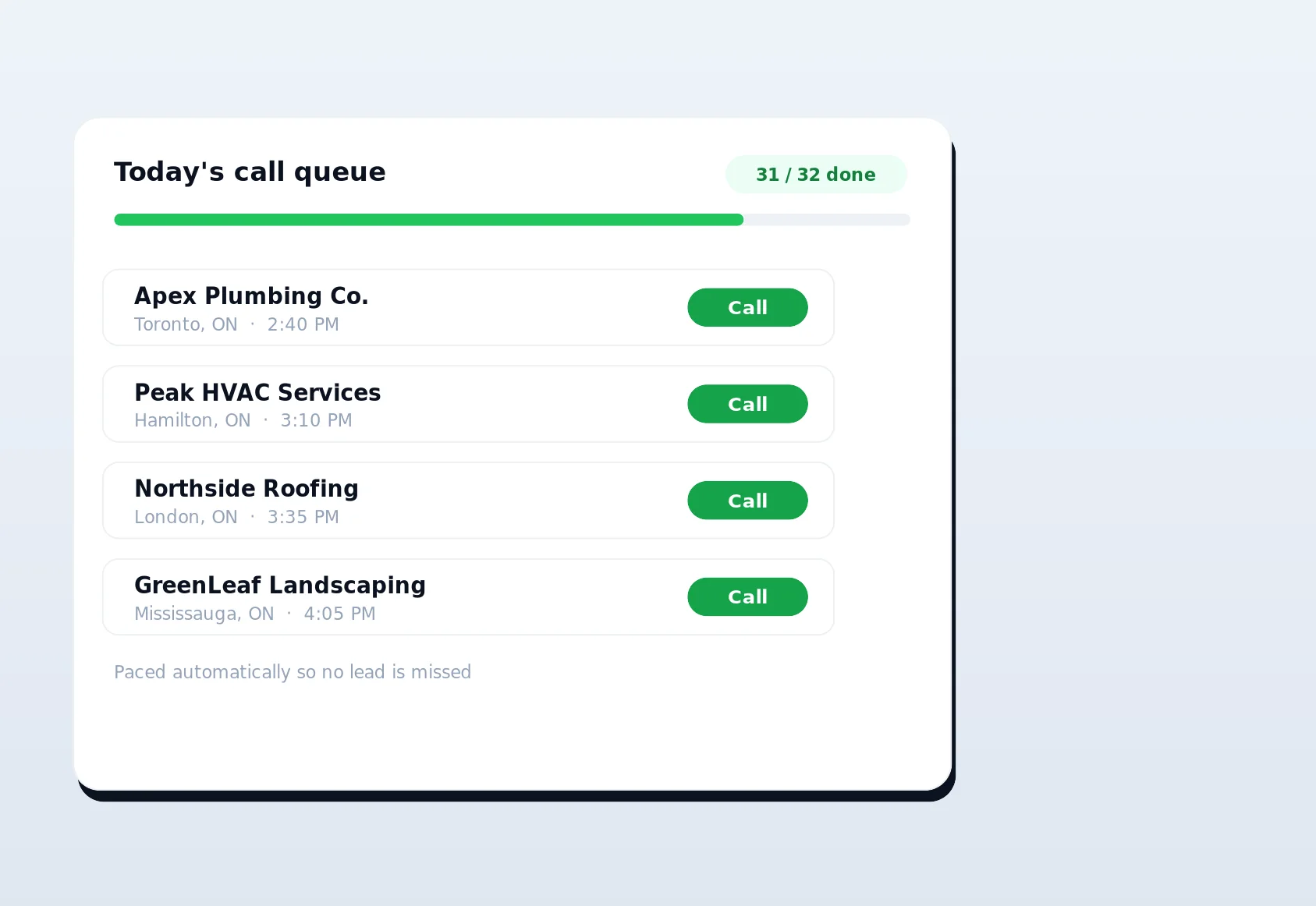
| Queued | Handed to a rep with cooldown and daily-cap fairness applied | Yes — in the dialer |
The concrete benefits and outcomes
OpenStreetMap business data isn't an academic feature — it changes the economics of prospecting. Because the source is open and the pipeline is automated, you spend your time selling instead of cleaning spreadsheets.
- Lower cost per lead. No per-record licensing fees on the underlying data means your marginal cost to expand into a new city or category is close to zero.
- Faster territory launches. Spin up a fresh region in minutes — define the area, pull, enrich, and your reps have a full queue the same day.
- Cleaner CRM hygiene. Deduplication against the master catalogue keeps your database from bloating with the same business five times over.
- Higher connect rates. Enriched phone and email fields mean reps reach a decision-maker instead of hitting a dead number.
- Compliance you can defend. Working from openly licensed data with transparent provenance is far safer than reselling opaque scraped dumps.
Put those together and the shift is structural, not incremental. A traditional list-buying motion has a hard ceiling: every new market costs money, so you ration your expansion and prospect conservatively. An open-data motion removes that ceiling. Testing a new vertical or an adjacent town stops being a budget decision and becomes a five-minute experiment. Teams that adopt this pattern tend to prospect wider and iterate faster, because the cost of being wrong about a market is measured in minutes rather than invoices.
A quick worked example
Imagine a commercial roofing supplier expanding from one city into three neighbouring towns. In the old model they'd scope a list purchase, wait for delivery, and hope the coverage was decent. With LinkSpear they define each town as a radius pull, select the relevant categories — roofers, builders, property managers — and within the same afternoon have several hundred deduplicated businesses, enriched with emails and phones, sitting in a call queue split fairly across their two reps. The reps start dialling that day. The supplier learns which town converts best within a week, then doubles down. That feedback loop, not the raw record count, is the real product.
How it compares to the alternatives
Most local lead sources force a trade-off between cost, freshness and coverage. LinkSpear's OpenStreetMap pipeline is designed to avoid picking just one.
| Approach | Data cost | Coverage of small/long-tail businesses | Deduplication & enrichment | Licensing clarity |
|---|---|---|---|---|
| LinkSpear + OpenStreetMap | No per-record fees | Strong, community-maintained | Built in, automatic | Open, transparent |
| Bought commercial list | High, per record | Metro-biased, often stale | Usually manual | Restrictive resale terms |
| Single-source directory scraper | Low but fragile | Only that one site's coverage | Rarely included | Gray area, breakage risk |
| Manual research | Cheap in cash, costly in hours | Whatever you can find by hand | None | Clear but unscalable |
LinkSpear doesn't force you to choose a single source, either. OSM pairs naturally with business lead scraping from YellowPages, so you can cross-fill categories where one source is thin and the other is rich — all deduplicated into the same master catalogue.
Who OpenStreetMap business data is for
Any team that sells to, or on behalf of, local businesses gets value here — but a few groups feel the impact immediately.
Marketing and SEO agencies
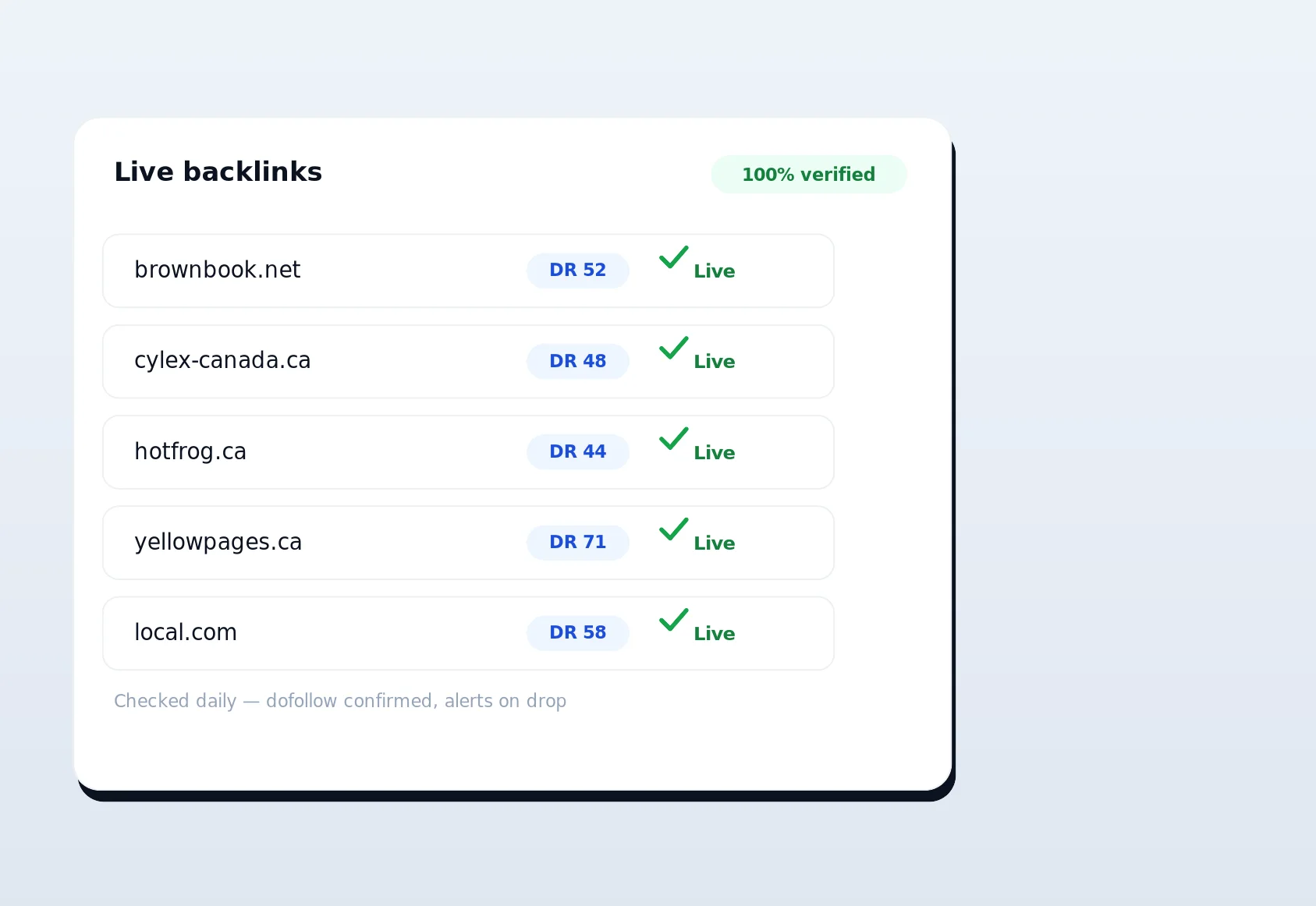
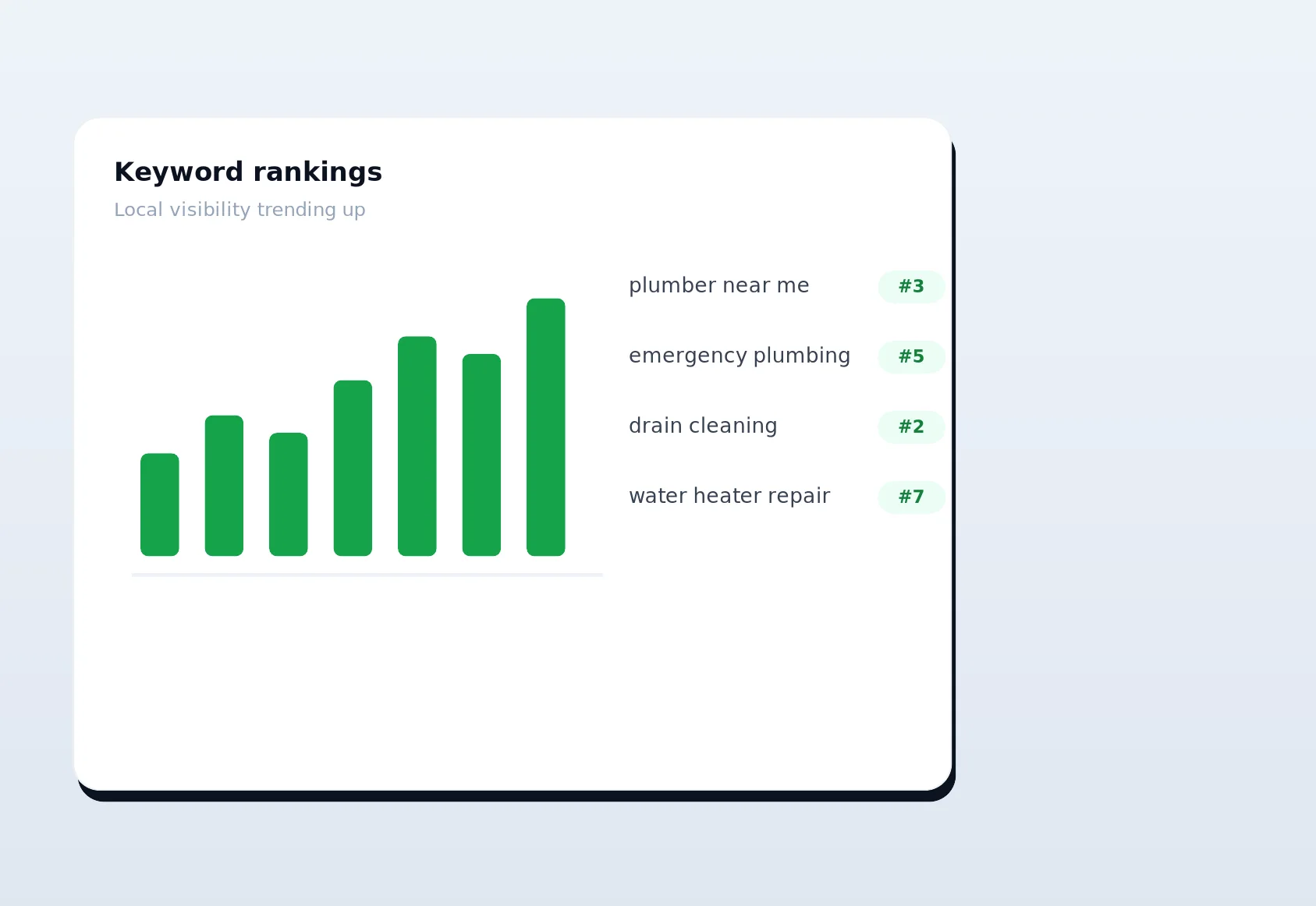
Agencies prospecting local service businesses can build territory-by-territory lead lists on demand, then move won clients straight into fulfilment: local citation building, directory backlink building and rank tracking. One dataset feeds both the sale and the delivery, and agency sub-accounts keep each client cleanly separated.
Local service businesses selling to other businesses
Commercial cleaners, IT providers, suppliers and B2B tradespeople can map every relevant business in their catchment area and work it systematically instead of guessing. Industry pages like plumbers, roofers and dentists show how the same pipeline adapts per vertical.
Inside-sales and lead-gen teams
Teams running high-volume outbound get a constantly replenishable well of fresh, deduplicated targets that flow directly into call queuing with cross-tenant fairness, cooldowns and daily call caps — so no rep burns the same business twice and no lead sits idle.
Where it fits in the LinkSpear workflow
OpenStreetMap business data is the top of the funnel, but its real power is how cleanly it hands off to everything downstream. A typical end-to-end run looks like this:
- Source. Pull OSM places for your target area and categories, optionally blended with YellowPages via business lead scraping.
- Enrich. Fill missing emails and phones through anonymous-proxy lead enrichment, with the email finder recovering contacts your reps can actually reach.
- Sell. Feed full contact cards into call queuing and export to your CRM with CSV lead export.
- Deliver. Once a local business becomes a client, run their SEO from the same platform — citations, directory backlinks, schema audits and rank tracking.
Because every stage shares one deduplicated master catalogue, data captured while prospecting is never thrown away — it becomes the foundation for fulfilment, reporting and renewal.
Putting OpenStreetMap business data to work in your first week
Adopting a new data source usually means a painful onboarding, but pulling OpenStreetMap business data into LinkSpear is deliberately low-friction. Most teams follow the same path in their first few days, and it compounds quickly.
- Day one: pick your home city and two or three core categories, run a pull, and watch the deduplicated records populate your directory with coordinates, addresses and any contact details OSM already holds.
- Day two: kick off enrichment so the platform recovers missing emails and phones through anonymous proxies, turning thin records into full contact cards while you focus on messaging.
- Day three: load the enriched cards into call queuing, set cooldowns and daily caps, and let your reps start dialling a clean, fairly distributed queue.
- End of week one: expand into adjacent towns or a second vertical, confident that deduplication keeps everything tidy and refreshes will layer future updates on top rather than creating clutter.
By the end of that first week you're not evaluating a tool — you're running an operational pipeline that keeps producing fresh, callable leads on demand. Every subsequent territory is a repeat of the same simple loop, which is exactly what makes the approach scale from a solo founder to an agency running dozens of client campaigns side by side.
Data quality, freshness and responsible use
Open data is only useful if it's handled responsibly. LinkSpear treats OpenStreetMap as a living source, not a one-time dump.
- Refreshable pulls. Re-run a territory to catch newly added or corrected businesses; deduplication ensures updates land on the existing record rather than creating clones.
- Attribution-aware. The platform is built around OSM's open license and its attribution expectations, keeping your usage clean.
- Enrichment stays anonymous. Website visits for email and phone recovery route through rotating anonymous proxies, protecting your IP reputation and keeping outreach footprints clean.
- You stay in control. Nothing is auto-contacted; OSM data becomes callable leads that you and your reps decide how and when to work.
Honest limitations
No data source is perfect, and it would be dishonest to pretend otherwise. OpenStreetMap coverage is uneven: a dense city centre may have near-complete business listings, while a rural district might be sparse until local contributors fill it in. Some records carry a name and location but little contact detail, which is precisely why enrichment is a built-in stage rather than an afterthought. And because the map is community-edited, occasional stale or duplicated entries slip through — LinkSpear's deduplication and refresh cycles are designed to catch them, but the honest framing is that this is a continuously improving source, not an infallible one. For most local prospecting, the combination of open coverage plus automated enrichment already outperforms the bought-list alternative on both cost and freshness, and it only gets better as the map does.
Start pulling OpenStreetMap business data today
Every hour spent stitching together stale lists or babysitting a brittle scraper is an hour you're not on the phone closing local clients. LinkSpear turns the world's largest open map into deduplicated, enriched, callable leads — then carries that data all the way through outreach and SEO fulfilment without you re-keying a thing. New users get a 14-day free trial on the Starter plan, with no credit card required to begin. Define your first territory, watch OpenStreetMap business data flow into full contact cards, and hand your reps a queue that's ready to dial. Start your free trial and see how quickly an open map becomes a working pipeline.